C-141 Starlifter vs C-5 Galaxy
C-141 Starlifter vs C-5 Galaxy at a glance — top speed 805 vs 932 km/h, range 4,723 vs 8,900 km, max takeoff weight 146,556 vs 381,017 kg, built 285 vs 131 units.
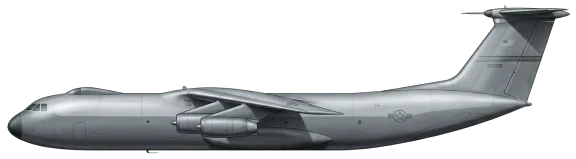
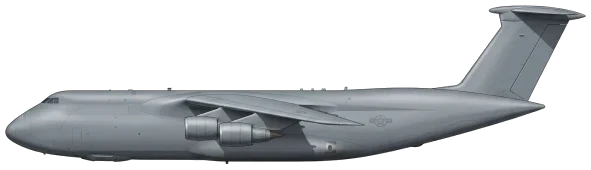
| C-141 Starlifter | C-5 Galaxy | |
|---|---|---|
| Origin country | 🇺🇸 United States | 🇺🇸 United States |
| Category | Military Transport Aircraft | Military Transport Aircraft |
| Manufacturer | Lockheed | Lockheed |
| First flight | 17 December 1963 | 30 June 1968 |
| Year introduced | 1965 | 1971 |
| Number produced | 285 units | 131 units |
| Average unit price | $40 million | $168 million |
| Wing area | 300.0 m² | 576.0 m² |
| Wingspan | 49.0 m | 67.9 m |
| Height | 12.0 m | 19.8 m |
| Length | 51.3 m | 75.3 m |
| Maximum speed | 805 km/h | 932 km/h |
| Operational range | 4,723 km | 8,900 km |
| Service ceiling | 12,497 m | 10,600 m |
| Max. takeoff weight | 146,556 kg | 381,017 kg |
| Empty weight | 65,540 kg | 172,365 kg |
| Total thrust | 4 x 9,185 kgf | 4 x 19,674 kgf |
Detailed Comparison
The Lockheed C-141 Starlifter and C-5 Galaxy represent two complementary pillars of United States strategic airlift, born from different operational requirements. The C-141 was developed as a versatile jet transport to replace an aging propeller fleet, capable of carrying both cargo and personnel. The C-5 was designed from the outset for the singular purpose of carrying "outsized" cargo—equipment too large or heavy for any other aircraft, such as main battle tanks and helicopters—granting the US military unprecedented global reach for its heaviest assets.
Development and Design
The C-141's design was a direct evolution of jet transport technology, answering the USAF's 1960 requirement for a modern airlifter. Its development was relatively swift, resulting in a conventional and highly effective design featuring a high-mounted swept wing, T-tail, and rear loading ramp that became a standard configuration for subsequent military transports. In contrast, the C-5's development under the CX-HLS program was technologically ambitious and fraught with challenges, including significant cost overruns and initial structural issues with its wings. Its design incorporated several key innovations not present in the C-141:
- Drive-through loading: A "visoring" upward-hinging nose cone and aft ramp doors allowed vehicles to be driven on and off simultaneously, drastically reducing load times.
- Kneeling landing gear: The entire aircraft could be lowered to align its cargo floor with truck-bed height.
- High-flotation landing gear: A 28-wheel configuration distributed the immense weight, enabling operations from semi-prepared runways. The C-141 was designed for a crew of four, while the larger, more complex C-5 required five.
Specifications and Performances
The C-5's design for outsized cargo is reflected in its immense scale. Its maximum takeoff weight of 381,017 kg is more than double the C-141's 146,556 kg. This size differential translates directly to payload capacity. The C-5 can carry a maximum payload of 127,459 kg, nearly four times the C-141A’s 32,136 kg. The most critical distinction lies in the cargo bay dimensions: the C-5's compartment is substantially longer (37 m vs. 21 m), wider (5.8 m vs. 3.0 m), and taller, enabling it to transport items like the Army's 67-ton armored vehicle-launched bridge, which the C-141 could not accommodate. While both aircraft featured similar turbofan technology, the C-141 possessed a superior service ceiling (12,497 m vs. 10,600 m) and climb rate (13.2 m/s vs. 9.14 m/s), reflecting its lighter weight and more conventional aerodynamic profile.
Deployment and usage
Both aircraft formed the backbone of the USAF's Military Airlift Command for decades. The C-141 was the workhorse, flying vast quantities of palletized cargo, troops, and paratroopers in every major US military engagement from Vietnam through Desert Storm. The C-141B stretch modification increased its volume, but not its ability to carry outsized equipment. The C-5 was the strategic enabler, deployed when its unique heavy-lift capability was required. During Operation Nickel Grass in 1973, C-5s delivered tanks and heavy ordnance to Israel, a mission impossible for the C-141. While the C-141 fleet faced wing crack issues requiring a major re-winging program, the entire fleet was ultimately retired by 2006. The C-5 fleet, despite its own early structural problems, was deemed too valuable to replace and underwent extensive modernization, culminating in the C-5M Super Galaxy with new engines and avionics, ensuring its continued service.
Conclusion
The C-141 Starlifter was a highly successful, mass-produced strategic airlifter that provided reliable, long-range transport for general cargo and personnel. The C-5 Galaxy, while more expensive and produced in smaller numbers, provided a singular, mission-critical capability: the intercontinental transport of any piece of equipment in the US Army's inventory. The C-141 was the logistical backbone; the C-5 was the strategic sledgehammer. The retirement of the Starlifter and the continued modernization of the Galaxy underscores the enduring military requirement for the C-5's unparalleled capacity to project heavy combat power anywhere in the world.