C-212 Aviocar vs Douglas DC-3
C-212 Aviocar vs Douglas DC-3 at a glance — top speed 370 vs 413 km/h, range 835 vs 2,540 km, max takeoff weight 7,700 vs 13,154 kg, built 483 vs 10,174 units.
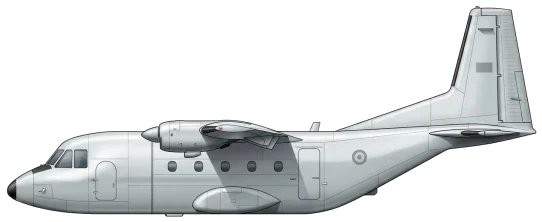
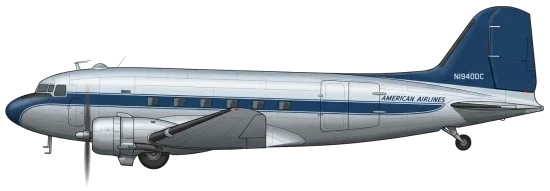
| C-212 Aviocar | Douglas DC-3 | |
|---|---|---|
| Origin country | 🇪🇸 Spain | 🇺🇸 United States |
| Category | Military Transport Aircraft | Military Transport Aircraft |
| Manufacturer | CASA | Douglas |
| First flight | 26 March 1971 | 23 December 1941 |
| Year introduced | 1974 | 1936 |
| Number produced | 483 units | 10174 units |
| Average unit price | $7 million | $80K |
| Wing area | 41.0 m² | 91.7 m² |
| Wingspan | 20.3 m | 29.0 m |
| Height | 6.3 m | 5.6 m |
| Length | 16.2 m | 22.7 m |
| Maximum speed | 370 km/h | 413 km/h |
| Operational range | 835 km | 2,540 km |
| Service ceiling | 7,925 m | 7,071 m |
| Max. takeoff weight | 7,700 kg | 13,154 kg |
| Empty weight | 3,780 kg | 6,450 kg |
| Total thrust | 2 x 671 kW | 3 x 875 kW |
Detailed Comparison
The CASA C-212 Aviocar serves as a specialized, modern tactical transport designed for Short Take-Off and Landing (STOL) in austere environments, whereas the Douglas DC-3 (C-47 Skytrain) established the doctrinal baseline for military air transport. While separated by nearly four decades, both airframes address the logistical requirement for rugged, medium-lift capacity, though the C-212 incorporates specific military-grade structural optimizations absent in the civilian-derived DC-3.
Development and Design
The C-212 utilizes a high-mounted wing and a box-like fuselage, prioritizing internal volume efficiency and ground clearance for rough-field operations. Its fixed tricycle landing gear and STOL engineering allow it to operate independent of heavy ground support, while the unpressurized hull limits operations to low altitudes. Conversely, the DC-3 features a low-wing monoplane design with conventional "taildragger" landing gear. Originally engineered as a civilian airliner (DST) to compete with the Boeing 247, its adaptation into the C-47 required floor strengthening and cargo door modifications, yet it retained the aerodynamic profile of a 1930s passenger liner. A critical design distinction is the C-212's rear-loading ramp, which facilitates the rapid deployment of pallets and vehicles, a capability the side-loading DC-3 lacks.
Specifications and Performance
Performance metrics highlight divergent operational doctrines. The DC-3 offers superior range at 2,540 km, approximately triple that of the C-212’s 835 km, reflecting its origin as a transcontinental airliner. However, the C-212 maximizes utility over speed; while its maximum speed is lower (370 km/h vs the DC-3's theoretical 450 km/h), its STOL capabilities allow access to restricted landing zones inaccessible to the larger Douglas aircraft. The C-212 relies on twin Garrett TPE331 turboprops (671 kW), providing reliable power-to-weight ratios for tactical climbs, contrasting with the DC-3’s reliance on dual radial piston engines (typically Wright R-1820 or Pratt & Whitney R-1830). The C-212’s Maximum Takeoff Weight of 7,700 kg is significantly lighter than the DC-3's 13,154 kg, yet it maintains a comparable troop capacity (approx. 24-28 personnel).
Deployment and Usage
The DC-3/C-47 was ubiquitous during World War II, with over 10,000 units forming the backbone of Allied logistics, paratroop drops, and glider towing operations. Its legacy persisted into the Vietnam War, where it was adapted into the AC-47 gunship. The C-212, while produced in smaller numbers (483 units), fulfills specialized niche roles for over 40 nations. It serves extensively in infiltration/exfiltration roles for units like the U.S. Army Special Operations Command (designated C-41A) and private contractors like Blackwater. Unlike the standard C-47, the C-212 was designed with hardpoints for up to 500 kg of weaponry, enabling armed reconnaissance and light close air support duties alongside transport.
Conclusion
The Douglas DC-3 represents the definitive general-purpose transport of the piston era, prioritizing range and capacity for strategic logistics. The CASA C-212 functions as a dedicated tactical asset, sacrificing range and aerodynamic efficiency for austere field performance and mission versatility. While the DC-3 enabled global air mobility, the C-212 perfected the "last tactical mile" delivery capability required by modern special operations and light infantry forces.