Falcon 8X vs Gulfstream G650
Falcon 8X vs Gulfstream G650 at a glance — top speed 1,111 vs 982 km/h, range 11,945 vs 13,890 km, max takeoff weight 33,113 vs 45,360 kg.

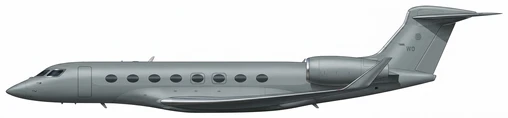
| Falcon 8X | Gulfstream G650 | |
|---|---|---|
| Origin country | 🇫🇷 France | 🇺🇸 United States |
| Category | Military Transport Aircraft | Military Transport Aircraft |
| Manufacturer | Dassault | Gulfstream |
| First flight | 6 February 2015 | 25 November 2009 |
| Year introduced | 2016 | 2012 |
| Number produced | 289 units | N/A |
| Average unit price | $50 million | $70 million |
| Wingspan | 26.3 m | 30.4 m |
| Height | 7.9 m | 7.7 m |
| Length | 24.5 m | 30.4 m |
| Maximum speed | 1111 km/h | 982 km/h |
| Operational range | 11,945 km | 13,890 km |
| Service ceiling | 15,545 m | 15,545 m |
| Max. takeoff weight | 33,113 kg | 45,360 kg |
| Empty weight | 16,693 kg | 25,401 kg |
| Total thrust | 3 x 3,059 kgf | 2 x 75 kN |
Detailed Comparison
Dassault’s Falcon 8X and Gulfstream’s G650 occupy the heavy-cabin segment of business jets adapted for military and government applications, specifically VIP transport and electronic warfare (EW). While Dassault builds on its trijet lineage to supply the French Air Force’s signals intelligence (SIGINT) requirements, Gulfstream relies on raw twin-engine thrust and greater internal volume to dominate the long-endurance special mission market.
Development and Design
Dassault developed the 8X as a 7X derivative, stretching the fuselage and reinforcing the landing gear to handle a 33,113 kg maximum takeoff weight (MTOW). The manufacturer retained the trijet configuration, utilizing three Pratt & Whitney Canada PW307-D engines. This layout provides redundancy for over-water operations and shorter field lengths. Gulfstream designed the G650 from a clean sheet, adopting a conventional low-wing, T-tail twinjet layout. Powered by two Rolls-Royce BR725 engines generating 75 kN of thrust each, the G650 accommodates a 45,360 kg MTOW. The Gulfstream fuselage is wider and longer, translating to heavier payload capacities for onboard electronics, consoles, and cooling systems required for military conversions.
Specifications and Performances
Gulfstream holds the advantage in absolute performance metrics. The G650 airframe outranges the 8X by nearly 2,000 kilometers (13,890 km versus 11,945 km) and cruises faster, pushing Mach 0.925 at its limit compared to the Dassault's Mach 0.90. Both platforms share a 15,545-meter (51,000-foot) service ceiling, a metric for avoiding commercial traffic and maximizing sensor line-of-sight in intelligence, surveillance, and reconnaissance (ISR) roles.
The Falcon 8X counters with a 8,700 kg lower empty weight and a $20 million lower unit cost ($50M vs $70M). Dassault's three 29.9 kN engines produce less total thrust (89.7 kN) compared to the G650's two 75 kN engines (150 kN total), limiting the 8X's capacity to carry heavy external radar arrays compared to the Gulfstream.
Deployment and usage
Military deployment of both platforms diverges based on payload requirements and national procurement.
- The Gulfstream G650 serves primarily in government VIP fleets, with operators like the Italian Air Force acquiring G650ERs for global transport. Gulfstream markets the airframe for high-endurance ISR modifications, building on the G550 CAEW's operational footprint.
- The Falcon 8X acts as a dedicated electronic warfare asset. The French Air Force selected the 8X for its Universal Electronic Warfare Capability (CUGE) "Archange" program to carry Thales SIGINT payloads, replacing the retired C-160G Gabriel fleet by 2028.
Conclusion
The Gulfstream G650 holds the edge for airborne early warning (AEW) and long-range VIP transport. Its 45,360 kg MTOW and 150 kN of combined thrust allow the integration of heavy, power-intensive radar arrays and extended fuel loads that the Dassault airframe cannot support. The Falcon 8X wins as a dedicated, cost-effective SIGINT platform. The $20 million lower acquisition cost, combined with trijet redundancy and adequate payload capacity for passive electronic interception gear, makes it the pragmatic choice for air forces requiring regional electronic intelligence rather than global airborne command posts.