Gulfstream G550 vs Gulfstream G650
Gulfstream G550 vs Gulfstream G650 at a glance — top speed 941 vs 982 km/h, range 12,500 vs 13,890 km, max takeoff weight 41,050 vs 45,360 kg.
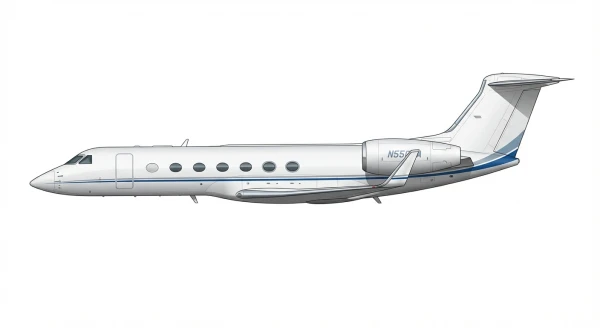
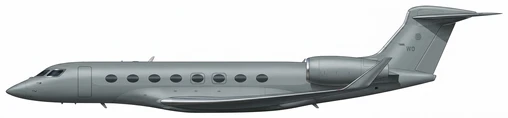
| Gulfstream G550 | Gulfstream G650 | |
|---|---|---|
| Origin country | 🇺🇸 United States | 🇺🇸 United States |
| Category | Military Transport Aircraft | Military Transport Aircraft |
| Manufacturer | Gulfstream | Gulfstream |
| First flight | 1 January 2003 | 25 November 2009 |
| Year introduced | 2004 | 2012 |
| Number produced | 600 units | N/A |
| Average unit price | $62 million | $70 million |
| Wing area | 106.0 m² | -- m² |
| Wingspan | 28.5 m | 30.4 m |
| Height | 7.7 m | 7.7 m |
| Length | 29.4 m | 30.4 m |
| Maximum speed | 941 km/h | 982 km/h |
| Operational range | 12,500 km | 13,890 km |
| Service ceiling | 15,545 m | 15,545 m |
| Max. takeoff weight | 41,050 kg | 45,360 kg |
| Empty weight | 20,956 kg | 25,401 kg |
| Total thrust | 2 x 6,690 kgf | 2 x 75 kN |
Detailed Comparison
The Gulfstream G550 and G650 occupy separate tiers in military aviation, divided by their modification histories rather than their baseline civilian flight characteristics. While both originated as long-range executive transports, defense contractors integrated complex electronic warfare and early warning radars into the G550, establishing it as a primary special-missions platform. The G650 remains confined to government VIP transport and aeromedical evacuation.
Development and Design
Gulfstream derived the G550 from the G-V series, certifying it in 2003 with aerodynamic refinements and Honeywell Primus Epic avionics. Its architecture proved highly adaptable to external modifications, allowing engineers to append conformal radomes, cheek fairings, and antenna arrays without destabilizing the airframe. The G650, introduced in 2012, is a clean-sheet design featuring a wider cabin, a swept wing optimized for Mach 0.85+ cruise, and upgraded Rolls-Royce BR725 engines. While the G650 provides more internal volume and thrust, its design philosophy prioritized civilian passenger comfort and high-subsonic efficiency over the structural modularity that made the G550 attractive to defense integrators.
Specifications and Performances
The G650 outperforms the G550 in raw kinematic metrics, carrying a heavier payload over longer distances at higher speeds. The G650’s maximum takeoff weight of 45,360 kg exceeds the G550 by 4,310 kg, supported by BR725 turbofans generating 75 kN of thrust per engine compared to the G550's 6,690 kgf BR710s. This translates to a 1,390 km range advantage (13,890 km vs 12,500 km) and a higher maximum speed (982 km/h vs 941 km/h). In military applications, the G550’s 41,050 kg MTOW provides sufficient margin for heavy sensor suites like the IAI EL/W-2085 radar, rendering the G650's excess capacity unnecessary for current payload requirements. Both aircraft share a 15,545 m service ceiling, keeping them above standard commercial traffic and weather during loiter operations.
Deployment and usage
The G550 operates extensively in frontline combat support. Defense contractors have converted the airframe into specialized variants across multiple domains:
- Israel utilizes G550 Eitam CAEW and SEMA variants for airspace management and electronic intelligence.
- The US Air Force deploys the EA-37B Compass Call for tactical electronic attack, replacing the EC-130H.
- Australia fields the MC-55A Peregrine for SIGINT and ELINT gathering.
- Italy operates the E-550A for airborne early warning.
The G650 lacks this combat footprint. Its military deployment is restricted to logistics and executive transport, such as the two G650ERs acquired by the Italian Air Force in 2025 for government personnel movement.
Conclusion
The G550 holds a definitive edge in special missions, electronic warfare, and airborne early warning. Its proven airframe modifications, established supply chains, and integration with IAI and L3Harris sensor packages make it the default choice for militaries seeking business-jet-sized ISR platforms. The G650 wins strictly in VIP and government transport. Its higher speed, wider cabin, and extended range offer utility for head-of-state logistics, but its lack of existing military-grade sensor integrations makes it an unproven and highly expensive option for tactical operations.