IAI Heron vs IAI Harop
IAI Heron vs IAI Harop at a glance — top speed 207 vs 417 km/h, range 1,000 vs 200 km.
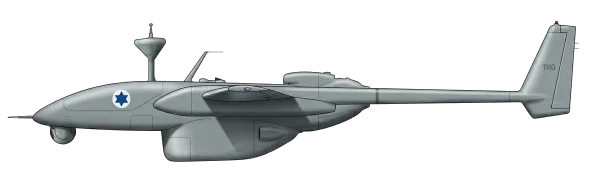
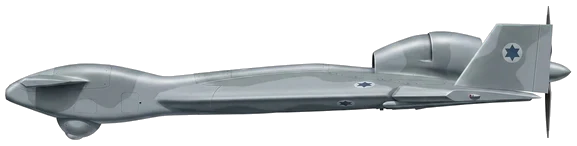
| IAI Heron | IAI Harop | |
|---|---|---|
| Origin country | 🇮🇱 Israel | 🇮🇱 Israel |
| Category | Military Drones | Military Drones |
| Manufacturer | IAI | IAI |
| First flight | 1 January 1994 | 1 January 2005 |
| Year introduced | 2005 | 2005 |
| Number produced | N/A | N/A |
| Average unit price | $9.5 million | $10 million |
| Wingspan | 16.6 m | 3.0 m |
| Length | 8.5 m | 2.5 m |
| Maximum speed | 207 km/h | 417 km/h |
| Operational range | 1,000 km | 200 km |
| Service ceiling | 10,000 m | 4,600 m |
| Max. takeoff weight | 1,270 kg | -- kg |
Detailed Comparison
Developed by Israel Aerospace Industries (IAI), the Heron and Harop fulfill divergent requirements in modern unmanned aerial warfare. The Heron operates as a persistent, medium-altitude intelligence, surveillance, and reconnaissance (ISR) node, providing brigade-level overwatch. Conversely, the Harop functions as an expendable loitering munition, designed to hunt and organically prosecute time-sensitive targets in contested airspace.
Development and Design
The Heron emerged in the mid-1990s as a medium-altitude long-endurance (MALE) platform, replacing first-generation UAVs like the Scout and Pioneer. Its design prioritizes sensor modularity over kinetic capability. The 1,270 kg MTOW airframe accommodates 250 kg of COMINT, ELINT, and synthetic aperture radar payloads. IAI evaluated arming the Heron under Project Cheetah, but the IDF ultimately maintained its strict ISR designation.
The Harop, introduced a decade later in 2005, evolved from the autonomous Harpy anti-radiation drone. IAI integrated an electro-optical sensor and a man-in-the-loop control data link, shifting the doctrine from purely autonomous radar-hunting to targeted strikes against moving or non-emitting targets. The Harop packages the sensor and the effector into a single canister-launched asset.
Specifications and Performances
Performance metrics dictate entirely different flight profiles. The Heron relies on a Rotax 914 engine to maintain a loiter speed of 207 km/h for up to 52 hours at 10,000 meters. This 35,000-foot ceiling keeps the airframe above man-portable air defense systems (MANPADS) while maintaining a direct line-of-sight data link for real-time artillery adjustment.
The Harop trades endurance for speed, low observability, and lethality. It cruises at 417 km/h with a 6-hour flight limit and a 200 km communication radius. Its physical footprint—a 2.5-meter length and a radar cross-section under 0.5 square meters—makes it difficult for early warning radars to track compared to the Heron's 16.6-meter wingspan. The Harop's terminal dive culminates in a 16 kg warhead detonating with a sub-meter circular error probable.
Deployment and usage
The IDF established decentralized UAV operations with the Heron during the 2008–2009 Gaza conflict, allocating squadrons directly to brigade combat teams rather than central command. Australia and Canada utilized leased Herons for route clearance overwatch in Afghanistan. Conversely, the Harop gained traction through Azerbaijani deployment in the 2016 and 2020 Nagorno-Karabakh conflicts, where forces utilized the munition to degrade Armenian armor and air defenses in freezing temperatures and GPS-jammed zones.
Combat deployments dictate their operational limits:
- Heron operators maintain persistent, multi-day surveillance over static borders or permissive maritime zones, as seen with Frontex Mediterranean operations.
- Harop operators exploit the low radar cross-section to penetrate contested airspace and destroy integrated air defenses, such as the 2018 strike on a Syrian SA-22 Greyhound.
- Indian forces utilized Harop munitions for immediate, precision cross-border strikes against infrastructure during the May 2025 border clashes.
Conclusion
The Heron holds the edge in low-intensity conflicts and permissive airspace where sustained, multi-spectrum intelligence gathering is required. Its 52-hour endurance provides unmatched, continuous situational awareness for ground forces. In conventional, high-intensity conflicts involving integrated air defense systems, the Harop is the superior asset. Its low observable profile, high speed, and kinetic capacity allow operators to physically dismantle anti-access/area denial (A2/AD) networks rather than simply observing them. As state-on-state warfare demands the immediate prosecution of fleeting targets, the expendable loitering munition doctrine outpaces unarmed MALE platforms.