NH90 / Caiman vs S-92 Superhawk
NH90 / Caiman vs S-92 Superhawk at a glance — top speed 300 vs 306 km/h, range 880 vs 850 km, built 471 vs 300 units.
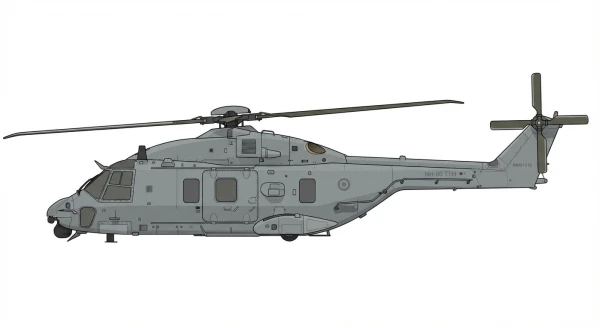
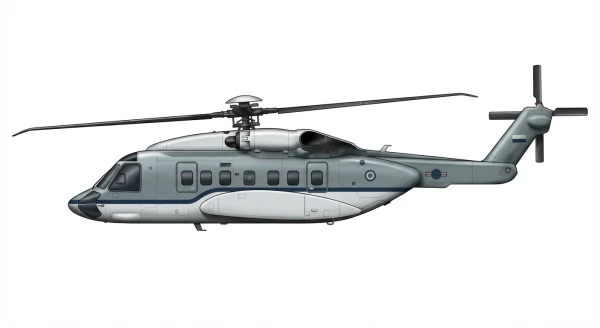
| NH90 / Caiman | S-92 Superhawk | |
|---|---|---|
| Origin country | 🇩🇪 Germany🇫🇷 France🇮🇹 Italy🇳🇱 Netherlands | 🇺🇸 United States |
| Category | Military Helicopters | Military Helicopters |
| Manufacturer | NHIndustries | Sikorsky |
| First flight | 18 December 1995 | 23 December 1998 |
| Year introduced | 2004 | 2004 |
| Number produced | 471 units | 300 units |
| Average unit price | $42 million | $32 million |
| Wingspan | 16.3 m | 17.2 m |
| Height | 5.3 m | -- m |
| Length | 19.6 m | -- m |
| Maximum speed | 300 km/h | 306 km/h |
| Operational range | 880 km | 850 km |
| Service ceiling | 6,000 m | 4,267 m |
| Max. takeoff weight | 10,600 kg | -- kg |
| Empty weight | 6,400 kg | 7,031 kg |
| Total thrust | 2 x 1,693 kW | -- |
Detailed Comparison
The NH90 was conceived from the outset as a dedicated NATO multi-role military asset, while the S-92 Superhawk is a military adaptation of a successful civilian helicopter designed for the offshore oil and gas industry. This fundamental difference in origin defines their respective characteristics. The NH90 is a specialized weapon system built for battlefield and naval environments, whereas the S-92 offers a robust, multi-purpose transport platform.
Development and Design
The NH90, a product of a European consortium, embodies a more advanced, purpose-built military design philosophy. Its key innovations are central to its military function:
- It was the first production helicopter with full fly-by-wire (FBW) controls, enhancing maneuverability and reducing pilot workload.
- Its diamond-shaped composite fuselage was engineered to produce the lowest radar signature in its class.
- An integrated infrared suppression system on its engine exhausts further reduces its sensory profile.
The S-92’s development leveraged the proven dynamic components of the S-70/H-60 family, prioritizing safety and reliability for its primary civilian mission. Its design is more conventional, featuring an aluminum airframe with composite elements. While its military variant, the H-92, incorporates FBW, the platform's core design reflects its transport origins with features like an active vibration control system for passenger comfort and a large cabin capable of holding standard cargo containers.
Specifications and Performances
While detailed performance metrics for the S-92 are not fully provided, key differences can be analyzed. The NH90 is a medium-lift helicopter with a maximum takeoff weight of 10,600 kg, powered by two engines producing a combined 3,386 kW. This results in a notable power-to-weight ratio, contributing to its strong climb rate of 11.2 m/s and agility. Its composite construction contributes to a lighter empty weight of 6,400 kg. The S-92 is a physically larger and heavier helicopter, designed to carry up to 22 troops or significant cargo, implying a higher MTOW and a focus on payload capacity over the tactical agility emphasized in the NH90's design.
Deployment and usage
The NH90 has been widely adopted by European and allied nations in two primary forms: the land-based Tactical Transport Helicopter (TTH) and the naval NATO Frigate Helicopter (NFH). The NFH is a highly specialized variant equipped for anti-submarine and anti-surface warfare. Despite its advanced capabilities, the NH90 program has been troubled by delivery delays, high maintenance demands, and durability concerns, leading some operators to plan for early retirement.
Conversely, the S-92 has seen its primary success in civilian and parapublic roles, especially search and rescue (SAR) with operators like the UK and Irish Coast Guard. Its military adoption has been more targeted. The Royal Canadian Air Force operates the highly modified CH-148 Cyclone for maritime operations, and the specialized VH-92 was selected for the U.S. presidential transport mission, underscoring the platform's perceived reliability and safety.
Conclusion
The comparison reveals a choice between a specialized, technologically advanced system and a proven, adaptable workhorse. The NH90 offers state-of-the-art military features like stealth characteristics and integrated FBW controls, but this complexity comes at a higher price ($42M vs $32M) and has resulted in significant in-service challenges. The S-92, derived from a robust civilian design, provides a reliable and spacious transport solution that has been successfully militarized for specific, demanding roles like maritime patrol and VIP transport. The selection between the two depends heavily on an operator's specific mission requirements, budget, and tolerance for the risks associated with a complex, purpose-built military platform versus a versatile civil-derived airframe.