Mi-8 Hip vs NH90 / Caiman
Mi-8 Hip vs NH90 / Caiman at a glance — top speed 250 vs 300 km/h, range 495 vs 880 km, max takeoff weight 12,000 vs 10,600 kg, built 17,000 vs 471 units.
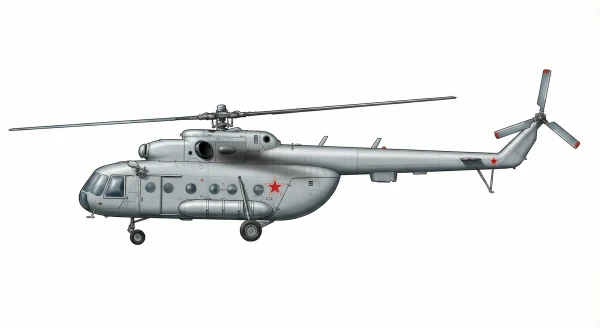
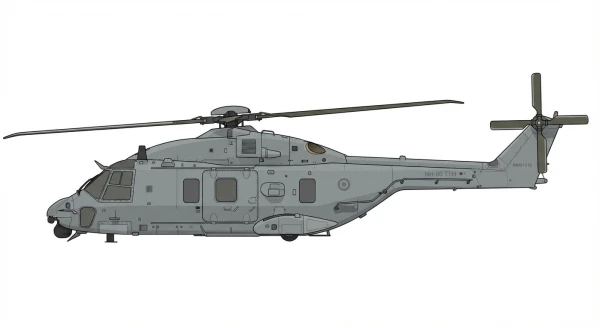
| Mi-8 Hip | NH90 / Caiman | |
|---|---|---|
| Origin country | 🇷🇺 Ex-USSR | 🇩🇪 Germany🇫🇷 France🇮🇹 Italy🇳🇱 Netherlands |
| Category | Military Helicopters | Military Helicopters |
| Manufacturer | Mil | NHIndustries |
| First flight | 24 June 1961 | 18 December 1995 |
| Year introduced | 1967 | 2004 |
| Number produced | 17000 units | 471 units |
| Average unit price | $4 million | $42 million |
| Wingspan | 21.3 m | 16.3 m |
| Height | 5.7 m | 5.3 m |
| Length | 25.2 m | 19.6 m |
| Maximum speed | 250 km/h | 300 km/h |
| Operational range | 495 km | 880 km |
| Service ceiling | 4,500 m | 6,000 m |
| Max. takeoff weight | 12,000 kg | 10,600 kg |
| Empty weight | 7,160 kg | 6,400 kg |
| Total thrust | 2 x 1,119 kW | 2 x 1,693 kW |
Detailed Comparison
The Mi-8 Hip and the NH90 are medium twin-turbine helicopters that illustrate a stark contrast between Soviet-era mass-produced utility and modern, specialized Western European design. The Mi-8 is a robust, ubiquitous transport helicopter with a vast production run and extensive combat history, while the NH90 is a technologically advanced, multi-role platform featuring fly-by-wire controls and extensive use of composites, built for specific NATO operational requirements.
Development and Design
The Mi-8's design philosophy prioritizes simplicity, ruggedness, and versatility. Originating in the early 1960s, its conventional aluminum airframe and mechanical flight controls were designed for mass production and ease of maintenance in austere conditions. Its large, unobstructed cabin is its defining feature, allowing it to be easily configured for troop transport, cargo, or as a gunship. The platform’s longevity is a testament to its successful core design, which has been incrementally updated through numerous variants rather than redesigned.
In contrast, the NH90 was conceived as a high-technology replacement for a generation of NATO helicopters. A key innovation is its full fly-by-wire flight control system, a first for a production helicopter, which reduces pilot workload and integrates with advanced mission systems. Its diamond-shaped fuselage is made largely of composite materials, reducing its radar cross-section. This focus on advanced technology, while providing significant capability, has also resulted in a complex system with high maintenance demands and significant development and acquisition costs.
Specifications and Performances
While both are twin-engine helicopters, their performance metrics reflect their different eras and design goals. The NH90 offers superior flight performance, with a higher maximum speed (300 km/h vs. 250 km/h) and more than double the range (880 km vs. 425 km) of the basic Mi-8. This is driven by its significantly more powerful engines, which deliver a combined 1693 kW per unit, compared to the Mi-8's 1119 kW. However, the Mi-8's larger airframe and higher maximum takeoff weight (12,000 kg vs. 10,600 kg) allow it to carry a larger payload, including up to 24 troops, compared to the NH90 TTH's 20. The NH90's design incorporates stealthier features and advanced avionics from the outset, whereas the Mi-8 relies on bolt-on armor and countermeasures for survivability.
Deployment and usage
The Mi-8 has one of the most extensive operational histories of any aircraft. Serving with over 50 nations, it has been a workhorse in conflicts from the Soviet-Afghan War to the current war in Ukraine, primarily as a transport and utility asset. Its armed variants provide fire support, but it remains a transport helicopter at its core, and has proven vulnerable to modern anti-aircraft threats.
The NH90's deployment is more specialized, focused on NATO and allied nations. It operates in two main configurations: the Tactical Transport Helicopter (TTH) for land forces and the NATO Frigate Helicopter (NFH) for naval operations. The NFH is a dedicated anti-submarine (ASW) and anti-surface warfare (ASuW) platform. The NH90's service has been marked by operational challenges related to maintenance, reliability, and high running costs, leading several operators to question its long-term viability despite its advanced capabilities.
Conclusion
The comparison between the Mi-8 Hip and the NH90 is a case of quantity and reliability versus quality and specialization. The Mi-8 is a proven, cost-effective ($4.0 million), and adaptable platform whose value lies in its sheer numbers and operational simplicity. The NH90, at over ten times the price ($42.0 million), represents a leap in helicopter technology, offering superior performance and specialized mission capabilities, particularly for naval warfare. However, this technological sophistication comes with significant acquisition and sustainment costs. The choice reflects a fundamental divide: the Mi-8 is a globally available utility tool, while the NH90 is a high-end military system for well-funded forces with specific, complex requirements.