NH90 / Caiman
European multinational medium-sized military helicopter, known for deployment in various peace-keeping and combat missions since the 1990s. Key figures: top speed 300 km/h, range 880 km, service ceiling 6,000 m, max takeoff weight 10,600 kg, unit price $42M, built 471. In service with 12 air forces as of 2026 — Italy (114), Germany (101), France (90) and 9 others.
| Crew | 1–3 |
| Length | 19.6 m (64.2 ft) |
| Wingspan | 16.3 m (53.5 ft) |
| Height | 5.3 m (17.4 ft) |
| Empty weight | 6,400 kg (14,110 lbs) |
| Max. takeoff weight | 10,600 kg (23,369 lbs) |
| Powerplant | 2 × turboshafts Rolls-Royce-Turbomeca RTM322 1,693 kW each |
| Maximum speed | 300 km/h (186 mph) |
| Operational range | 880 km (547 mi) |
| Service ceiling | 6,000 m (19,685 ft) |
| Climb rate | 11.2 m/s (36.7 ft/s) |
-
 Italy
114
Italy
114
-
 Germany
101 +30
Germany
101 +30
-
 France
90 +17
France
90 +17
-
 Qatar
28
Qatar
28
-
 Spain
25 +49
Spain
25 +49
-
 Finland
20
Finland
20
-
 Greece
20
Greece
20
-
 Netherlands
19 +3
Netherlands
19 +3
-
 Oman
18
Oman
18
-
 Sweden
18
Sweden
18
-
 New Zealand
8
New Zealand
8
-
 Belgium
4
Belgium
4
Recent Events — NH90 / Caiman
3 events →

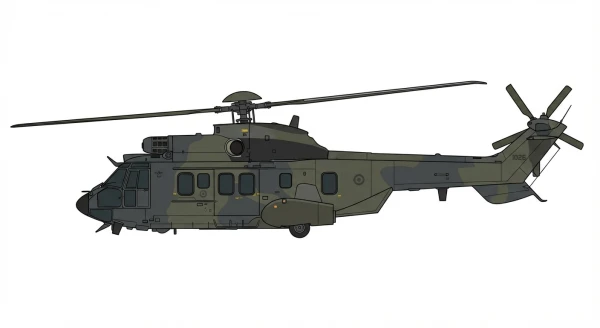
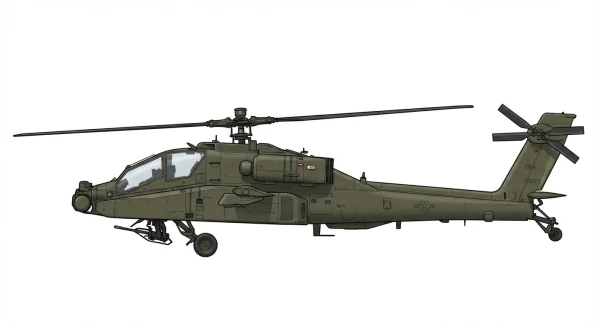
Description
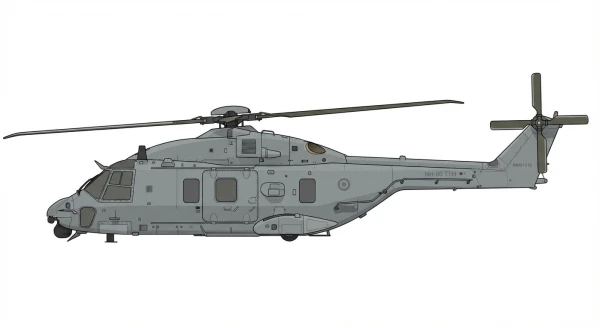
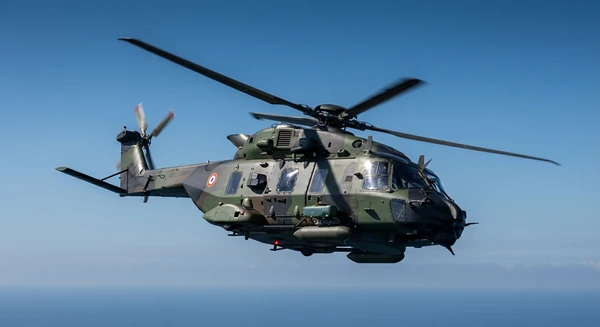
The NHIndustries NH90 is a medium-class twin-turbine multirole military helicopter, developed and produced by the European consortium NHIndustries (Airbus Helicopters France and Deutschland, Leonardo/AgustaWestland, GKN Fokker). The first production helicopter fitted with fully fly-by-wire flight controls, it comes in two main models: the land-based Tactical Transport Helicopter (TTH), able to carry 20 troops, and the naval NATO Frigate Helicopter (NFH), dedicated to anti-submarine warfare and rescue. Entering operational service in 2007, it equips some fifteen countries and has drawn persistent criticism for its delays, operating costs and low availability, leading Norway and Australia to part with it.
Development
In 1985, France, West Germany, Italy, the Netherlands and the United Kingdom joined forces to develop a transport and anti-ship/anti-submarine helicopter for NATO; the United Kingdom left the programme in 1987. NHIndustries signed the design and development contract with NAHEMA on 1 September 1992, Portugal joining the agency in June 2001. The first prototype, PT1, flew on 18 December 1995; on 12 December 2002 PT3 became the first helicopter to fly on fly-by-wire controls alone after removal of the mechanical back-ups. In June 2000, the partner states ordered 366 aircraft for 8.6 billion dollars. The TTH and NFH share about 75% commonality, each customer imposing its own configuration. Assembly lines are spread between Marignane, Donauwörth, Tessera, Albacete, Halli (Finland, closed in 2016) and Brisbane. Production peaked at 53 aircraft in 2014; the 500th was delivered to the French Army in 2023. By March 2024, 515 airframes had been delivered in 24 configurations to 14 countries.
Design
The airframe is made of composite materials, with four composite main rotor blades, ballistic tolerance and crashworthiness. The quadruplex fly-by-wire flight control system is coupled to a four-axis autopilot and to the mission and navigation systems. The powerplant is the customer's choice: Rolls-Royce Turbomeca RTM322 or General Electric CT7-8F, with infrared exhaust suppressors. The flight envelope covers −40 °C to +50 °C up to 20,000 feet. The Thales avionics include a full glass cockpit, the TopOwl helmet-mounted sight, IFF, FLIR, weather radar and Link 11 and 16 datalinks. Naval versions receive the Harpoon deck-lock system, automatic folding of the blades and tail boom, a HELRAS dipping sonar and sonobuoy processing. The Standard 3 version, delivered from December 2024, raises the maximum weight to 11 tonnes.
Armament
Armament comprises two door-mounted machine guns; Oman uses 20 mm gun pods instead. The TTH can carry 20 mm gun pods and rocket pods, the NFH MU90 torpedoes and air-to-surface and anti-submarine missiles. Payload capacity reaches 2,500 kg of internal cargo or 4,200 kg on the sling.
Operational History
The German Army received the first production examples in December 2006 and deployed up to four TTHs to Afghanistan in 2013 for medical evacuation; Italy committed five TTHs there in 2012. The Royal Netherlands Navy, the first NFH customer in April 2010, deployed the type against piracy in the Gulf of Aden from HNLMS De Ruyter in 2013. French NH90s have performed rescues at sea since 2011 and were deployed to Mali in November 2014. Norway terminated its contract in June 2022 and in November 2025 obtained a settlement of 305 million euros in return for handing back the aircraft. Australia withdrew its 46 MRH-90 Taipans in September 2023 after two accidents. Other customers: Belgium, Finland, Greece, New Zealand, Oman, Qatar, Spain, Sweden.
Variants
- NH90 TTH: land-based tactical transport version for 20 troops or 12 stretchers, also used for special operations, MEDEVAC and VIP transport.
- NH90 NFH: shipborne naval version for ASW and anti-surface warfare, with folding tail and rotor and reinforced undercarriage.
- NH90 Sea Lion: German derivative of the NFH with a reduced sensor fit, dedicated to SAR and VERTREP, in service since June 2020.
- NH90 Sea Tiger: German NFH variant for ASW and ASuW, 31 ordered in 2020.
- Helikopter 14 (HKP 14): Swedish version with a high cabin (1.82 m), in land-based HKP 14E and naval HKP 14F versions, nine of each.
Frequently Asked Questions
What type of aircraft is the NH90 / Caiman?
What is the maximum speed of the NH90 / Caiman?
What is the range of the NH90 / Caiman?
When did the NH90 / Caiman first fly?
How many NH90 / Caiman have been built?
Which countries operate the NH90 / Caiman?
How much does a NH90 / Caiman cost?
What is the service ceiling of the NH90 / Caiman?
- AUG 302026 Updated Description updated
- AUG 52026 Updated Powerplant updated in a site-wide editorial pass
- AUG 32026 Updated Description updated
- APR 72026 Updated Sources and cross-references refreshed
- FEB 72026 Updated Ceiling added