RC-135 Rivet Joint vs Saab 340 AEW&C
RC-135 Rivet Joint vs Saab 340 AEW&C at a glance — top speed 933 vs 522 km/h, range 5,552 vs 1,300 km, built 32 vs 12 units.
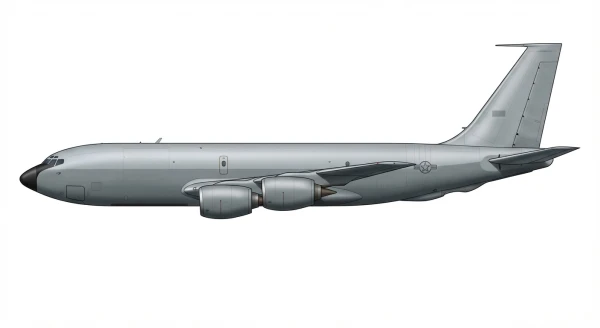
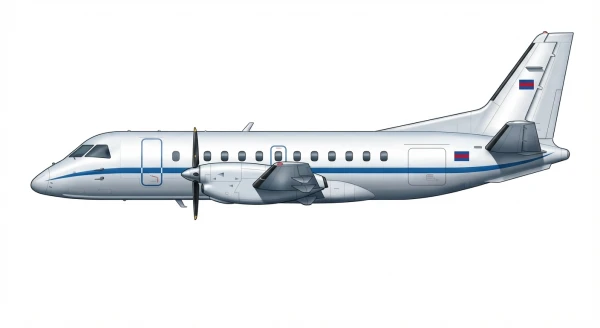
| RC-135 Rivet Joint | Saab 340 AEW&C | |
|---|---|---|
| Origin country | 🇺🇸 United States | 🇸🇪 Sweden |
| Category | Military Special Mission Aircraft | Military Special Mission Aircraft |
| Manufacturer | Boeing | Saab |
| First flight | 1 January 1972 | 1 January 1994 |
| Year introduced | 1961 | 1997 |
| Number produced | 32 units | 12 units |
| Average unit price | -- | -- |
| Wing area | -- m² | 42.0 m² |
| Wingspan | 39.9 m | 21.4 m |
| Height | -- m | 7.0 m |
| Length | -- m | 20.6 m |
| Maximum speed | 933 km/h | 522 km/h |
| Operational range | 5,552 km | 1,300 km |
| Service ceiling | 15,240 m | 7,620 m |
| Max. takeoff weight | -- kg | 13,155 kg |
| Empty weight | 56,245 kg | 10,300 kg |
| Total thrust | -- | 2 x 1,390 kW |
Detailed Comparison
The Boeing RC-135 Rivet Joint and the Saab 340 AEW&C execute distinct airborne intelligence and command missions. The RC-135 is a strategic signals intelligence (SIGINT) and electronic intelligence (ELINT) platform designed for long-endurance, passive data collection. The Saab 340 is a regional airborne early warning and control (AEW&C) asset, built to provide active radar coverage for tactical airspace management.
Development and Design
The RC-135 originated from a 1960s United States Air Force requirement to replace the RB-50 Superfortress. Built on the heavy C-135 jet airframe, the platform has undergone continuous modernization, transitioning from J57 turbojets to CFM-56 turbofans and integrating a digital glass cockpit. Its architecture is defined by the need to carry heavy, complex sensor arrays, most visibly the AN/ASD-1 ELINT system housed in forward fuselage cheek pods.
Saab developed the 340 AEW&C in the 1990s by marrying a commercial commuter turboprop with the PS-890 Erieye radar. Saab bypassed the traditional rotating radome in favor of a fixed, dorsal-mounted Active Electronically Scanned Array (AESA). This design reduces aerodynamic drag and weight but introduces geometric limitations:
- A 120-degree field of view on each side of the fuselage
- Radar blind spots directly forward and aft of the airframe
Specifications and Performances
The RC-135’s 56,245 kg empty weight dictates its operational profile. It requires high altitudes—a 15,240 m service ceiling—to maximize the line-of-sight for its passive receivers. A maximum speed of 933 km/h and a 5,552 km range enable rapid, inter-theater deployment, while its 12-hour endurance sustains prolonged orbits over collection targets.
The Saab 340 operates in a constrained flight envelope. Its twin General Electric CT7-9B turboprops limit the aircraft to a 7,620 m service ceiling and a 522 km/h maximum speed. This lower altitude inherently reduces its radar horizon compared to larger, jet-powered AEW platforms. With a 1,300 km range and 5-hour endurance, the Saab 340 remains geographically tethered to its immediate theater.
Deployment and usage
Operated exclusively by the US Air Force and the Royal Air Force, the RC-135 has participated in every US air campaign since Vietnam. It conducts stand-off intelligence gathering, recently flying sustained orbits near Kaliningrad and the Polish border during the 2022 Russian invasion of Ukraine to map Russian electromagnetic signatures and troop movements.
The Saab 340 AEW&C supplies the export market for middle-tier air forces requiring localized airspace control. Originally fielded by Sweden, it has seen service in Thailand and the UAE. Poland purchased two airframes in 2023, and Sweden transferred two units to Ukraine in 2024 to provide an immediate, lower-maintenance radar picture against low-flying cruise missiles and aircraft.
Conclusion
The RC-135 holds the edge in strategic, theater-level intelligence collection. Its altitude, endurance, and heavy payload capacity make it the required platform for global powers needing to map adversary electromagnetic spectrums from stand-off distances. The Saab 340 AEW&C wins in the regional defense market. It provides an active AESA radar platform for localized airspace management at a fraction of the procurement and operating costs of a heavy jet AWACS, making it the practical choice for nations focused strictly on border defense.