Tecnam P2002 vs Pipistrel Virus SW80
Tecnam P2002 vs Pipistrel Virus SW80 at a glance — top speed 250 vs 283 km/h, range 1,092 vs 1,450 km, max takeoff weight 598 vs 600 kg.
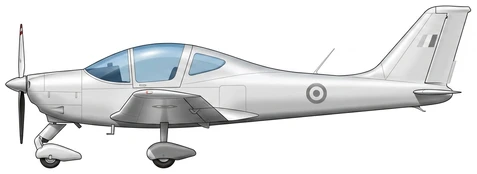

| Tecnam P2002 | Pipistrel Virus SW80 | |
|---|---|---|
| Origin country | 🇮🇹 Italy | 🇸🇮 Slovenia |
| Category | Military Training Aircraft | Military Training Aircraft |
| Manufacturer | Tecnam | Pipistrel |
| First flight | -- | 10 August 1999 |
| Year introduced | 2002 | 2000 |
| Number produced | N/A | 1000 units |
| Average unit price | -- | -- |
| Wing area | 11.5 m² | 9.5 m² |
| Wingspan | 8.6 m | 10.7 m |
| Height | 2.4 m | 1.9 m |
| Length | 6.6 m | 6.5 m |
| Maximum speed | 250 km/h | 283 km/h |
| Operational range | 1,092 km | 1,450 km |
| Service ceiling | 3,995 m | 6,800 m |
| Max. takeoff weight | 598 kg | 600 kg |
| Empty weight | 331 kg | 289 kg |
| Total thrust | 1 x 74 kW | 1 x 60 kW |
Detailed Comparison
The Italian Tecnam P2002 and the Slovenian Pipistrel Virus SW80 operate in the ultra-low-cost military flight screening and ab-initio training market. While air forces historically utilized turboprops for basic training, budget constraints compel militaries to procure commercial-off-the-shelf light sport aircraft to filter pilot candidates before assigning them to high-cost airframes. Both utilize Rotax 912 engine variants to compress cost per flight hour, but their structural and aerodynamic approaches diverge.
Development and Design
The Tecnam P2002 applies conventional military trainer ergonomics via an all-metal, low-wing monoplane configuration and a bubble canopy. Tecnam stressed the airframe to +6g and -3g, allowing it to tolerate the heavy-handed control inputs of student pilots.
The Pipistrel Virus SW80 evolved from a motor-glider origin, employing a high-wing, pod-and-boom configuration with a T-tail and air brakes. Pipistrel integrates a ballistic parachute recovery system into the airframe. Later EASA-certified iterations, such as the SW 121, introduced dual redundant ADAHRS and haptic stall warnings to provide glass-cockpit familiarization.
Specifications and Performances
Operating with a 60 kW Rotax 912 UL engine against the P2002’s 73.5 kW Rotax 912 S2, the Virus SW80 records higher metrics across the primary flight envelope. The Pipistrel’s aerodynamic profile and 289 kg empty weight—compared to the Tecnam's 331 kg—yield a maximum speed of 283 km/h, a 1450 km range, and an 8.4 m/s climb rate. The P2002 reaches 250 km/h with a 6.2 m/s climb. The Virus reaches a service ceiling of 6800 m, exceeding the P2002's 3995 m limit and granting instructors more vertical airspace for maneuver training.
Deployment and usage
Militaries deploy these types strictly for candidate screening rather than tactical instruction. The Hellenic Air Force operates the P2002-JF at Tatoi for initial pilot selection. In October 2025, a Hellenic Air Force P2002 crashed at Tatoi Airport, injuring both pilots.
India procured 194 Virus SW80 aircraft, designated "Garud", distributed among three branches:
- 110 units for the National Cadet Corps
- 72 units for the Indian Air Force
- 12 units for the Indian Navy
The Indian Air Force utilizes the Garud for basic flight safety training and airfield bird monitoring. During an engine failure in January 2026 near Bamrauli, a Garud crew deployed the airframe's ballistic parachute to execute a forced landing, with both pilots walking away uninjured.
Conclusion
The Tecnam P2002 holds the edge for air forces requiring a direct ergonomic stepping stone to primary trainers. Its low-wing configuration, bubble canopy, and heavier control feel provide a mechanical filter for fast-jet candidates moving toward platforms like the T-6 Texan II.
The Pipistrel Virus SW80 holds the edge for mass-scale cadet familiarization and general aviation screening. Its higher flight performance combined with the ballistic recovery parachute reduces the fatality risk associated with low-altitude student errors. The P2002 is the correct tool for standardizing fighter-track students, while the SW80 scales more safely for broad initial screening.