Ivory Coast (ranked #120 globally) holds a stronger overall military position than Guinea (#123) on the ARMS Index. Ivory Coast fields 27,000 active troops — 2.1:1 Guinea's 13,000. Ivory Coast allocates $0.7B to defense compared to $0.5B for Guinea.
Six-pillar composite: manpower, ground forces, naval power, air power, nuclear deterrent and defense budget, with a readiness modifier from budget per soldier. Full methodology.
Pillar
Weight
Score
Basis
Manpower
15%
54.5
27400 effective
Ground forces
20%
21.6
5 main battle tanks
Naval power
20%
0.0
Carrier tiers, nuclear vs conventional submarines
Air power
25%
15.4
Weighted by aircraft type & fleet age
Nuclear deterrent
10%
0.0
No declared capability
Defense budget
10%
30.6
$697M, PPP-adjusted
Readiness
modifier
×0.97
Budget per soldier
🇬🇳 Guinea
World #123
15.6/ 100
Six-pillar composite: manpower, ground forces, naval power, air power, nuclear deterrent and defense budget, with a readiness modifier from budget per soldier. Full methodology.
🇨🇮 Ivory Coast: Focuses on counter-terrorism and securing northern borders against Sahelian militancy, pursuing strategic autonomy and force modernization following the reduction of the permanent French military presence.
🇬🇳 Guinea: Prioritizes internal stability, regime survival, and border defense, pivoting away from traditional Western security frameworks toward junta-led regional states and Russian partnerships.
OPV 45 patrol vessels, sustained Gulf of Guinea ops
Triton 850 fast intervention boats, coastal focus
🇨🇮
Tech & ISR
Ground Master 200 radars, dedicated Cyber (ANSSI)
High reliance on foreign advisors, limited organic ISR
🇨🇮
3. Scenario: First 7 Days of War
A diplomatic breakdown over cross-border militant pursuit triggers armed skirmishes between border garrisons. In the first 48 hours, Guinea deploys its elite Special Forces Group (GPS) and Streit armored formations to seize strategic border crossings. Ivory Coast rapidly activates its Northern Operational Zone (ZON) command, utilizing Ground Master 200 radars and UAVs to map Guinean deployments. By Day 4, Ivory Coast leverages its superior air availability, deploying Mi-24s to interdict Guinean supply lines, while Guinea's aging Su-25s struggle to mount consistent sorties. On Days 5 through 7, Ivorian infantry, supported by reliable Cobra II mobility and French-trained Commando Delta units, execute a coordinated counter-offensive. Guinea falls back to fortified defensive positions, relying on Russian technical advisors to stabilize strained command and control networks.
Outcome: Ivory Coast achieves tactical overmatch through superior logistics, air support, and operational integration, forcing Guinea onto the defensive.
4. Wildcards
🏴☠️ Jihadist Exploitation: A bilateral conflict would deplete northern garrisons, allowing Sahel-based militants to launch opportunistic incursions that could force both nations into a premature ceasefire.
🇷🇺 Foreign Paramilitary Support: Guinea’s growing integration with Russia’s Africa Corps could provide rapid, asymmetric advantages in intelligence, electronic warfare, or direct mercenary combat support.
🏛️ Regime Fragility: Guinea’s junta-led government faces acute domestic instability; early battlefield setbacks could trigger internal military fracturing or a subsequent coup in Conakry.
5. Verdict
Ivory Coast holds a decisive conventional advantage driven by a larger defense budget, superior equipment readiness, and a professionalized, modernizing force structure. Guinea’s military capacity is severely constrained by its preoccupation with internal regime security, reliance on aging Soviet-era hardware, and recent defective procurements.
Short War
Long War
Conventional
🇨🇮 Ivory Coast advances
🇨🇮 Ivory Coast dictates terms
Hybrid/Asymmetric
⚖️ Border stalemate
🇬🇳 Guinea fractures internally
This analysis is a speculative scenario generated by artificial intelligence for informational and entertainment purposes only. It does not constitute a military assessment and should not be interpreted as a prediction of any real-world outcome.
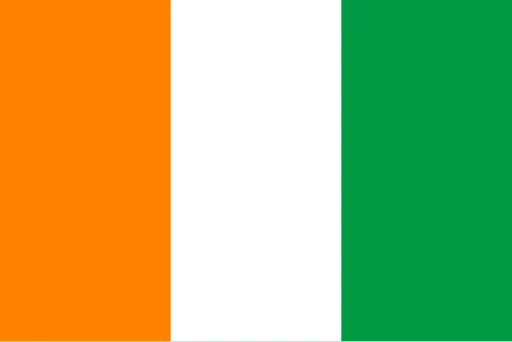 Ivory Coast vs
 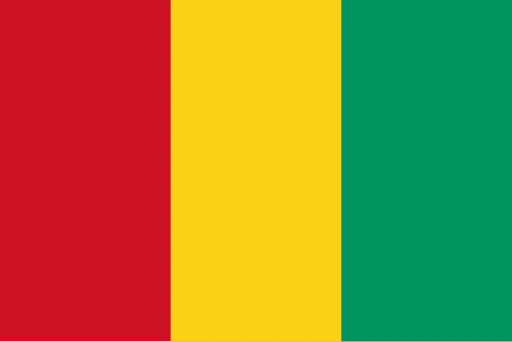 Guinea