Kenya (ranked #74 globally) holds a stronger overall military position than Ethiopia (#76) on the ARMS Index. Ethiopia fields 138,000 active troops — 5.8:1 Kenya's 24,000. Ethiopia allocates $1B to defense compared to $1.3B for Kenya.
Six-pillar composite: manpower, ground forces, naval power, air power, nuclear deterrent and defense budget, with a readiness modifier from budget per soldier. Full methodology.
Pillar
Weight
Score
Basis
Manpower
15%
81.3
503000 effective
Ground forces
20%
67.1
338 main battle tanks
Naval power
20%
0.0
Carrier tiers, nuclear vs conventional submarines
Air power
25%
37.5
Weighted by aircraft type & fleet age
Nuclear deterrent
10%
0.0
No declared capability
Defense budget
10%
42.0
$1B, PPP-adjusted
Readiness
modifier
×0.80
Budget per soldier
🇰🇪 Kenya
World #74
29.2/ 100
Six-pillar composite: manpower, ground forces, naval power, air power, nuclear deterrent and defense budget, with a readiness modifier from budget per soldier. Full methodology.
🇪🇹 Ethiopia: Prioritize internal stability, secure sovereign maritime access in the Red Sea, and safeguard vital infrastructure (GERD) while pivoting toward non-Western strategic partnerships (BRICS, China, Russia) for military hardware.
🇰🇪 Kenya: Maintain territorial integrity and maritime security in the Indian Ocean, leveraging its Major Non-NATO Ally status and tech-centric modernization to counter regional asymmetric threats and project stabilizing influence.
2. Combat Power Snapshot
Domain
Ethiopia
Kenya
Edge
Air Power
Su-27/30 fighters, heavy reliance on diverse combat UAVs (TB2, Wing Loong)
F-5 Tiger II fleet, Spyder AD integration, light ISR/attack focus
🇪🇹
Ground Forces
Massive infantry scale (~500k), T-72/62 MBTs, heavy artillery, battle-hardened
Smaller professional force (~50k), legacy Vickers MBTs, elite counter-terror units
🇪🇹
Naval
Landlocked, reconstituting a naval force reliant on external basing agreements
Established coastal defense, naval shipyards, active Indian Ocean patrols
🇰🇪
Cyber & Tech
Traditional warfare focus, limited indigenous advanced electronics
Dedicated Cyber Command, international cyber recognition, AI-integrated ISR
🇰🇪
3. Scenario: First 7 Days of War
A border dispute over proxy alignments in the arid frontier triggers a rapid conventional escalation.
On Days 1–2, Ethiopia leverages its overwhelming manpower and artillery advantage (SH-15, BM-21) to breach the border, supported by Su-27 airstrikes. Kenya responds by activating Spyder air defense batteries and dispersing its ground forces.
By Days 3–4, Kenya's Cyber Team disrupts Ethiopian command-and-control nodes, while Kenyan Special Operations Regiments launch asymmetric counter-attacks on stretched Ethiopian supply lines.
During Days 5–7, Ethiopia's mechanized advance bogs down; Kenya utilizes Western-supplied ISR and its own TB2 UAVs to isolate Ethiopian vanguard units, forcing a tactical pause.
Outcome: Ethiopia's numerical superiority secures initial territorial gains, but Kenya's qualitative tech edge and agile defense force a rapid, costly stalemate.
4. Wildcards
🌪️ Internal Fragmentation: Ethiopia's ongoing internal insurgencies (OLA, Fano) constantly threaten to sabotage rear logistics and fracture command cohesion, severely limiting its capacity to sustain an external war.
🌐 Great Power Intervention: Kenya’s status as a Major Non-NATO Ally and its hosting of British forces (BATUK) virtually guarantee rapid Western intelligence, cyber support, and resupply, countering Ethiopia's Sino-Russian hardware pipeline.
🏴☠️ Asymmetric Proxies: Both states could weaponize regional insurgent groups (such as al-Shabaab or cross-border militias) to destabilize the adversary's frontier without committing conventional forces.
5. Verdict
Ethiopia possesses overwhelming conventional mass, heavier armor, and air superiority, but internal ethnic divisions and logistical constraints blunt its expeditionary capability. Kenya fields a smaller, professional, and technologically forward force optimized for defense and asymmetric warfare, ensuring it can absorb an initial shock and effectively disrupt a brute-force offensive.
Short War
Long War
Conventional
🇪🇹 Ethiopia gains ground
⚖️ Logistical stalemate
Hybrid/Asymmetric
🇰🇪 Kenya disrupts C2
🌪️ Both face internal fracturing
This analysis is a speculative scenario generated by artificial intelligence for informational and entertainment purposes only. It does not constitute a military assessment and should not be interpreted as a prediction of any real-world outcome.
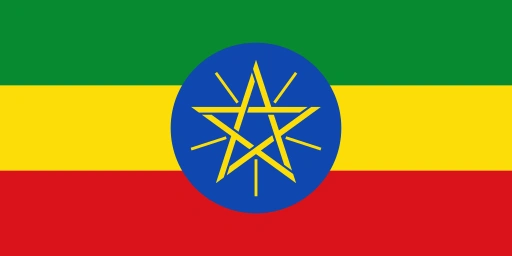 Ethiopia vs
 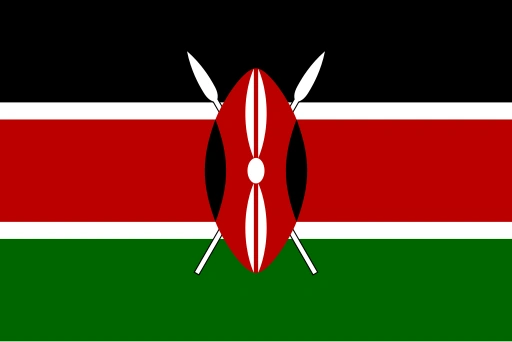 Kenya
Kenya