Su-27 Flanker
Soviet-originated multirole fighter, distinguished for deployments during the Cold War, globally utilized in air superiority missions. Key figures: top speed 2,500 km/h, range 3,530 km, service ceiling 18,500 m, max takeoff weight 30,000 kg, unit price $30M, built 680. In service with 11 air forces as of 2026 — Russia (468), Vietnam (46), Kazakhstan (40) and 8 others.
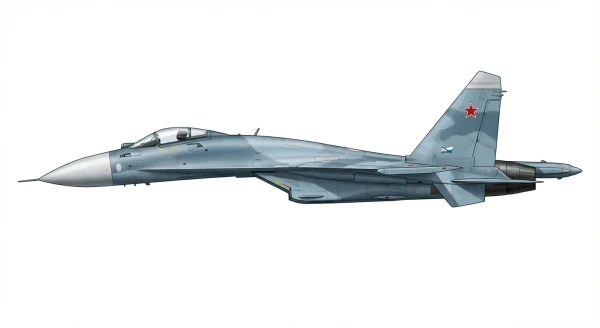
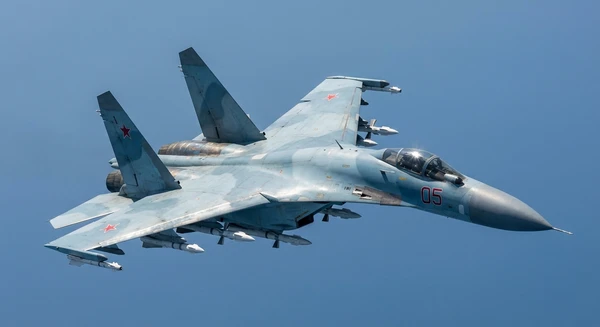
| Crew | 1 |
| Length | 21.9 m (72.0 ft) |
| Wingspan | 14.7 m (48.2 ft) |
| Height | 5.9 m (19.5 ft) |
| Wing area | 62.0 m² (667.8 sqft) |
| Empty weight | 16,300 kg (35,935 lbs) |
| Max. takeoff weight | 30,000 kg (66,139 lbs) |
| Powerplant | 2 × turbofans Saturn AL-31F 12,502 kgf each |
| Ejection seat | Zvezda K-36DM |
| Maximum speed | 2500 km/h (Mach 2.5) |
| Operational range | 3,530 km (2,193 mi) |
| Service ceiling | 18,500 m (60,696 ft) |
| Climb rate | 300.0 m/s (984.3 ft/s) |
| Takeoff distance | 650 m (2,133 ft) |
-
 Russia
468 +15
Russia
468 +15
-
 Vietnam
46
Vietnam
46
-
 Kazakhstan
40 +3
Kazakhstan
40 +3
-
 China
32
China
32
-
 Uzbekistan
25
Uzbekistan
25
-
 Ukraine
23
Ukraine
23
-
 Ethiopia
20
Ethiopia
20
-
 Indonesia
16
Indonesia
16
-
 Eritrea
2
Eritrea
2
-
 Angola
1
Angola
1
-
 Belarus
1
Belarus
1
- Air-to-Air Long-Range Vympel R-27 / K-27 (AA-10 Alamo)
- Air-to-Air Short-Range Vympel R-73 (AA-11 Archer)
Recent Events — Su-27 Flanker
31 events →-
APR 172026
 Russia
×2
First Su-35S batch of 2026 delivered by UAC from Komsomolsk-on-Amur; estimated two aircraft handed over to Russian Aerospace Forces.
Delivered
Russia
×2
First Su-35S batch of 2026 delivered by UAC from Komsomolsk-on-Amur; estimated two aircraft handed over to Russian Aerospace Forces.
Delivered
-
MAR 92026
 Ukraine
Su-27 shot down by Russian Su-35S using R-37M missile over Eastern Ukraine; 39th TAB commander killed.
Shot down
Ukraine
Su-27 shot down by Russian Su-35S using R-37M missile over Eastern Ukraine; 39th TAB commander killed.
Shot down
-
FEB 252026
 Kazakhstan
Su-30SM crashed during training near Balkhash, Karaganda Region; both pilots ejected safely.
Crash
Kazakhstan
Su-30SM crashed during training near Balkhash, Karaganda Region; both pilots ejected safely.
Crash
-
JAN 292026
Russia
Su-30SM reportedly shot down over Black Sea; crew did not survive (Ukrainian claim, unverified).
Shot down
-
DEC 252025
Russia
×2
Seventh and final Su-35S batch of 2025 delivered by UAC completing record production year.
Delivered
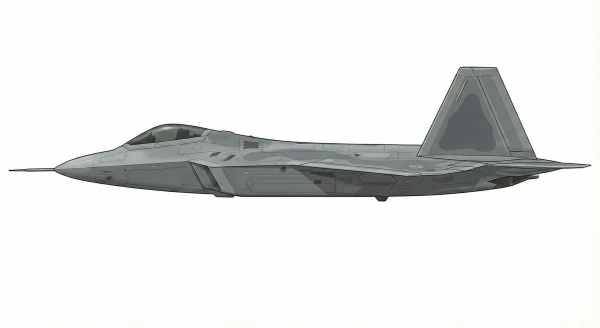
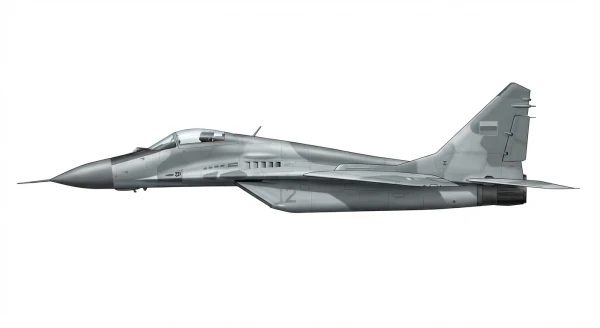
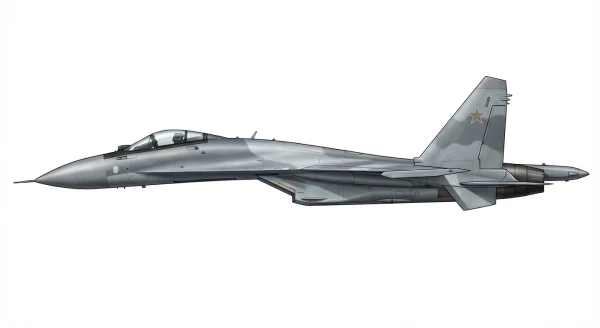
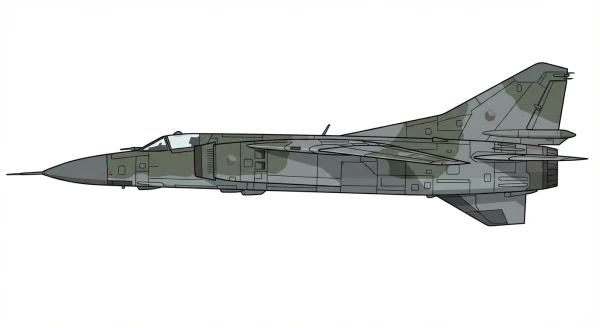
Description
The Su-27 Flanker is a twin-engine, supersonic, all-weather air superiority fighter developed by the Soviet Union. The aircraft was designed by the Sukhoi Design Bureau to counter American fighters like the F-15 Eagle and F-16 Fighting Falcon. Development began in the late 1960s, but the aircraft was not introduced into service until 1985. It was one of the Soviet Union's most advanced aircraft, incorporating cutting-edge technologies in avionics, aerodynamics, and firepower. The Su-27 played a significant role in modernizing the Soviet Air Force and continues to be a mainstay in the Russian Air Force as well as the air forces of several other countries.
Design
The Su-27 Flanker features a blended wing-body design that improves its aerodynamic efficiency and allows for a larger internal fuel capacity, contributing to its long range. It has a highly distinctive appearance, characterized by its large leading-edge root extensions (LERX), which improve maneuverability and provide additional lift. The aircraft is equipped with two Lyulka AL-31F turbofan engines, which give it a top speed of around Mach 2.35.
One of the standout features of the Su-27 is its exceptional agility, facilitated by its advanced fly-by-wire control system and thrust-vectoring nozzles. This enables the aircraft to perform complex maneuvers like Pugachev's Cobra and the Herbst maneuver, which are nearly impossible for most other fighter jets. Its radar system is robust, capable of tracking multiple targets simultaneously at considerable distances.
Armament
The Su-27 Flanker is well-equipped for both air-to-air and air-to-ground combat, although its primary role is as an air superiority fighter. It is armed with a single 30mm GSh-30-1 autocannon with 150 rounds, which is effective for close-quarters aerial combat and strafing ground targets.
For air-to-air engagements, the Su-27 can carry a range of missiles, most commonly the R-27 (AA-10 'Alamo') and the R-73 (AA-11 'Archer'). The R-27 comes in several variants with different guidance systems like semi-active radar homing and infrared homing, allowing for flexibility in different combat scenarios. The R-73 is a short-range, infrared-guided missile known for its high maneuverability, making it deadly in dogfight situations.
Additionally, the aircraft is capable of carrying the longer-range R-77 (AA-12 'Adder') missiles, which are active radar-guided and provide beyond-visual-range capabilities. This allows the Su-27 to engage enemy aircraft from a distance without needing to close in for visual confirmation.
In terms of air-to-ground capabilities, the Su-27 can carry unguided bombs, laser-guided bombs, and a variety of air-to-surface missiles. However, it's worth noting that while the Su-27 can perform air-to-ground roles, it is not as specialized in this aspect as some other aircraft like the Su-25 or the American A-10 Thunderbolt II. Its primary focus remains air superiority.
Operational History
The Su-27 entered service with the Soviet Air Force in 1985 and quickly became one of the mainstays of the fleet. Throughout the late Cold War, it served as a counter to U.S. and NATO air superiority fighters but saw limited actual combat during this period. With the dissolution of the Soviet Union in 1991, many Su-27s were inherited by successor states, most notably Russia and Ukraine.
In the post-Soviet era, the Su-27 has seen combat in various conflicts. Russian Su-27s were deployed in the First and Second Chechen Wars primarily for air superiority roles but were rarely engaged in air-to-air combat due to the lack of a capable air threat from Chechen forces. The aircraft has also been involved in the Russo-Georgian War of 2008, where it was used for both air-to-air and air-to-ground missions.
Ukrainian Su-27s have been used in exercises and air patrols but gained international attention during the 2014 Crimean Crisis and the ongoing conflict in Eastern Ukraine. However, their combat role has been limited in these contexts.
Ethiopian Su-27s saw action in the Eritrea-Ethiopia War from 1998 to 2000, where they achieved air superiority and reportedly shot down a number of Eritrean aircraft. In Angola, Su-27s have been deployed in a defensive capacity but have not seen extensive combat.
The Su-27 and its variants have also been exported to various countries, including China, India, Vietnam, and several others. Chinese Su-27s, for instance, have frequently been involved in intercepts and patrols over contested areas in the South China Sea and along the Taiwan Strait.
Variants
-
Su-27S (Flanker-B) - This is the single-seat, basic version optimized for air superiority roles. It's the initial production variant and serves as the foundation for subsequent models.
-
Su-27SK and Su-27SM - These are export and modernized versions of the basic Su-27S, incorporating updates in radar, avionics, and weapon systems to extend their operational life and capabilities.
-
Su-27UB (Flanker-C) - This is the two-seat trainer version, but it retains full combat capability. It's frequently used for conversion training but can also be deployed in combat roles.
-
Su-30 (Flanker-C) - An evolution of the Su-27UB, the Su-30 is a multi-role, two-seat variant that incorporates advanced avionics and can carry a wider array of weapons. It exists in multiple sub-variants like the Su-30MKI, Su-30MKK, and Su-30SM, tailored for different international customers.
-
Su-33 (Flanker-D) - Developed for naval operations, the Su-33 has reinforced landing gear, folding wings, and tail surfaces for carrier storage. It also features an arresting hook and is capable of taking off from a carrier using a ski-jump.
-
Su-34 (Fullback) - This is a dedicated strike variant with a side-by-side seating arrangement for the pilot and co-pilot. It is designed for long-range, precision strike missions and has a more robust air-to-ground capability compared to other Su-27 variants.
-
Su-35 (Flanker-E) - An advanced single-seat, multi-role variant, the Su-35 boasts improved avionics, greater operational range, and thrust-vectoring engines. It represents one of the most advanced iterations of the Su-27 design.
-
Su-37 (Flanker-F) - Though not mass-produced, the Su-37 serves as a technology demonstrator and testbed for features like thrust-vectoring nozzles. Some of its advancements have been incorporated into the Su-35.
Frequently Asked Questions
What type of aircraft is the Su-27 Flanker?
What is the maximum speed of the Su-27 Flanker?
What is the range of the Su-27 Flanker?
When did the Su-27 Flanker first fly?
How many Su-27 Flanker have been built?
Which countries operate the Su-27 Flanker?
How much does a Su-27 Flanker cost?
What is the service ceiling of the Su-27 Flanker?
- AUG 132026 Updated First flight and service entry corrected to the T-10S maiden flight and the 1985 Soviet Air Forces adoption
- AUG 52026 Updated Climb rate added; powerplant and thrust updated
- JUL 232026 Updated Sources and cross-references refreshed
- APR 72026 Updated Sources and cross-references refreshed
- JAN 242026 Updated Thrust updated
- JAN 122026 Updated Range updated in a site-wide editorial pass