Ghadir vs Sang-O
Ghadir vs Sang-O at a glance — displacement 117 vs 275 tons, length 29 vs 34 m, speed 10 vs 7.5 knots, crew 7 vs 15.
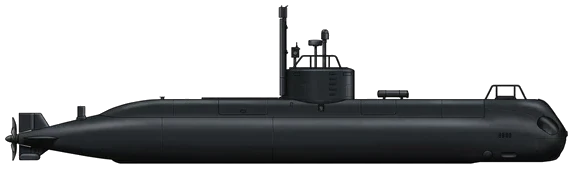
| Ghadir | Sang-O | |
|---|---|---|
| Origin | 🇮🇷 Iran | 🇰🇵 North Korea |
| Category | Submarine | Submarine |
| Type | Midget submarine | Coastal submarine |
| Manufacturer | Marine Industries Organization | Bong Dao Bo Shipyard, Sinpo |
| Year introduced | 2007 | 1991 |
| Number built | 20 units | 41 units |
| Estimated unit price | NA | NA |
| Displacement | 117 tons | 275 tons |
| Maximum speed | 10.0 knots | 7.5 knots |
| Range | NA | 1,500 nm |
| Length | 29.0 m | 34.0 m |
| Beam | 9.0 m | 3.8 m |
| Crew | 7 | 15 |
| Max depth | NA | 150 m |
| Ghadir | Sang-O | |
|---|---|---|
| Armament |
|
|
| Propulsion | Diesel-electric propulsion, secondary retractable propeller | Diesel-electric, 1 diesel engine, 1 electric motor, 1 shaft |
Detailed Comparison
The Iranian Ghadir class and the North Korean Sang-O class are diesel-electric coastal submarines that provide mass-produced, low-cost subsurface capacity for heavily sanctioned navies. While Iran based the Ghadir directly on North Korean Yono-class technology, the two platforms reflect divergent naval doctrines: Iran prioritizes anti-access/area denial (A2/AD) chokepoint control in the Persian Gulf, while North Korea focuses on coastal infiltration and special operations force (SOF) deployment across the Northern Limit Line.
Development and Design
Introduced in 1991, the 275-ton, 34-meter Sang-O bridges the gap between midget and older Romeo-class coastal submarines. North Korea’s Bong Dao Bo Shipyard produced 41 units, modifying the base design into distinct attack and unarmed infiltration variants. Later production shifted to the Sang-O II, stretching the hull to 40 meters and roughly 340 tons to increase troop capacity.
Iran’s Marine Industries Organization introduced the 117-ton, 29-meter Ghadir in 2007. With over 20 units built, it operates exclusively in the shallow bathymetry of the Persian Gulf and Gulf of Oman. The design is optimized for resting on the seabed, utilizing the highly cluttered acoustic environment of the Strait of Hormuz to mask its signature.
Weapons and Sensors
The Sang-O carries a heavier conventional payload, tailored for anti-ship engagements and coastal mining:
- 4 × 533mm torpedo tubes armed with Russian 53-65KE wake-homing torpedoes
- Minelaying capacity for up to 16 naval mines
- SOF variant removes torpedo tubes to accommodate 10 commandos
The Ghadir possesses only half the torpedo capacity (2 × 533mm tubes, firing Valfajr or Hoot supercavitating weapons) but integrates modernized standoff weapons: submerged-launch Jask-2 anti-ship cruise missiles (ASCMs). This ASCM integration allows a 117-ton submarine to strike surface combatants beyond standard torpedo range.
Propulsion and Performance
The Sang-O offers greater endurance. Its single-shaft diesel-electric plant yields 9 knots submerged and a 1,500-nautical-mile range, suitable for the deeper waters of the Sea of Japan. The Ghadir utilizes a diesel-electric system with a secondary retractable propeller for ultra-shallow maneuvering. It achieves 8 knots submerged. While its exact range is classified, its 117-ton displacement restricts it to short-duration sorties compared to the North Korean vessel.
Deployment and Combat Record
The Sang-O has a documented record of hostile infiltration. In September 1996, a Sang-O inserting commandos grounded near Gangneung, South Korea, triggering a 49-day manhunt and resulting in 11 South Korean military fatalities. The Ghadir class remains largely untested in kinetic exchanges, though units routinely shadow U.S. Fifth Fleet transits and conduct regional exercises, including a 2014 deployment to Karachi, Pakistan. One Ghadir was reportedly lost to a collision or accident in April 2014.
Conclusion
For covert infiltration and extended coastal patrol, the Sang-O holds the edge. Its 1,500-nautical-mile range, 150-meter test depth, and dedicated 10-man commando capacity make it a proven platform for inserting SOF into enemy littoral zones. However, for localized sea-denial in confined chokepoints, the Ghadir is superior. The ability to launch Jask-2 ASCMs while submerged, combined with a 117-ton hull engineered to sit passively on the shallow Gulf seabed, presents a more complex targeting problem for modern anti-submarine warfare networks than the strictly torpedo-armed Sang-O.