Strategic Position
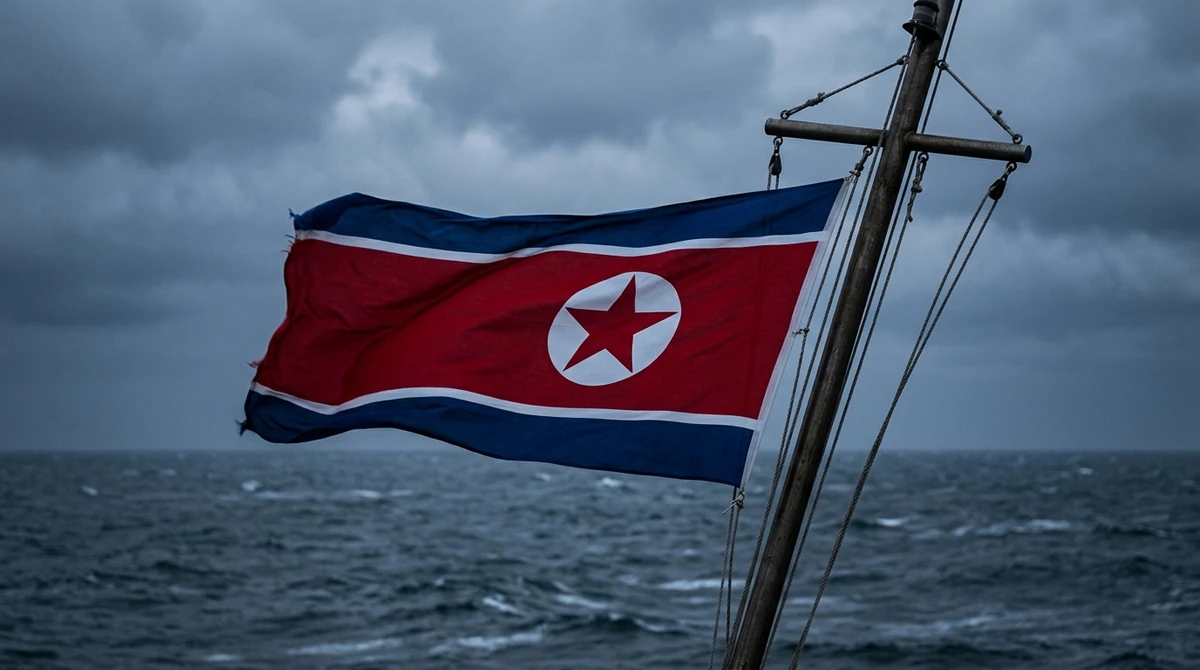
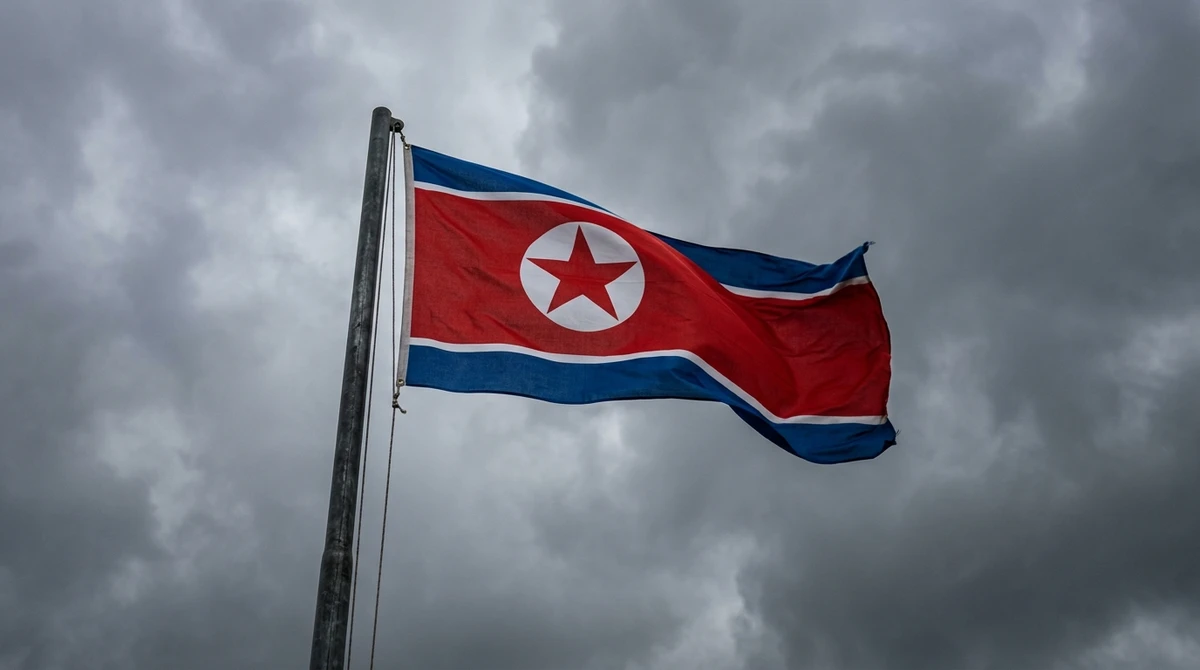
The Democratic People's Republic of Korea (DPRK) maintains a security posture centered on the "Songun" (military-first) policy, prioritizing the Korean People's Army (KPA) in all aspects of state affairs. In 2025 and 2026, the DPRK formalised a significant shift in defense doctrine, adopting the "Hostile Two-State Theory," which classifies South Korea as a principal adversary rather than a partner for eventual unification. This shift reflects a more offensive strategic orientation aimed at achieving absolute deterrence against the United States and its regional allies.
The primary bilateral security arrangement is the Comprehensive Strategic Partnership Treaty with the Russian Federation, which came into effect in late 2024. This treaty includes a mutual defense clause, committing both nations to provide military assistance in the event of an armed invasion. This alignment has facilitated increased military-technical cooperation and resource exchanges, reducing North Korea's traditional structural reliance on China and providing the KPA with battlefield data from the conflict in Ukraine.
Military Forces
The KPA is commanded by the State Affairs Commission, chaired by Kim Jong Un, and the Workers' Party of Korea (WPK) Central Military Commission. The armed forces include approximately 1.2 million active-duty personnel, supported by several million paramilitary and reserve forces, including the Worker-Peasant Red Guards.
Ground Forces
The Ground Force remains the largest branch, organized into frontline corps and mechanized, tank, and artillery divisions. Equipment includes:
- Main battle tanks: Operates the Chonma-ho and Pokpung-ho series, alongside the newer "M2020" tank models.
- Artillery: Fields several thousand systems, including 170mm KOKSAN self-propelled guns and 240mm multiple rocket launchers (MRL).
- Guided Rockets: Operates the KN-09 (300mm) and KN-25 (600mm) "super-large" multiple rocket launchers, capable of delivering tactical nuclear or conventional warheads.
Naval Force
The Navy focuses on coastal defense and denial-of-access operations. It comprises the East Sea and West Sea Fleets.
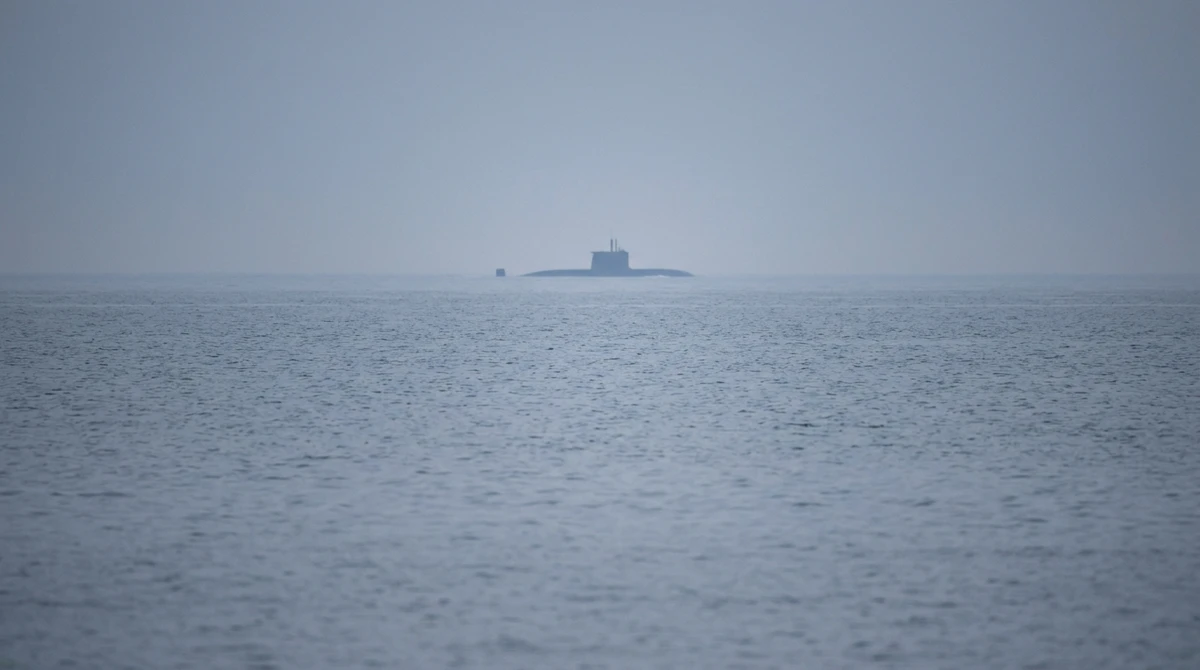
- Submarines: Operates a fleet of Romeo-class and Sang-O-class boats. The service recently commissioned the Hero Kim Kun Ok, a modified Sinpo-C class tactical nuclear attack submarine.
- Surface Combatants: Includes Amnok-class corvettes and various missile-capable patrol craft.
Air and Anti-Air Force
The Air Force operates a mix of Soviet-era aircraft and domestically developed unmanned assets.
- Combat Aircraft: Maintains MiG-29, Su-25, and MiG-23 fighters for air defense and ground attack.
- Unmanned Aerial Vehicles (UAVs): Operates the Saetbyol-4 reconnaissance and Saetbyol-9 multi-purpose attack drones, alongside mass-produced First Person View (FPV) and kamikaze drones.
- Air Defense: Fields the Pongae-5 and Pongae-6 long-range surface-to-air missile systems.
Strategic Force
This branch manages the DPRK’s nuclear and ballistic missile inventory.
- ICBMs: Operates the solid-fueled Hwasong-18 and the larger Hwasong-19 intercontinental ballistic missiles.
- IRBMs/MRBMs: Fields the Hwasong-16B intermediate-range missile equipped with a hypersonic glide vehicle.
Special Operations Forces
The KPA maintains one of the world's largest specialized units, trained for infiltration, unconventional warfare, and sabotage. In 2025, several thousand of these personnel were identified as having gained operational experience through deployments to Russian territory.
Defense Industry
North Korea maintains a highly self-sufficient defense industrial base, controlled by the KPA General Bureau and the Second Economic Committee. Domestic production covers small arms, heavy artillery, armored vehicles, and advanced missile systems. In 2025, the DPRK expanded its manufacturing capacity, including a large-scale facility near Huichon.
The defense industry has transitioned into a major export sector, specifically supporting Russian military requirements. Deliveries to Russia include:
- Artillery munitions: Millions of 152mm and 122mm shells.
- Ballistic missiles: KN-23 and KN-24 short-range systems.
- Armored assets: KOKSAN self-propelled artillery and various MRL units.
In exchange, North Korea seeks technical assistance for satellite launches, miniaturized nuclear warheads, and nuclear-powered submarine development.
Strategic Trends
The DPRK is currently executing a multi-year modernization plan focused on tactical nuclear weapons and automated warfare. A key priority is the shift from liquid-fueled to solid-fueled missile systems to reduce launch preparation times and enhance survivability.
Nuclear doctrine has evolved to allow for preemptive strikes if the regime perceives an imminent threat to its leadership or strategic assets. This is supported by the deployment of "tactical nuclear" units at the brigade and division levels. Future force development, as outlined in preparations for the 9th WPK Congress in 2026, emphasizes the integration of artificial intelligence and swarm drone technology into conventional force structures. Defense spending remains an exceptionally high priority, consuming a significant portion of the national budget to sustain both the nuclear program and the large-scale conventional military apparatus.