Sang-O-class
North Korean coastal submarine introduced in 1991, with around 40 boats still in service. Key figures: displacement 275 tons, length 34 m, top speed 7.5 knots, crew 15, built 41. In service with 1 navy — North Korea (46).
| Subtype | Coastal submarine |
| Displacement | 275 tons |
| Displacement submerged | 370 tons |
| Crew | 15 members |
| Width | 3.8 m (12.5 ft) |
| Length | 34.0 m (111.5 ft) |
| Max. depth | 150 m (492.1 ft) |
| Propulsion | Diesel-electric, 1 diesel engine, 1 electric motor, 1 shaft |
| Range | 1,500 nm |
| Maximum speed | 8 knots |
| Max. speed submerged | 9 knots |
- 4 × 533 mm torpedo tubes with 53-65KE torpedoes
- Minelaying capability (up to 16 mines)
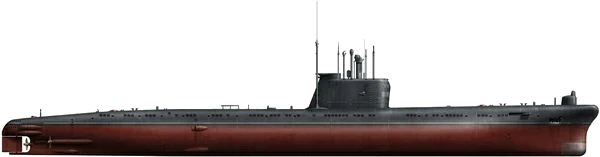
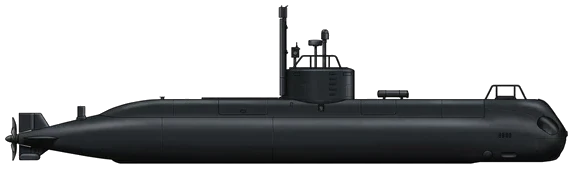
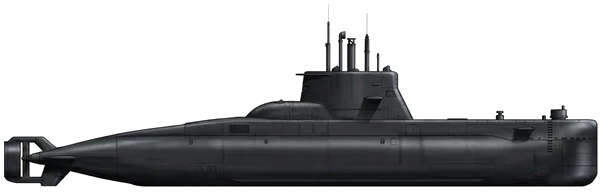
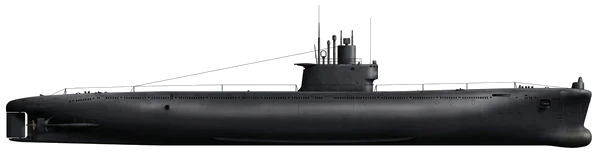
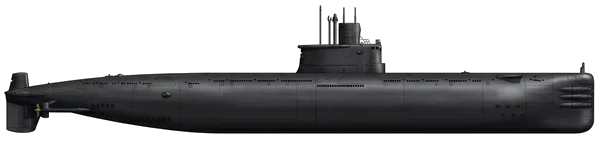
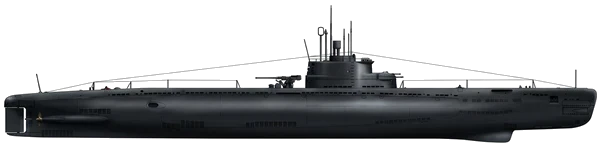
Description
The Sang-O-class ("Shark" class) is a series of diesel-electric coastal submarines of the Korean People's Navy and the backbone of North Korea's submarine force. Introduced in 1991 and produced at the Bong Dao Bo Shipyard in Sinpo, more than 40 boats were built, and roughly 40 were still assessed as active in 2021, making it one of the most numerous submarine classes in the world. The class is North Korea's second-largest indigenously built submarine design.
At 34 meters and 275 tons surfaced, the Sang-O sits between midget submarines and the older Romeo-class boats. Propulsion is diesel-electric with a single shaft, giving a modest 7.5 knots on the surface and about 9 knots submerged, with a range of around 1,500 nautical miles and a test depth of 150 meters. The attack version carries four 533 mm torpedo tubes armed with Russian 53-65KE torpedoes and can lay mines, while an unarmed infiltration variant carries around ten commandos in place of weapons.
The class gained international notoriety on 18 September 1996, when a Sang-O ran aground near Gangneung during a reconnaissance mission, triggering a large manhunt in South Korea. The captured boat has been displayed at Unification Park near Gangneung since 2001.
A stretched derivative, the Sang-O II or K-300, was identified in the 2000s. Around 39 to 40 meters long with a surfaced displacement of roughly 300 to 340 tons, it offers greater range, higher speed and improved troop-carrying capability, and has been observed at bases on North Korea's east coast.
Frequently Asked Questions
What type of ship is the Sang-O-class?
What is the displacement of the Sang-O-class?
What is the maximum speed of the Sang-O-class?
What is the range of the Sang-O-class?
How many crew members serve on the Sang-O-class?
How many Sang-O-class ships have been built?
Which countries operate the Sang-O-class?
- JUL 242026 Created Page created: Sang-O