General Dynamics Ajax vs FV510 Warrior
General Dynamics Ajax vs FV510 Warrior at a glance — weight 38,000 vs 25,500 kg, top speed 70 vs 75 km/h, range 500 vs 600 km, crew — vs 3.
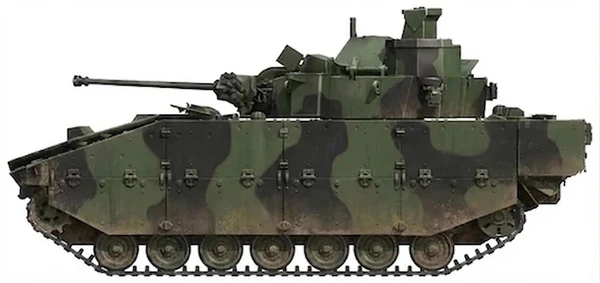
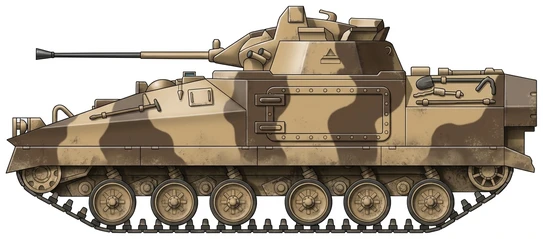
| General Dynamics Ajax | FV510 Warrior | |
|---|---|---|
| Origin country | 🇬🇧 United Kingdom | 🇬🇧 United Kingdom |
| Category | Light Armoured Vehicle | Infantry Fighting Vehicle |
| Type | Armoured Reconnaissance Vehicle | Infantry Fighting Vehicle |
| Manufacturer | General Dynamics UK | GKN |
| Number produced | 100 units | 1,043 units |
| Estimated unit price | $13 million | $2.4 million |
| Combat weight | 38.0 tons | 25.5 tons |
| Maximum speed | 70 km/h | 75 km/h |
| Operational range | 500 km | 600 km |
| Length | 7.62 m | 6.37 m |
| Width | 3.35 m | 3.00 m |
| Height | 3.00 m | 2.80 m |
| Crew | 3 (commander, gunner, driver) | 3 |
| General Dynamics Ajax | FV510 Warrior | |
|---|---|---|
| Main armament | 40mm CT cannon | 1 Rarden 30mm gun |
| Secondary weapon | 7.62mm machine gun | 1 MAG 7.62mm machine gun |
| Engine | MTU V8 diesel, 800 hp | Perkins Diesel Engine with 550 hp |
Detailed Comparison
The British Army’s tracked vehicle fleet is currently defined by the transition from the FV510 Warrior infantry fighting vehicle to the Ajax reconnaissance platform. The 25.5-ton Warrior, fielded in 1984, utilizes an aluminum hull and an unstabilized 30mm cannon. The 38-ton Ajax, derived from the ASCOD 2 chassis, integrates a 40mm cased-telescoped weapon and a 20 Gbit/s digital architecture, but its procurement has been stalled by structural defects.
Development and Design
Warrior emerged from the 1972 MCV-80 project to escort Challenger 1 tanks. GKN Sankey utilized an aluminum hull and deliberately omitted firing ports to prioritize solid modular armor. Ajax originated from the Future Rapid Effect System (FRES) to replace the CVR(T) family. General Dynamics based the platform on the ASCOD 2, but integrating a Lockheed Martin turret and localized sensor suite pushed the combat weight to 38 tons—a 12.5-ton increase over Warrior. This mass, combined with chassis integration flaws, generated noise and vibration issues that caused crew injuries and halted initial operating capability in 2026.
Protection and Firepower
Warrior’s primary limitation in modern combat is its 30mm L21A1 RARDEN cannon. The weapon is unstabilized, forcing the vehicle to halt before firing. Combat in Ukraine indicates that fire-on-the-move capability dictates armored survivability. Ajax corrects this with the stabilized 40CT cannon. Firing cased-telescoped ammunition via a linkless carousel, it achieves 200 rounds per minute. The gun elevates to 80°, enabling engagement of loitering munitions and Class 1 UAVs. For protection, Ajax relies on modular steel armor and acoustic masking, whereas Warrior requires heavy bolt-on packages like Wrap Two to survive shaped charges, stressing its suspension.
Mobility and Logistics
The 550 hp Perkins diesel gives Warrior a 21.5 hp/ton power-to-weight ratio and a 75 km/h top speed. Ajax utilizes an 800 hp MTU V8, yielding 21 hp/ton and 70 km/h. While power metrics are proportional, Ajax’s 38-ton mass restricts its deployment over lighter civilian bridge infrastructure compared to the 25.5-ton Warrior. Mechanically, Warrior’s analog simplicity allows sustained operations with minimal diagnostic equipment. Ajax’s electronic architecture and auxiliary power units require intensive, specialized maintenance facilities.
Deployment and Combat Record
Following the 2021 cancellation of the Warrior Capability Sustainment Programme, the fleet is being drawn down. Its operational history includes:
- Desert Storm, where availability rates remained high despite two units lost to friendly fire AGM-65 missiles.
- Peacekeeping in Bosnia, where the baseline armor withstood small arms and anti-tank mines.
- Deployments in Iraq and Afghanistan, utilizing applique armor packages against rocket-propelled grenades.
Ajax has no combat record. Its deployment is strictly limited to domestic trials, where mechanical failures repeatedly force the Ministry of Defence to suspend operations.
Conclusion
The FV510 Warrior is tactically obsolete. Its unstabilized main gun precludes modern maneuver warfare, justifying its planned replacement by Boxer vehicles. However, Ajax fails as a viable tracked alternative in its current state. Despite an advanced 40mm armament and drone-capable elevation, its structural defects and hazardous crew environment render it non-deployable. For immediate operations, a baseline Warrior provides reliable, functional mechanized support. Ajax operates strictly as a developmental testbed until General Dynamics rectifies the chassis dynamics.