General Dynamics Ajax
The Ajax is a British armoured reconnaissance vehicle introduced in 2021, featuring a 40mm cased telescoped cannon and an integrated digital sensor suite. Key figures: weight 38 t, top speed 70 km/h, range 500 km, unit cost $13M, built 100. In service with 1 army — United Kingdom (142).
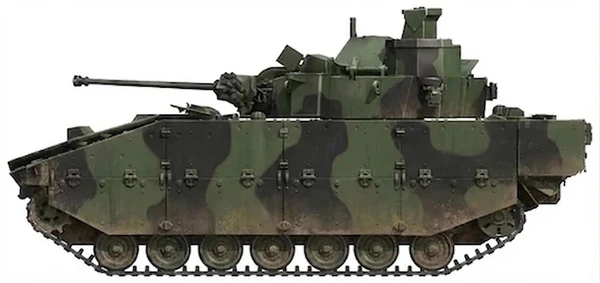
| Sub-type | Armoured Reconnaissance Vehicle |
| Crew | 3 (commander, gunner, driver) personnels |
| Range | 500 km |
| Mass | 38.0 tons |
| Height | 3.0 m (9.8 ft) |
| Width | 3.35 m (11.0 ft) |
| Length | 7.62 m (25.0 ft) |
| Max. speed | 70 km/h (43 mph) |
| Engine | MTU V8 diesel, 800 hp |
| Weapon 1 | 40mm CT cannon |
| Weapon 2 | 7.62mm machine gun |
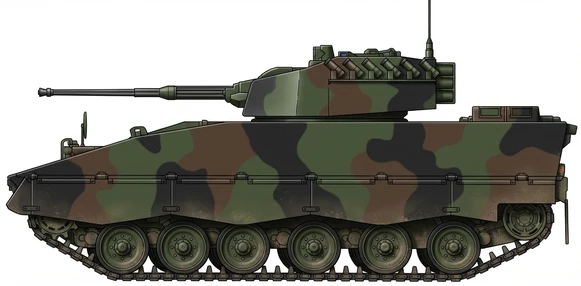
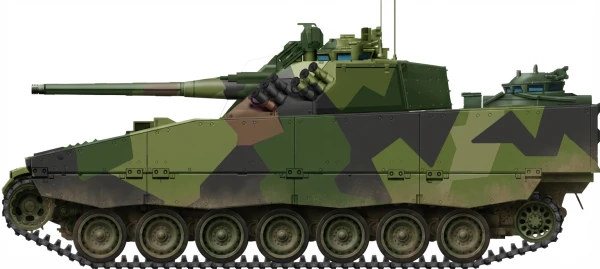
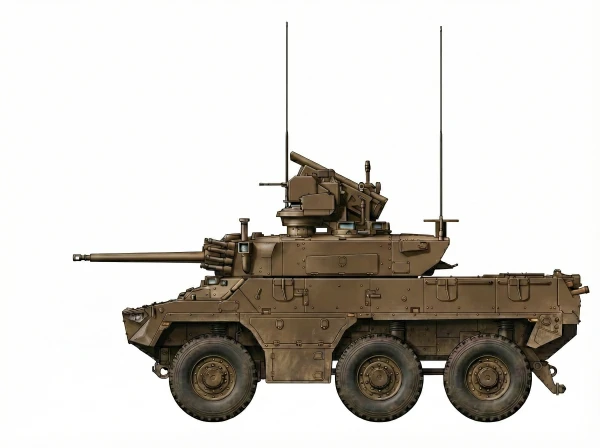
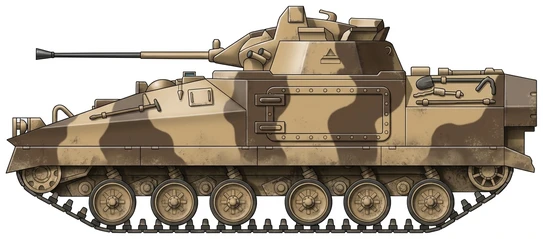
Description
The Ajax, formerly designated the Scout SV (Specialist Vehicle), was developed by General Dynamics UK for the British Army. The program originated from the Future Rapid Effect System (FRES) initiative intended to replace the Combat Vehicle Reconnaissance (Tracked) (CVR(T)) family, which had been in service since 1971. The Ajax is a derivative of the ASCOD 2 armored fighting vehicle originally developed by Steyr-Daimler-Puch Spezialfahrzeug and Santa Bárbara Sistemas. In 2010, the Ministry of Defence selected the ASCOD 2 Common Base Platform, awarding a demonstration phase contract to General Dynamics. A production order for 589 vehicles across several variants was placed in 2014, with final assembly established in South Wales.
The vehicle utilizes a modular design consisting of six variants: the Ajax reconnaissance vehicle, Ares personnel carrier, Athena command post, Apollo repair vehicle, Atlas recovery vehicle, and Argus engineering vehicle. The reconnaissance variant features a turret and fire control system designed by Lockheed Martin UK. Armament consists of the 40CT 40 mm cannon, which utilizes telescoped ammunition seated within the propellant casing. The weapon system employs a linkless carousel magazine and reaches a rate of fire of 200 rounds per minute. The cannon can elevate to 80°, allowing for engagement of helicopters and unmanned aerial vehicles. The electronics suite includes a 20 Gbit/s Ethernet architecture for processing and storing sensor data, integrated with the Bowman communication system. Power for stationary operations is provided by a silent auxiliary generator.
The British Army is the sole current operator. Initial deliveries were delayed by technical issues regarding noise and vibration. These conditions resulted in health complications for crews and led to the suspension of trials in 2020 and 2021. Technical failures included damage to electronic systems and the inability to stabilize the main armament while moving. Deliveries to units including the Queen’s Royal Hussars and the Royal Lancers commenced in 2025. Initial operating capability (IOC) was declared in late 2025 for the Household Cavalry Regiment. Use was halted shortly thereafter following reports of crew illness during training exercises. IOC status was withdrawn in January 2026 pending safety investigations. Poland has evaluated the Ajax chassis for its heavy infantry fighting vehicle requirement.
Frequently Asked Questions
What type of vehicle is the General Dynamics Ajax?
What is the weight of the General Dynamics Ajax?
What is the maximum speed of the General Dynamics Ajax?
What is the operational range of the General Dynamics Ajax?
How many crew members does the General Dynamics Ajax require?
How many General Dynamics Ajax have been built?
What weapons does the General Dynamics Ajax carry?
- JUL 272026 Updated General Dynamics Ajax: name updated; General Dynamics Ajax: cost added
- APR 152026 Created Page created: Ajax