M101 Howitzer vs OTO Melara Mod 56
M101 Howitzer vs OTO Melara Mod 56 at a glance — weight 2,030 vs 1,290 kg, range 18 vs 11 km, crew 8 vs 7.
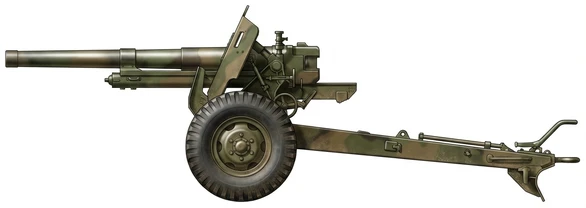
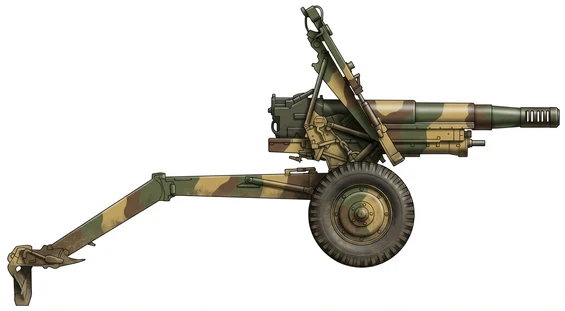
| M101 Howitzer | OTO Melara Mod 56 | |
|---|---|---|
| Origin country | 🇺🇸 United States | 🇮🇹 Italy |
| Category | Towed Artillery | Towed Artillery |
| Type | Artillery piece | Pack Howitzer |
| Manufacturer | Rock Island Arsenal | OTO Melara |
| Number produced | 10,202 units | 2,500 units |
| Estimated unit price | $0.0 million | $-- million |
| Combat weight | 2.0 tons | 1.3 tons |
| Operational range | 18 km | 11 km |
| Length | 5.94 m | 3.65 m |
| Width | 2.21 m | 1.50 m |
| Height | 1.73 m | 1.18 m |
| Crew | 8 | 7 |
| M101 Howitzer | OTO Melara Mod 56 | |
|---|---|---|
| Main armament | 105 mm high explosive (HE) semi-fixed ammunition | 105 mm howitzer |
| Secondary weapon | HEAT M67 Shell | -- |
Detailed Comparison
Developed sixteen years apart, the 2.03-ton American M101 and the 1.29-ton Italian OTO Melara Mod 56 dictate strictly divergent tactical employment despite sharing the same 105mm NATO ammunition. The M101 was designed for high-volume fires at the battalion level across conventional fronts. OTO Melara engineered the Mod 56 specifically for Alpine units requiring extreme mobility, trading structural longevity and range for the ability to break down into mule-portable components.
Development and Design
The U.S. Army Ordnance Department standardized the M101 (originally M2A1) in 1941 to replace World War I-era designs. Built around a heavy split-trail carriage and a robust breech ring, the M101 was manufactured in numbers exceeding 10,000 units. OTO Melara developed the Mod 56 in 1957 under an Italian Army requirement for mountain artillery. The resulting design prioritized mass reduction, culminating in a 1.29-ton system capable of rapid disassembly. This teardown capacity allowed Alpine brigades to manhandle the weapon into firing positions inaccessible to vehicle-towed guns like the M101.
Protection and Firepower
Both systems fire standard U.S. M1 105mm high explosive ammunition, but their ballistic performance diverges sharply. The M101 reaches a maximum operational range of 18 km. The Mod 56 sacrifices barrel length and chamber pressure to maintain its low weight, resulting in a maximum range of just 11 km. This 7 km deficit exposes Mod 56 crews to rapid counter-battery fire in modern engagements. Crew protection on both systems is limited to thin frontal gun shields, which operators frequently remove from the Mod 56 entirely to reduce weight.
Mobility and Logistics
The Mod 56 dictates an aggressive heliborne or pack-animal logistics model. It supports multiple transport methods:
- Sling-loaded beneath light utility helicopters
- Broken down into 12 components for mule or manual carry
- Stowed internally within an M113 armored personnel carrier
The M101 requires a dedicated prime mover, typically a 2.5-ton truck. However, the Mod 56's lightweight construction compromises its durability. Australian and New Zealand forces in Vietnam reported that the Mod 56 could not withstand continuous fire missions without structural failure. The heavier M101 carriage absorbs recoil stresses efficiently, permitting sustained fire without degrading the mount.
Deployment and Combat Record
The M101 formed the backbone of U.S. artillery in World War II, Korea, and Vietnam, and continues to appear in the Russo-Ukrainian War as a reserve system. Operators in Vietnam and South Korea successfully mounted M101s on truck beds to create improvised self-propelled artillery. The Mod 56 equipped the Allied Command Europe Mobile Force until 1975 and saw combat in the Falklands, Aden, and Vietnam. During the Falklands War, Argentine forces using the Mod 56 were consistently outranged by British L118 light guns, forcing them into defensive, suppressed postures.
Conclusion
The M101 holds the decisive edge in any conventional artillery role requiring sustained bombardment. Its 18 km reach and structural resilience make it a viable, albeit dated, system for static defense or truck-mounted integration. The OTO Melara Mod 56 is strictly a niche asset. Its structural fragility and 11 km range render it a liability in conventional counter-battery environments. It retains tactical value only in mountainous or jungle theaters where road networks are non-existent and aerial or pack transport is the only method to deploy indirect fire.