Europe Military Forces 🇪🇺
Military Strength Overview
Geography
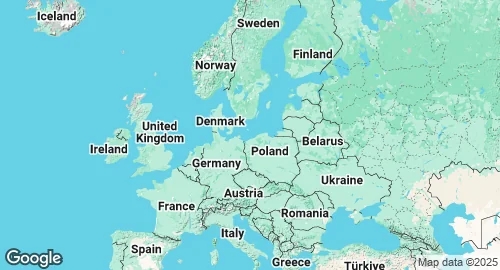
| Capital | |
| Land Area | None km² |
| Coastline Length | None km |
Population and Military Personnel Trends
GDP and Inflation Rate Trends
Strategic Overview in 2026
Strategic Position
European security architecture is defined by the North Atlantic Treaty Organization (NATO) and the European Union’s (EU) Common Security and Defence Policy. Following the accessions of Finland and Sweden, 32 nations participate in NATO’s collective defense framework, which remains the primary guarantor of territorial integrity. The EU’s Strategic Compass serves as a secondary framework for autonomous crisis management and rapid response capabilities.
Geopolitical priorities focus on the eastern flank, specifically the containment of Russian conventional and hybrid threats. Secondary concerns include maritime security in the Mediterranean and Red Sea, stability in the Sahel region of Africa, and the protection of undersea infrastructure in the North Sea and Atlantic. National doctrines have transitioned from expeditionary counter-insurgency operations toward high-intensity, large-scale combat operations (LSCO). The "Suwalki Gap" and the High North are categorized as high-priority geographic zones for defensive planning and troop positioning.
Military Forces
The European defense posture relies on a combination of national military commands and integrated NATO structures. Active-duty personnel across European NATO and EU members exceed 1.5 million, supported by reserve components and paramilitary forces such as the French Gendarmerie and Italian Carabinieri.
Land Forces European armies emphasize heavy mechanized and armored formations. Standardized equipment includes Leopard 2, Challenger 3, and Leclerc main battle tanks. Infantry fighting vehicles (IFVs) include the CV90, Puma, and Boxer platforms. Artillery has shifted toward mobile, long-range systems such as the PzH 2000, Archer, and Caesar self-propelled howitzers. High-mobility artillery rocket systems (HIMARS) and M270 MLRS provide theater-level precision fires.
Air Forces Air dominance is facilitated by a mix of fourth- and fifth-generation multirole fighters. The Lockheed Martin F-35 Lightning II is the primary procurement standard for several nations, including the United Kingdom, Germany, Italy, and Poland. Domestic platforms include the Eurofighter Typhoon, Dassault Rafale, and JAS 39 Gripen. Strategic airlift is conducted primarily via the Airbus A400M and C-130J Hercules. Unmanned aerial vehicles (UAVs) range from tactical FPV drones to MALE-class platforms like the MQ-9 Reaper.
Naval Forces Naval capabilities range from green-water littoral defense to blue-water power projection. The United Kingdom and France operate aircraft carriers (Queen Elizabeth-class and Charles de Gaulle). Subsurface fleets include nuclear-powered attack submarines (Astute and Suffren classes) and diesel-electric submarines (Type 212 and Type 214). Surface fleets utilize Aegis-equipped or PAAMS-equipped destroyers and frigates, such as the Type 45, Horizon, and FREMM classes.
Specialized Capabilities France and the United Kingdom maintain independent nuclear deterrents via submarine-launched ballistic missiles. NATO’s nuclear sharing program involves the stationing of US-controlled B61 gravity bombs in nations including Germany, Italy, Belgium, and the Netherlands. Cyber defense commands are integrated into national military structures to counter gray-zone aggression.
Defense Industry
Europe maintains an advanced domestic defense industrial base (EDIB) capable of producing high-end platforms. Major manufacturers include Rheinmetall (land systems), BAE Systems (maritime and air), Leonardo (aerospace and electronics), Dassault Aviation (combat aircraft), and Saab (multidomain systems). The missile sector is largely consolidated under MBDA.
While the continent remains a leading exporter of fighter aircraft and armored vehicles, it maintains a reliance on the United States for off-the-shelf procurement of fifth-generation fighters and long-range air defense systems like the MIM-104 Patriot. Collaborative programs such as the Global Combat Air Programme (GCAP) and the Future Combat Air System (FCAS) aim to develop next-generation capabilities. The European Defence Industrial Strategy (EDIS), implemented in 2025, incentivizes joint procurement to reduce fragmentation across national supply chains.
Strategic Trends
Defense spending increased across Europe in 2025 and 2026, with the majority of NATO members meeting the 2% of GDP target. Frontline states, including Poland and the Baltic nations, have set budgets exceeding 4% of GDP. Procurement priorities focus on the European Sky Shield Initiative (ESSI) for integrated air and missile defense and the expansion of domestic ammunition production to address inventory depletions.
The EU is operationalizing the Rapid Deployment Capacity (RDC), designed to deploy up to 5,000 troops for intervention outside the bloc’s borders. Modernization efforts emphasize electronic warfare (EW), satellite-based communications, and the integration of artificial intelligence into command and control (C2) systems. Constraints include labor shortages in the defense sector, aging demographic profiles affecting recruitment, and the logistical challenge of standardizing equipment across 32 different national militaries.
European Aircraft Manufacturing
| Model | Manufacturer | Year | Number |
|---|---|---|---|
| A310 MRTT | Airbus | 2003 | 6 |
| A319 CJ | Airbus | 1995 | 1499 |
| A321 | Airbus | 1987 | 2917 |
| A330 | Airbus | 1992 | 1577 |
| A400M Atlas | Airbus | 2009 | 174 |
Frequently Asked Questions
Does Europe have nuclear weapons?
Military Expenditure: SIPRI Milex. Suggest a change