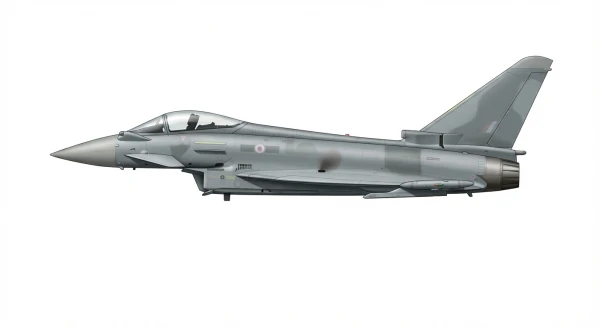
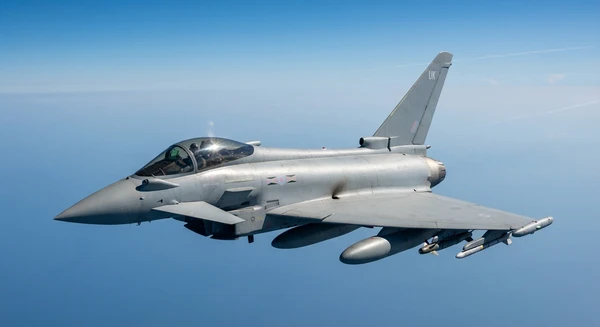
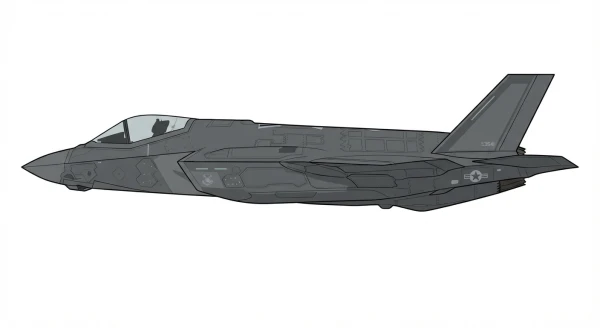
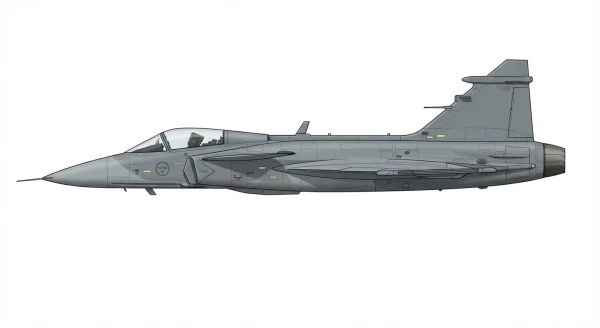
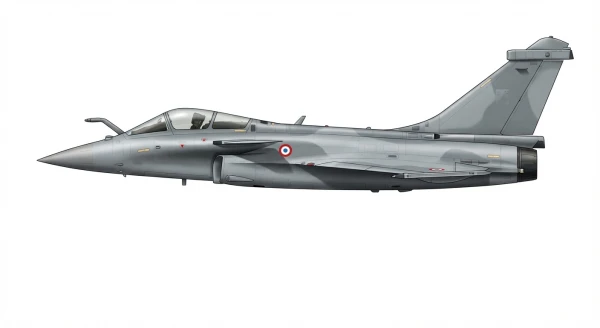
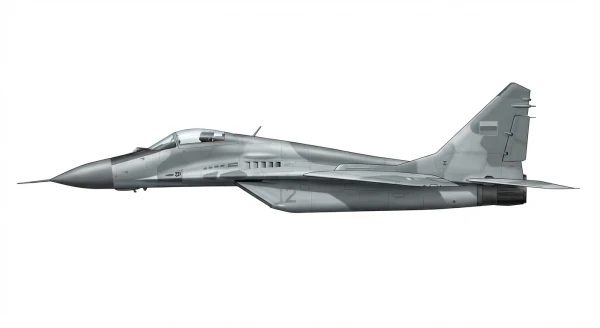
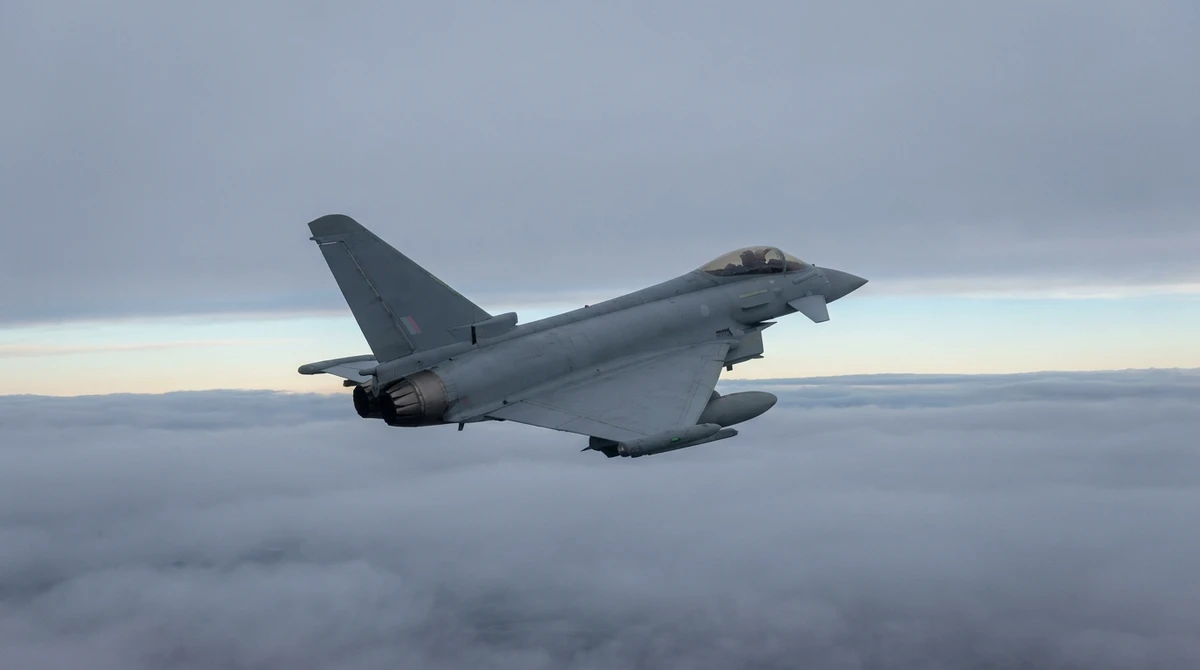
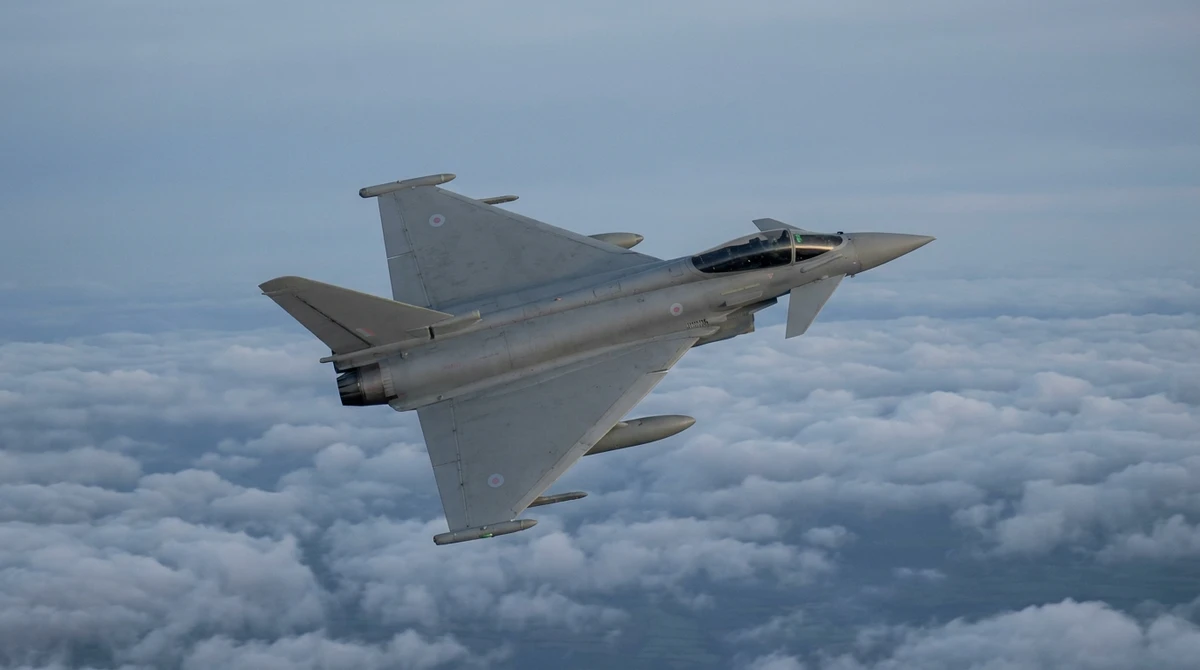
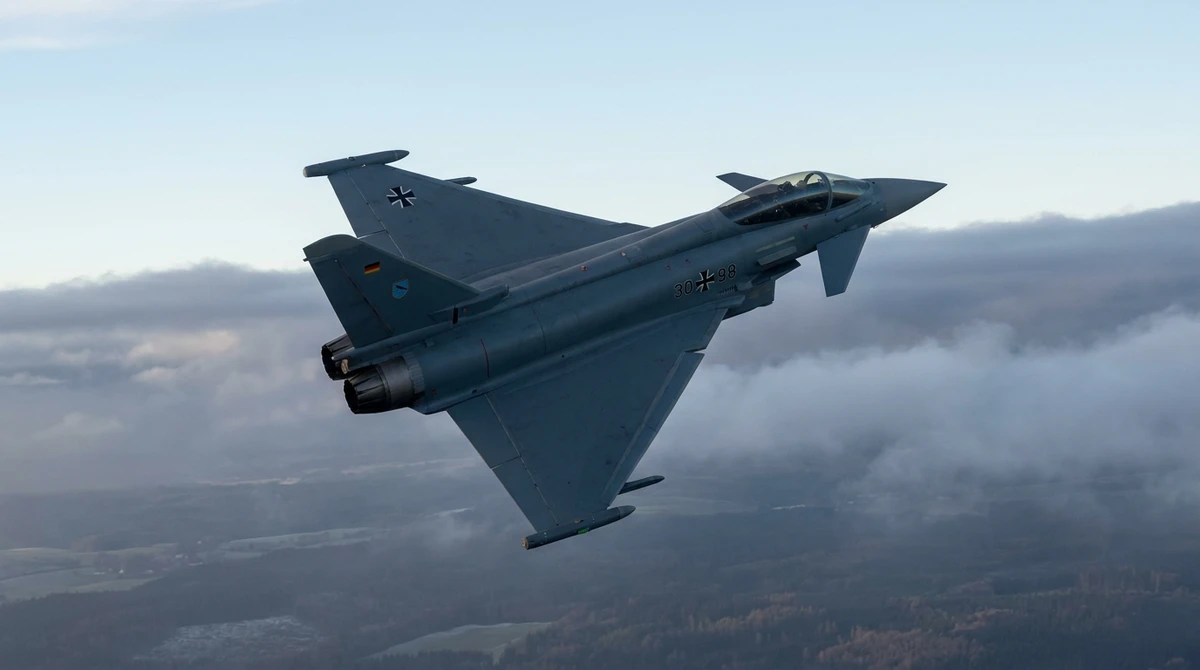
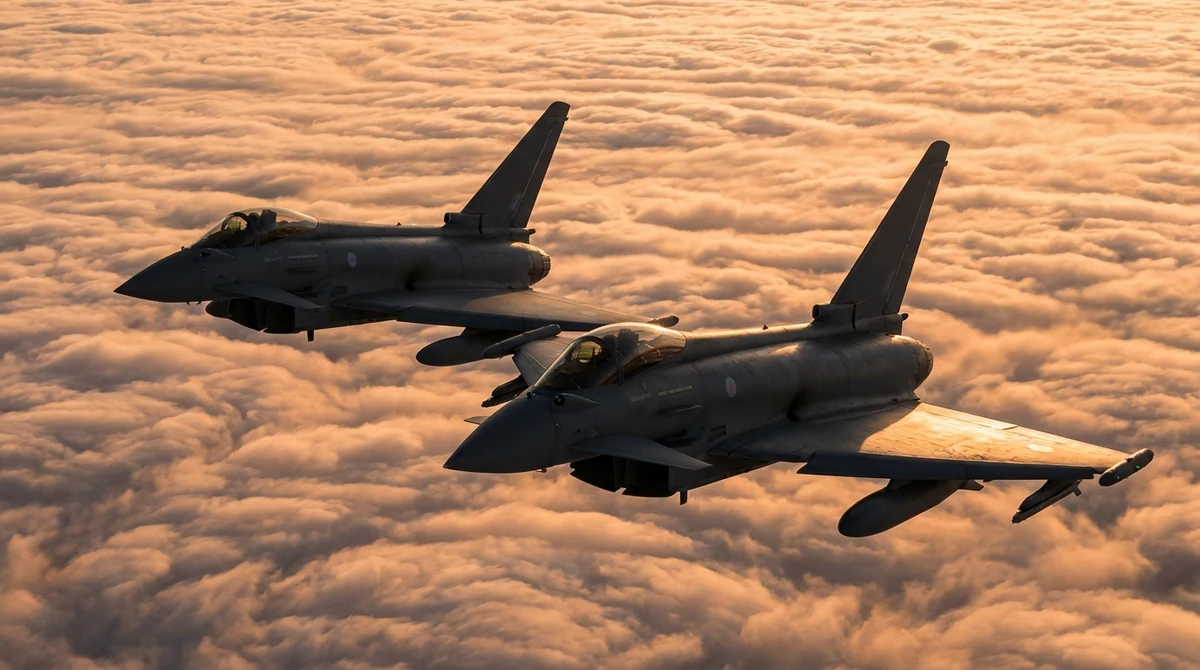
The Eurofighter Typhoon is a European twin-engine, supersonic, canard delta wing multirole fighter manufactured by a consortium of Airbus, BAE Systems, and Leonardo through Eurofighter Jagdflugzeug GmbH. Developed jointly by the United Kingdom, Germany, Italy, and Spain, the aircraft entered operational service in 2003. Originally designed as an air-superiority fighter, the Typhoon is known for high agility in aerial combat and its capability to execute air defence, reconnaissance, and precision ground-attack missions.
Development
Development began in 1983 under the Future European Fighter Aircraft programme involving Britain, Germany, Italy, Spain, and initially France, which departed to construct the Dassault Rafale independently. The British Aerospace EAP technology demonstrator first flew on 6 August 1986, followed by the maiden flight of the Eurofighter prototype on 27 March 1994. The aircraft was named Typhoon in September 1998 when initial production contracts were signed. Managed by the NATO Eurofighter and Tornado Management Agency, total procurement reached 680 aircraft by November 2023 across partner nations and export clients.
Design
The airframe features a 53-degree sweepback cranked delta wing, active canards, and 82% composite construction made primarily of carbon fibre and glass fibre. Flight control is managed by a quadruplex digital fly-by-wire system governing intentionally relaxed stability. Propulsion is provided by two Eurojet EJ200 turbofans rated at 60 kN dry and over 90 kN with afterburner, enabling supercruise up to Mach 1.5. Target tracking and defense rely on the Captor pulse-Doppler or ECRS active electronically scanned array radar, the PIRATE infrared search and track sensor, and the Praetorian defensive aids sub-system.
Armament
The Typhoon possesses 13 hardpoints carrying over 9,000 kg of payload, alongside an internal 27 mm Mauser BK-27 revolver cannon with 150 rounds. Air-to-air missile options include the AIM-120 AMRAAM, MBDA Meteor, ASRAAM, IRIS-T, and AIM-9 Sidewinder. Air-to-surface armaments comprise Paveway II/IV guided bombs, Brimstone, Storm Shadow, Taurus KEPD 350, and Marte ER anti-ship missiles.
Operational History
The Typhoon saw its combat debut in 2011 enforcing a no-fly zone and launching ground strikes in Libya during Operation Unified Protector. Royal Air Force and Royal Saudi Air Force Typhoons later conducted strike operations against ISIL targets in Iraq and Syria, while Saudi aircraft were deployed in Yemen. The type handles primary quick reaction alert air defence duties for operating nations and has been exported to Austria, Saudi Arabia, Oman, Kuwait, and Qatar.
Variants
- Tranche 1: Initial production variant providing baseline air-to-air capabilities alongside early laser-guided bomb integration.
- Tranche 2: Production batch introducing improved air-to-surface weapons integration and upgraded processing systems.
- Tranche 3: Variant featuring structural provisions for conformal fuel tanks, avionics enhancements, and integration of AESA radar systems.
- Tranche 4: Production standard featuring ground-attack enhancements and ECRS active electronically scanned array radars.
- Typhoon EK: Electronic warfare conversion configured with escort jammer pods, emitter location systems, and AGM-88E anti-radiation missiles.