Guam Military Forces 🇬🇺
Military Strength Overview
Geography
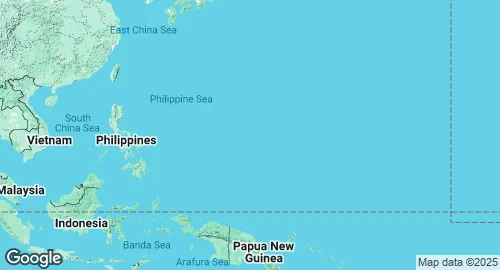
| Capital | Agaña |
| Land Area | 544 km² |
| Coastline Length | 125 km |
National Flag

Defense Statistics & Key Metrics
| Population | 163730 (2021) |
| GDP | $6.2 billion (2021) |
| GDP per capita | $38075 (2021) |
Population and Military Personnel Trends
GDP and Inflation Rate Trends
Strategic Overview in 2026
Strategic Position
Guam is an unincorporated territory of the United States located in the Micronesia subregion of the Western Pacific. Positioned within the "Second Island Chain," it serves as the primary forward operational hub for United States Indo-Pacific Command (USINDOPACOM) in the Philippine Sea. The territory is situated approximately 1,500 miles from Tokyo, Manila, and Taipei, placing it within the operational range of major regional flashpoints.
Primary security concerns center on the proliferation of long-range precision-strike capabilities by the People’s Republic of China (PRC) and the Democratic People’s Republic of Korea (DPRK). Defense doctrine focuses on Guam as a power-projection platform for air and sea operations, a logistics node for the sustainment of forces in the Western Pacific, and a critical link in the United States' regional missile defense architecture.
As a US territory, Guam is protected under the North Atlantic Treaty Organization (NATO) Article 5 framework (as clarified by US legal interpretation regarding Pacific territories) and is a component of bilateral security treaties with Japan, South Korea, the Philippines, and Australia. It also plays a role in the Compacts of Free Association (COFA) with the Federated States of Micronesia, the Republic of the Marshall Islands, and the Republic of Palau, providing a secure corridor for US military movement across the Central Pacific.
Military Forces
Guam does not maintain a sovereign military but hosts a heavy concentration of United States Armed Forces under the command of Joint Region Marianas (JRM). JRM is a joint command that provides executive oversight for installation management and operational support for all branches.
United States Navy
Naval Base Guam serves as a homeport for Los Angeles-class fast-attack submarines. It also maintains submarine tenders to support the maintenance and provisioning of the fleet. The base includes the Polaris Point submarine docks and the Apra Harbor facilities, which accommodate carrier strike groups and amphibious ready groups.
United States Air Force
Andersen Air Force Base (AFB) functions as a primary hub for heavy bomber operations and long-range reconnaissance. Through the Continuous Bomber Presence (CBP) mission, the base hosts rotational deployments of B-52H Stratofortress, B-1B Lancer, and B-2A Spirit bombers. The 36th Wing provides support for these assets, along with KC-135 Stratotankers and RQ-4 Global Hawk unmanned aerial vehicles (UAVs).
United States Marine Corps
Marine Corps Base Camp Blaz is the first new Marine Corps installation activated since 1952. It is designed to house several thousand Marines as part of the force realignment from Okinawa, Japan. The base serves as a hub for training and rapid response operations within the Indo-Pacific.
Guam National Guard
The Guam National Guard operates under the jurisdiction of the Governor of Guam but is integrated into the federal force structure. * Guam Army National Guard: Includes the 294th Infantry Regiment and various support units. * Guam Air National Guard: The 254th Air Base Group provides security, engineering, and refueling support at Andersen AFB.
Air and Missile Defense
The territory is protected by Task Force Talon, which operates a Terminal High Altitude Area Defense (THAAD) battery. This unit is integrated into a multi-layered defense network designed to intercept ballistic missile threats.
Defense Industry
Guam maintains a specialized defense services sector primarily focused on ship repair and facility maintenance. Domestic capabilities are centered on the Guam Shipyard and Cabras Marine Corporation, which provide dry-docking and industrial repair services for US Navy and Military Sealift Command vessels. The territory is entirely reliant on the United States mainland for the procurement of weapons systems, platforms, and advanced technology.
Strategic Trends
The primary shift in Guam’s defense posture is the implementation of the Enhanced Integrated Air and Missile Defense (EIAMD) system. Planned for full integration through 2026, this system utilizes a 360-degree sensor and interceptor architecture. It combines components of the Aegis Ashore system, Patriot (PAC-3) batteries, and the Indirect Fire Protection Capability (IFPC) to counter simultaneous threats from ballistic, cruise, and hypersonic missiles.
Modernization programs emphasize "Agile Combat Employment" (ACE). This involves the hardening of aircraft hangars and the expansion of austere airfields across the Marianas to prevent the concentration of assets in single, vulnerable locations. In 2025, the Department of Defense increased funding for the Pacific Deterrence Initiative (PDI), which covers infrastructure improvements on Guam, including the construction of hardened command and control centers and expanded fuel storage facilities.
Constraints facing the military presence on Guam include the limited capacity of the local electrical grid and water infrastructure, which require continuous federal investment to meet the demands of expanding military installations. Environmental and land-use negotiations with the local government also influence the pace of base expansion and live-fire training range development.
Frequently Asked Questions
Does Guam have nuclear weapons?
Military Expenditure: SIPRI Milex. Suggest a change