Panama Military Forces
The Air Force flies 39 aircraft. Panama has no nuclear weapons.
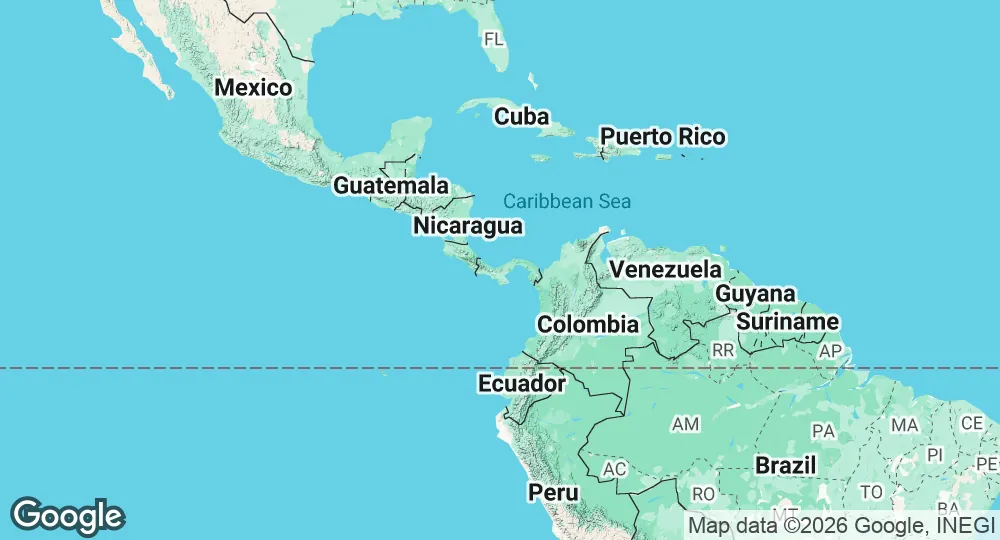
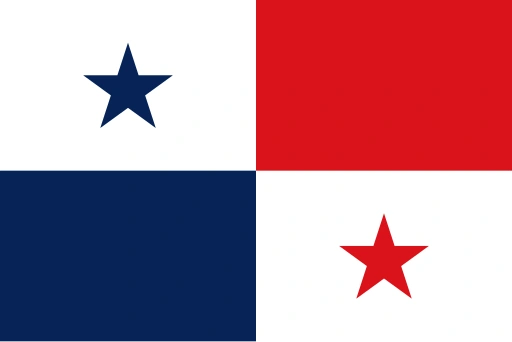
Armed Forces in 2026
| Domain | Strength | Composition |
|---|---|---|
| Panamanian National Aeronaval Service | 39 aircraft | 24 helicopters +7 on order |
| Personnel | 28,000 total | 26,000 paramilitary |
Country File
| Population | 4.6M (2025) |
| GDP | $90.5 billion (2025) |
| GDP per capita | $19,790 |
| Military budget | $952M (2024) |
| Share of GDP | 1.1% (2024) |
| Military spending per capita | $208 (2024) |
| Inflation rate | -0.19% (2025) |
| Capital | Panama City |
| Region | America |
| Land area | 74,340 km² |
| Coastline | 2,490 km |
| Land borders | 555 km |
| Bordering countries | 2 |
| Currency | PAB |
Strategic Overview in 2026
Strategic Position
Panama’s defense posture is defined by its status as a demilitarized nation that constitutionally abolished its standing army following the 1989 United States invasion. Primary security concerns center on the protection of the Panama Canal, the management of irregular migration through the Darien Gap, and the interdiction of transnational organized crime. The country’s strategic doctrine emphasizes civilian-led internal security, border integrity, and the preservation of the canal's neutrality as mandated by the 1977 Treaty of Neutrality.
Key regional relationships are dominated by a close security partnership with the United States. In April 2025, Panama signed a Memorandum of Understanding (MoU) with the U.S. Department of Defense, authorizing the U.S. military to utilize three air and naval facilities for interdiction missions and joint training. This agreement also facilitated the revival of the PANAMAX defense exercise for 2026, which focuses on multi-national responses to threats against the canal.
On its southern border, Panama collaborates with Colombia to address security challenges in the Darien Gap. While historically a transit point for insurgent groups, the region is now a primary zone for the movement of irregular migrants and drug trafficking. Tensions occasionally arise regarding the perceived influence of non-regional powers, such as China, on canal infrastructure, prompting Panamanian leadership to repeatedly reaffirm sovereign control and the waterway's neutral status.
Military Forces
Panama maintains the Panamanian Public Forces (Fuerza Pública de Panamá), a paramilitary and police-centric structure under the Ministry of Public Security. The forces consist of approximately 35,000 active personnel divided among four primary branches:
- National Police (Policía Nacional): The largest branch, with approximately 25,000 personnel, responsible for urban security and general law enforcement.
- National Aeronaval Service (Servicio Nacional Aeronaval - SENAN): Performs the roles of a coast guard and air force. It operates approximately 4,000 personnel and is tasked with maritime patrol, search and rescue, and canal security.
- National Border Service (Servicio Nacional de Fronteras - SENAFRONT): A specialized paramilitary force of approximately 4,500 personnel focused on land border security, particularly in the Darien and Chiriquí provinces.
- Institutional Protection Service (Servicio de Protección Institucional - SPI): An elite unit responsible for the protection of the President and key government infrastructure.
Equipment and Capabilities
Panama does not operate main battle tanks or supersonic fighter aircraft. Force modernization is focused on aerial surveillance and maritime interdiction:
- Aviation: In 2025, the government approved the acquisition of Embraer A-29 Super Tucano light attack aircraft, marking the first time the country will operate combat-capable planes. The fleet also includes Airbus C-295 transport aircraft, King Air 250 maritime patrol aircraft, and Enaer T-35C Pillán trainers. Helicopter assets include Sikorsky UH-60 Black Hawks, Bell 412s, and MD-500 utility models.
- Naval: SENAN maintains a fleet of coastal patrol vessels, logistics support ships, and numerous interceptor craft.
- Specialized Units: SENAFRONT operates the 5th Special Forces Brigade, which includes a Special Forces Battalion and a Special Boat Unit. This brigade specializes in jungle warfare and counter-narcotics operations in the Darien Gap.
Defense Industry
Panama does not possess a domestic arms manufacturing sector and remains entirely reliant on foreign imports for weaponry, aircraft, and armored vehicles. Major suppliers include the United States, Brazil, and the European Union.
The country maintains a robust maritime maintenance and repair infrastructure centered on the Panama Canal. Facilities such as the Balboa Shipyard and Astibal provide dry-docking and technical support for large vessels, including those used by SENAN. While these facilities primarily serve the commercial maritime sector, they provide essential lifecycle support for the Panamanian state's naval assets.
Strategic Trends
The primary modernization priority is the enhancement of aerial and maritime response capabilities to combat illegal trafficking. The 2025 procurement of Super Tucano and C-295 aircraft represents a significant shift toward increasing the force’s ability to monitor and interdict targets in remote jungle and maritime areas.
Panama’s security budget for 2026 is approximately $985 million, part of a larger $34.9 billion national budget. While security spending has increased under the current administration, the government faces significant constraints due to a high national debt-to-GDP ratio, which exceeds 55%. These fiscal pressures limit the scale of large-scale equipment acquisitions and necessitate continued reliance on foreign security assistance and equipment donations, particularly from the United States. Future force structure shifts are expected to focus on cyber defense and the integration of biometric surveillance systems at border checkpoints to manage the flow of irregular migration.
Military Expenditure: CIA World Factbook. Last updated on 25 September 2026. Suggest a change
Frequently Asked Questions
What is Panama's defense budget?
Does Panama have nuclear weapons?
How many aircraft does Panama's air force have?
What percentage of GDP does Panama spend on defense?
Does Panama have paramilitary forces?
- SEP 252026 Updated Population, GDP and inflation added for 2025
- AUG 292026 Updated Recorded as a state without armed forces, outside the ATLAS ranking
- AUG 42026 Updated Global Military Index updated in a site-wide editorial pass
- AUG 32026 Updated Global Military Index updated
- JUL 162026 Updated Global Military Index updated in a site-wide editorial pass
- JUN 162026 Updated Yearly statistics, military spending and 2 more fields updated
- JAN 132026 Updated Description added