EMB-314 Super Tucano
Brazilian turboprop light attack and counter-insurgency aircraft, designed in the late 20th century, extensively used for border patrol, training, and aerial interception. Key figures: top speed 590 km/h, range 2,855 km, service ceiling 10,668 m, max takeoff weight 5,400 kg, unit price $10M, built 260. In service with 18 air forces as of 2026 — Brazil (81), Colombia (24), Chile (22) and 15 others.
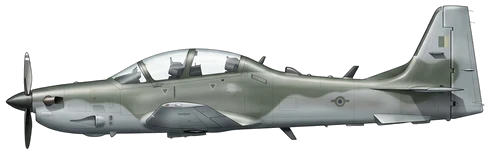
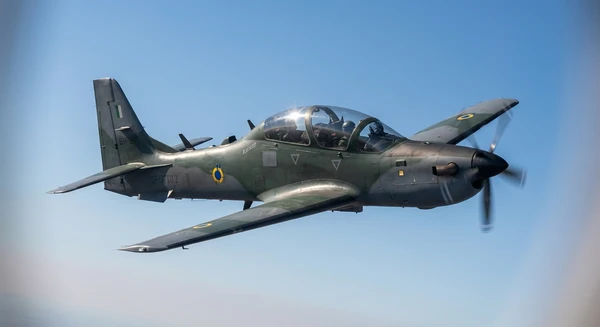
| Crew | 2 (pilot, navigator/student) |
| Length | 11.4 m (37.3 ft) |
| Wingspan | 11.1 m (36.5 ft) |
| Height | 4.0 m (13.0 ft) |
| Wing area | 19.4 m² (208.8 sqft) |
| Empty weight | 3,200 kg (7,055 lbs) |
| Max. takeoff weight | 5,400 kg (11,905 lbs) |
| Powerplant | 1 × Pratt & Whitney Canada PT6A-68C 1,196 kW each |
| Maximum speed | 590 km/h (367 mph) |
| Operational range | 2,855 km (1,774 mi) |
| Endurance | 8 hours |
| Service ceiling | 10,668 m (35,000 ft) |
| Climb rate | 16.4 m/s (53.8 ft/s) |
-
 Brazil
81
Brazil
81
-
 Colombia
24
Colombia
24
-
 Chile
22
Chile
22
-
 Ecuador
17
Ecuador
17
-
 Indonesia
13
Indonesia
13
-
 Nigeria
12
Nigeria
12
-
 Dominican Republic
8
Dominican Republic
8
-
 Philippines
6 +6
Philippines
6 +6
-
 Angola
6
Angola
6
-
 Portugal
5 +7
Portugal
5 +7
-
 Lebanon
5
Lebanon
5
-
 Turkmenistan
5
Turkmenistan
5
-
 Paraguay
4 +2
Paraguay
4 +2
-
 Mauritania
4
Mauritania
4
-
 Burkina Faso
3
Burkina Faso
3
-
 Mali
3
Mali
3
-
 Uruguay
2 +4
Uruguay
2 +4
-
 Afghanistan
1
Afghanistan
1
-
 Ghana
0 +5
Ghana
0 +5
-
 Panama
0 +4
Panama
0 +4
- Air-to-Air Short-Range AIM-9L Sidewinder
- Air-to-Air Short-Range MAA-1A Piranha
- Air-to-Air Short-Range MAA-1B Piranha
- Air-to-Air Short-Range Python 3
- Air-to-Air Short-Range Python 4
- Air-to-Ground AGM-65 Maverick
- Air-to-Ground Roketsan Cirit
- Unguided Bomb Mk 81
- Unguided Bomb Mk 82
- Unguided Bomb M117
- Unguided Bomb BINC-300
- Cluster Bomb BLG-252
- Guided Bomb FPG-82
- Guided Bomb SMKB-82
- Guided Bomb GBU-54
- Guided Bomb GBU-38
- Guided Bomb GBU-39
- Guided Bomb Paveway II
- Guided Bomb Lizard
- Guided Bomb Griffin
- Rocket Pod LM-70/19 (SBAT-70)
- Rocket Pod LAU-68A/G
- Rocket Pod APKWS
- Gun Pod M20A1
- Gun Pod FN Herstal HMP
- Gun Pod Dillon Aero M134 Minigun
Recent Events — EMB-314 Super Tucano
6 events →
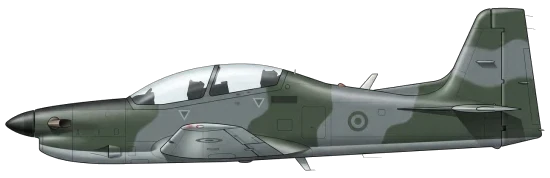
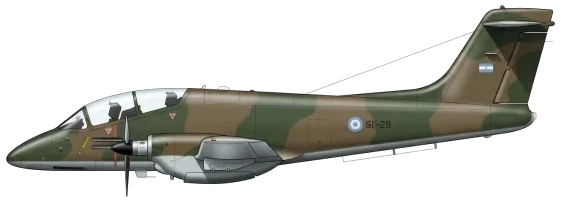
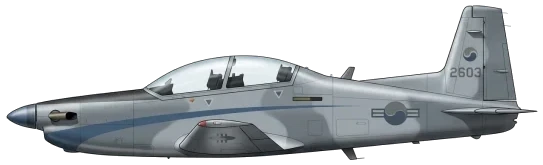
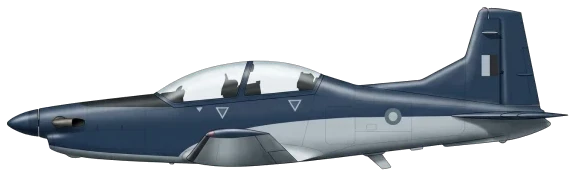
Description
The Embraer EMB-314 Super Tucano, also designated ALX or A-29, is a Brazilian turboprop light attack and counter-insurgency aircraft developed from the EMB-312 Tucano. Developed to meet Brazilian Air Force requirements for border patrol and training under the Amazon Surveillance System, the EMB-314 evolved from the EMB-312H prototype, which first flew in September 1991. The production-configured aircraft made its initial flight on 2 June 1999. Embraer manufactures the aircraft in Brazil and, in partnership with Sierra Nevada Corporation, in Jacksonville, Florida.
Design
The aircraft is powered by a 1,600 shp (1,200 kW) Pratt & Whitney Canada PT6A-68C turboprop engine driving a five-bladed Hartzell propeller. The airframe is strengthened for a fatigue life of 8,000–12,000 hours and includes Kevlar armor protection, a corrosion-protected structure, and a bird-strike-resistant canopy. Avionics, supplied primarily by Elbit Systems, include a night-vision-compatible glass cockpit with HOTAS controls, HUD, mission computer, and a laser range finder. Sensor systems include the FLIR AN/AAQ-22 Star Safire II.
Armament
The EMB-314 carries two internal, wing-mounted .50 caliber machine guns with 200 rounds each. It features five external hardpoints with a total payload capacity of 1,550 kg (3,300 lb). Armament options include 20 mm cannon pods, rocket pods (LAU-68A/G, APKWS), air-to-air missiles (AIM-9L, MAA-1 Piranha, Python 3/4), air-to-ground missiles (AGM-65 Maverick), and general-purpose or precision-guided bombs, including Paveway II, Lizard, and Griffin.
Operational History
Operational deployments began with the Brazilian Air Force in 2003, which acquired 99 aircraft for border surveillance and counter-narcotics missions under the Sivam programme and Operation Ágata. The Colombian Air Force acquired 25 aircraft, deploying them in combat operations against FARC and ELN guerillas, including Operations Phoenix and Sodoma. Through the U.S. Light Air Support program, the United States acquired 26 A-29s for the Afghan Air Force, which utilized them for close air support from 2016 until the 2021 Taliban offensive. Other export operators include Chile, Ecuador, Indonesia, Nigeria, the Dominican Republic, and the Philippines.
Variants
- A-29A: Single-seat version utilized for attack and interception operations.
- A-29B: Two-seat version configured for tactical instruction, training, and light attack missions.
- A-29N: NATO-compliant variant featuring single-pilot operation capability and specific data link communications.
- A-29M: Modernized standard featuring fourth and fifth-generation cockpit and data link systems.
- A-29C: Variant operated for testing and training by the United States Air Force Test Pilot School.
Frequently Asked Questions
What type of aircraft is the EMB-314 Super Tucano?
What is the maximum speed of the EMB-314 Super Tucano?
What is the range of the EMB-314 Super Tucano?
When did the EMB-314 Super Tucano first fly?
How many EMB-314 Super Tucano have been built?
Which countries operate the EMB-314 Super Tucano?
How much does a EMB-314 Super Tucano cost?
What is the service ceiling of the EMB-314 Super Tucano?
- AUG 122026 Updated Range corrected to the ferry range
- JUL 232026 Updated Sources and cross-references refreshed
- JUN 302026 Created Page created: EMB-314 Super Tucano; then built added