Serbia Military Forces
Serbia ranks #62 of 170 militaries worldwide in 2026, with 28,150 active troops. The Serbian Army fields 1,572 ground vehicles, including 262 main battle tanks; the Air Force flies 151 aircraft, including 32 combat aircraft; the Navy operates 30 warships. Landlocked, Serbia has no navy and no nuclear weapons.
Armed Forces in 2026
| Domain | Strength | Composition |
|---|---|---|
| Serbian Air Force and Air Defence | 151 aircraft | 32 combat 61 helicopters 4 air bases +19 on order |
| Serbian River Flotilla | 30 warships | |
| Ground Forces | 1,572 vehicles | 262 main battle tanks |
| Personnel | 28,150 active | 50,150 reserve 3,000 paramilitary |
ATLAS Index (Aggregate Total of Land, Air and Sea strength)
Full ranking →| Pillar | Weight | Score | Basis |
|---|---|---|---|
| Manpower | 10% | 35.9 | Active, reserve & paramilitary personnel |
| Ground forces | 20% | 38.4 | ARMS inventory power: armour & artillery by type and era, attack helicopters, armament |
| Naval power | 20% | 21.2 | SEAS inventory power: hulls by type, size and era, air wing, sustainment, armament |
| Air power | 25% | 23.8 | AIRS inventory power: aircraft by type and generation, enablers, armament |
| Nuclear deterrent | 10% | 0.0 | No declared nuclear capability |
| Defense budget | 15% | 25.9 | Annual spending, purchasing-power adjusted |
| Availability | modifier | ground ×0.96 · naval ×1.15 · air ×1.06 | Budget per point of each force, from the branch indexes |
Country File
| Population | 6.6M (2024) |
| GDP | $90.1 billion (2024) |
| GDP per capita | $13,679 |
| Military budget | $2.3B (2024) |
| Share of GDP | 2.5% (2024) |
| Military spending per capita | $342 (2024) |
| Inflation rate | 4.67% (2024) |
| Capital | Belgrade |
| Region | Europe |
| Land area | 88,246 km² |
| Land borders | 2,027 km |
| Bordering countries | 8 |
| Currency | RSD |
Strategic Overview in 2026
Strategic Position
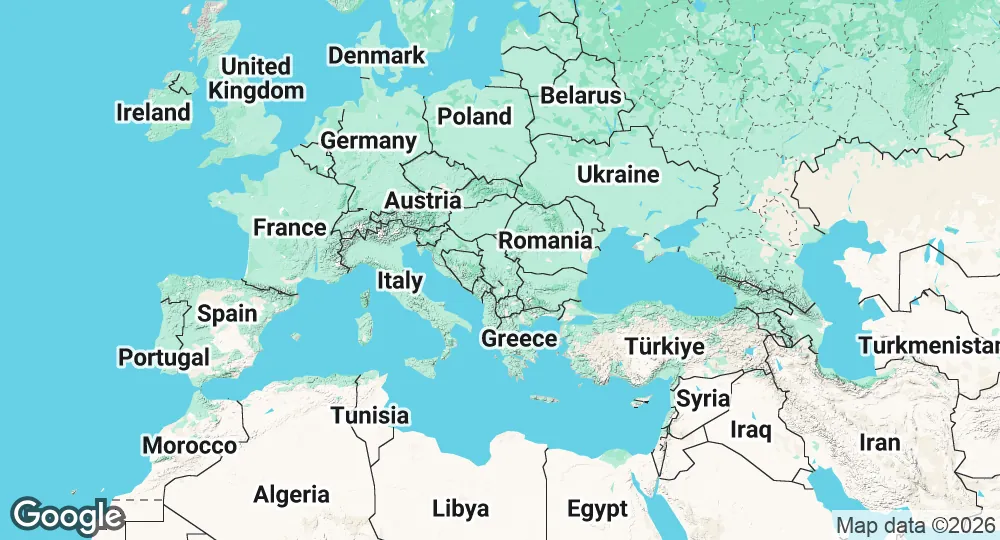
Serbia maintains a policy of military neutrality, formalized by a 2007 parliamentary resolution. The country does not seek membership in NATO or any other military alliance, though it participates in the NATO Partnership for Peace (PfP) program and maintains an Individual Partnership Action Plan (IPAP). Primary security concerns are centered on the administrative line with Kosovo and the preservation of territorial integrity under UN Security Council Resolution 1244.
The defense doctrine is based on the concept of "Total Defense," which integrates military and civilian resources for national protection. Geopolitically, Serbia is surrounded by NATO member states, with the exception of Bosnia and Herzegovina. This position necessitates a balancing of relations between the European Union, to which Serbia is an accession candidate, and traditional security partners including Russia and China. Bilateral defense cooperation has expanded to include Western nations, as evidenced by major procurement agreements with France and Germany, alongside long-standing technical ties with Eastern suppliers.
Military Forces
The Serbian Armed Forces (SAF) are organized into two primary branches: the Army and the Air Force and Air Defence. Command authority rests with the General Staff, which reports to the Ministry of Defence. Active personnel numbers are approximately 25,000 to 28,000. In 2026, the force structure is transitioning due to the reintroduction of mandatory military service, which is projected to add approximately 20,000 conscripts annually through 75-day service cycles.
- Army: The ground force is organized into four territorial brigades, a Special Forces brigade, and an artillery brigade. Primary armored capabilities consist of M-84 and T-72MS main battle tanks. Mechanized infantry units utilize BVP M-80A tracked vehicles and Lazar 3 wheeled armored vehicles. Artillery units operate Nora B-52 self-propelled howitzers and multi-barrel rocket launchers.
- Air Force and Air Defence: The aviation component operates MiG-29 multirole fighters and J-22 Orao ground-attack aircraft. The rotary-wing fleet includes Mi-35M attack helicopters, Mi-17 transport helicopters, and H145M utility helicopters. Air defense is structured in layers, utilizing the Chinese FK-3 long-range surface-to-air missile system, Russian Pantsir-S1 point-defense systems, and domestic PASARS-16 short-range systems.
- Specialized Units: The 72nd Special Operations Brigade and the 63rd Parachute Brigade serve as the primary unconventional warfare and rapid reaction forces. Plans initiated in 2025 aim to expand these units by several hundred personnel to increase elite operational capacity.
Defense Industry
The state-owned company Yugoimport-SDPR acts as the primary integrator and exporter for the domestic defense sector. Serbia maintains a high degree of self-sufficiency in small arms, ammunition, and wheeled armored vehicles.
- Domestic Production: Major products include the Nora B-52 155mm self-propelled howitzer, the Lazar and Milos families of armored vehicles, and the Mali Milos unmanned ground vehicle. Zastava Arms produces various small arms, including the M21 and M19 assault rifles.
- Ammunition and Missiles: The EDePro company and various state factories produce rockets and loitering munitions, such as the Raven direct attack drone system.
- Exports: Serbian defense products are exported to over 100 countries. Notable programs include the sale of Nora B-52 systems to Cyprus and Kenya, and the export of Tamnava multiple rocket launchers.
Strategic Trends
Defense spending for 2026 is projected at approximately $2.7 billion, representing roughly 2.5% of GDP. Modernization efforts focus on a technological shift toward Western platforms and unmanned systems. A 2025 agreement for the acquisition of 12 Rafale multirole fighters from France marks a transition away from Russian-sourced fixed-wing aviation, with deliveries expected to begin in 2028.
The reintroduction of conscription, scheduled to begin in early 2026, represents a shift from a fully professional force to a hybrid model aimed at rebuilding the reserve pool. Procurement priorities include the integration of Chinese CH-92A and CH-95 unmanned aerial vehicles (UAVs) and the expansion of domestic loitering munition production. Challenges facing the military include the demographic pressures affecting recruitment and the logistical complexity of maintaining a fleet that combines Russian, Chinese, and Western technology.
Military Expenditure: CIA World Factbook. Last updated on 11 August 2026. Suggest a change
Serbian Defense Manufacturing
Designed in SerbiaFrequently Asked Questions
How large is Serbia's military?
What is Serbia's defense budget?
How does Serbia rank militarily in the world?
Does Serbia have nuclear weapons?
How many aircraft does Serbia's air force have?
How large is Serbia's navy?
How many tanks does Serbia have?
What percentage of GDP does Serbia spend on defense?
What is Serbia's military personnel per capita?
Does Serbia have paramilitary forces?
- AUG 112026 Updated Global Military Index updated
- AUG 42026 Updated Global Military Index updated in a site-wide editorial pass
- AUG 32026 Updated Global Military Index updated
- JUL 222026 Updated Rank insignia and ranks overview added
- JUL 162026 Updated Global Military Index updated in a site-wide editorial pass
- JUN 162026 Updated Yearly statistics, military spending and 2 more fields updated
- APR 82026 Updated Paramilitary personnel updated