Hai Shih-class (Guppy II)
Commissioned by Taiwan in 1973, the US-built *Hai Shih*-class submarine serves primarily in a training role and is distinguished by its World War II-era Tench-class hull. Key figures: displacement 1,570 tons, length 95 m, top speed 20 knots, crew 81, built 2. In service with 1 navy — Taiwan (2).
| Subtype | Diesel-electric training submarine |
| Displacement | 1570 tons |
| Crew | 81 members |
| Width | 8.3 m (27.2 ft) |
| Length | 95.0 m (311.7 ft) |
| Propulsion | 4 × diesel engines driving electrical generators, 2 × 126-cell Sargo batteries, 2 × low-speed... |
| Range | 11,000 nm |
| Endurance | 75 days |
| Maximum speed | 20 knots |
- 1 or 2 x 5-inch (127 mm)/25 caliber deck guns
- 1 x 40mm Bofors gun
- 1 x twin 20mm Oerlikon mount
- 28 x torpedoes (or up to 56 mines)
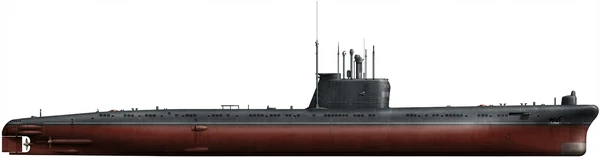
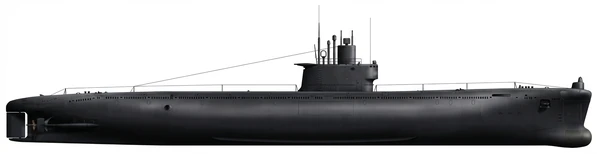
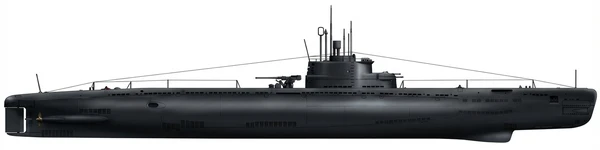
Description
The submarine Hai Shih (S 791) was originally built for the United States Navy as the Tench-class vessel USS Cutlass (SS-473). Launched in 1944, the submarine belongs to a class developed as an improvement over the preceding Gato and Balao designs, featuring a stronger physical construction and a modified internal layout that converted a ballast tank to carry fuel for increased range.
The design of the class resolved a safety vulnerability present in earlier submarines by rearranging the main ballast tanks to remove internal vent riser pipes from the torpedo rooms. This change eliminated the risk of high-pressure pipe ruptures during depth charge attacks and freed internal space, allowing the vessel to carry additional torpedoes. The original diesel-electric propulsion system utilized diesel engines supplying direct-drive electric motors to turn two shafts, with lead-acid batteries providing submerged power.
Between 1947 and 1949, the submarine underwent a GUPPY II modernization. This configuration replaced the original batteries with more compact lead-acid units, increasing the total battery cell count to improve submerged power. The upgrade also added a snorkel, streamlined the sail and bow, upgraded the electric motors to double-armature types, and updated the electrical, air conditioning, sonar, fire-control, and electronic support measures systems.
The submarine entered Japanese waters for its first war patrol immediately after the August 1945 ceasefire. Following its post-war GUPPY II conversion, the vessel continued in United States Navy service until 1973, when it was transferred to the Republic of China Navy of Taiwan and renamed Hai Shih. Both boats remain in service with the 256th Submarine Squadron, the last operational World War II-era, US-built submarines in service with any navy. Retirement is tied to the entry into service of the domestically built Hai Kun, which has not been commissioned after missing a November 2025 delivery deadline; the plan is to withdraw whichever of the two boats has the lower readiness first and retain the other as a training boat. The class carried the largest weapons load of any conventional submarine then in service.
Frequently Asked Questions
What type of ship is the Hai Shih-class?
What is the displacement of the Hai Shih-class?
What is the maximum speed of the Hai Shih-class?
What is the range of the Hai Shih-class?
How many crew members serve on the Hai Shih-class?
How many Hai Shih-class ships have been built?
Which countries operate the Hai Shih-class?
- AUG 62026 Updated Description updated
- JUL 272026 Updated Endurance updated
- JUL 252026 Created Page created: Hai Shih; then type, number built and 2 more fields updated