Naval Air Station Meridian
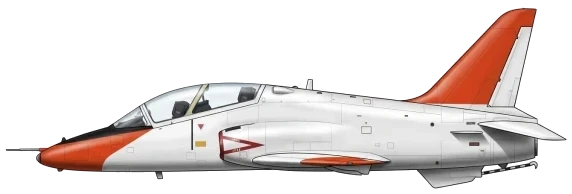
Naval Air Station Meridian (ICAO KNMM) is an active military air base in Mississippi, United States, operated by the US Navy. It has 3 runways (longest 2,439 m). Home to Training Air Wing One, flying T-45 Goshawk.
Facility Details
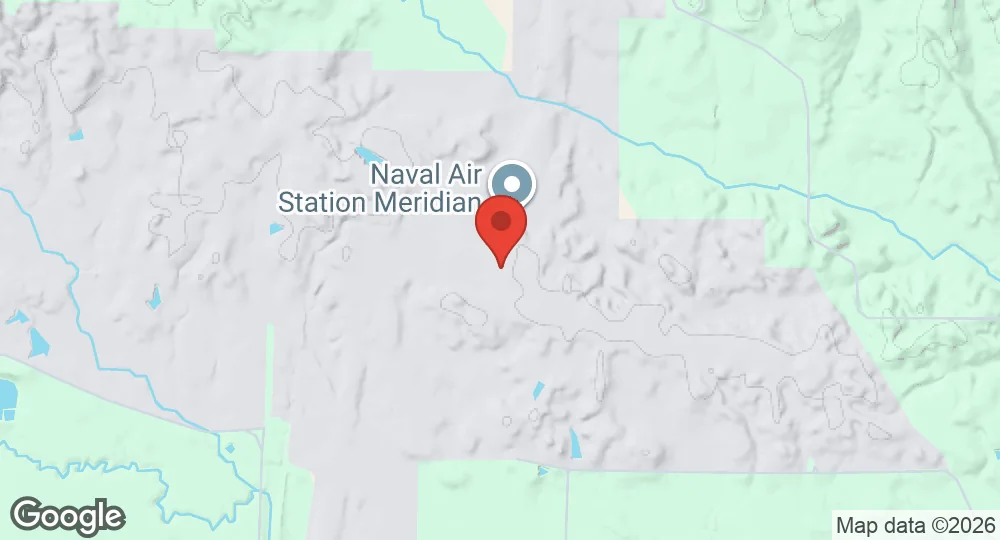
32.5519°N, 88.5556°W · 96 m elevation
| Operating Country | 🇺🇸 United States |
| Location | 🇺🇸 United States |
| Status | Active |
| Usage | Military only |
| Year built | 1961 |
| Operating Organization | US Navy |
| Units |
Training Air Wing One
|
| Elevation | 96 m (315 ft) |
| ICAO code | KNMM |
| Runways |
01L/19R · 2,439 m (8,002 ft) · Concrete01R/19L · 2,439 m (8,002 ft) · Concrete10/28 · 1,951 m (6,401 ft) · Concrete
|
| Website | www.cnic.navy.mil/Regions/cnrse/installations/nas_meridian/ |
- 31 km Key Field Air National Guard Base 186th Air Refueling Wing
- 121 km Columbus Air Force Base 14th Flying Training Wing
- 145 km Jackson Air National Guard Base 172d Airlift Wing
- 202 km Sumpter Smith Air National Guard Base 117th Air Refueling Wing
- 205 km Montgomery Air National Guard Base 187th Fighter Wing
- 207 km Maxwell Air Force Base 42nd Air Base Wing
Description
Naval Air Station (NAS) Meridian is located 11 miles northeast of Meridian, Mississippi, within Lauderdale and Kemper Counties. Construction began in July 1957, and the facility was commissioned as a Naval Auxiliary Air Station (NAAS) on July 19, 1961. The operational area was designated McCain Field in honor of Admiral John S. McCain, Sr. Training Squadron SEVEN (VT-7) arrived in 1961, followed by the establishment of Training Squadron NINE (VT-9) later that year. The installation became a full Naval Air Station in July 1968. Training Air Wing ONE was commissioned in August 1971, and Training Squadron NINETEEN (VT-19) was established the same month. The TA-4J advanced jet trainer was introduced to the station in October 1971. The Naval Technical Training Center was commissioned in April 1974, and the base was designated a Major Shore Command in 1982.
The United States Navy operates the base under the direction of Navy Region Southeast. NAS Meridian serves as one of the Navy's two strike pilot training facilities. Its primary mission is the conduct of undergraduate strike pilot training. The base hosts Training Air Wing ONE and its subordinate squadrons, VT-7 and VT-9. Other tenant units include the Naval Technical Training Center and Marine Aviation Training Support Squadron One.
Infrastructure includes McCain Field and Naval Outlying Landing Field (NOLF) Joe Williams, located 25 miles northwest of the main installation. NOLF Joe Williams is utilized for Field Carrier Landing Practice to prepare students for initial carrier qualifications. The base operates squadrons of T-45 Goshawk aircraft. Airfield operations are supported by an Air Traffic Control Division managing radar final control and tower systems, and a Ground Electronics Maintenance Division that maintains navigation aids and communication equipment. The Naval Technical Training Center, also known as the Stennis Center, provides technical training and administrative services for the command.
- AUG 192026 Updated Elevation corrected
- AUG 142026 Updated Based aircraft recorded: T-45 Goshawk
- AUG 132026 Updated Runway designations, surfaces and lengths recorded
- APR 112026 Updated Description updated in a site-wide editorial pass
- APR 102026 Updated Description added
- MAR 302026 Created Page created: Naval Air Station Meridian