CH-3 Rainbow
Chinese unmanned combat aerial vehicle, developed in the early 21st century, used for reconnaissance and precision strike operations. Key figures: unit price $1M. In service with 2 air forces as of 2026 — Algeria (5), Nigeria (3).
- Air-to-Ground AR-1
- Guided Bomb FT-9
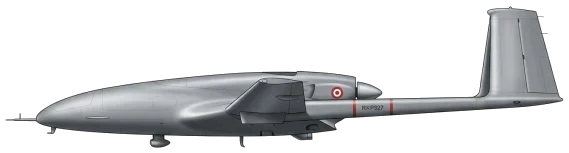
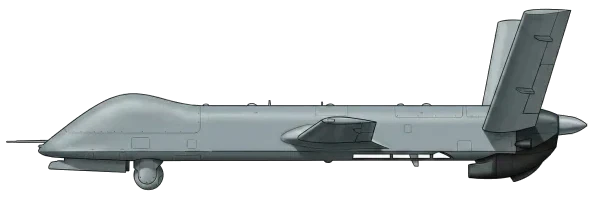
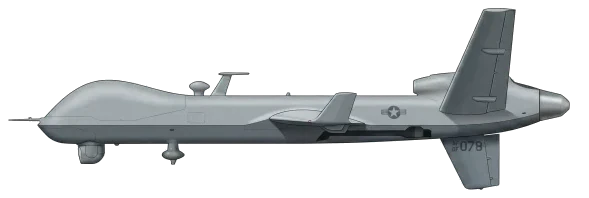
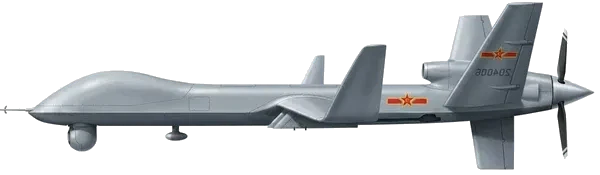
Description
The CH-3 Rainbow is a fixed-wing unmanned combat aerial vehicle (UCAV) designed by the China Academy of Aerospace Aerodynamics (CAAA) and marketed by the China Aerospace Science and Technology Corporation (CASC). The aircraft first flew in 2007. The Pakistani NESCOM Burraq, which carries the Burq missile, may be based on the CH-3 design.
Armament
The CH-3 is equipped with a shared data link system that enables it to cooperate operationally with the CH-5 UAV. The aircraft has a payload capacity of 70 kg and is armed with the AR-1 air-to-ground missile and the FT-9 guided bomb.
Operational History
In active operations, the Nigerian Air Force deployed the CH-3 against the Boko Haram insurgency in 2015. One Nigerian CH-3 crashed in January 2015, and the aircraft were operated infrequently due to poor quality. As of 2023, Nigeria maintained at least one active CH-3, with eight more in delivery in 2020. The Myanmar Air Force produces the CH-3 locally under license, and the Myanmar military utilized the aircraft for counterinsurgency operations in 2015 and 2016 during the Myanmar civil war. Additional export operators include the Algerian Air Force, the Sudanese Air Force, and the Turkmen Air Force.
Variants
- CH-3A: A variant of the UCAV operated by the Turkmen Air Force.
Frequently Asked Questions
What type of aircraft is the CH-3 Rainbow?
When did the CH-3 Rainbow first fly?
Which countries operate the CH-3 Rainbow?
How much does a CH-3 Rainbow cost?
- AUG 202026 Updated Unit price filled (1.0 $M, estimate) for the UAV inventory weighting.
- JUL 232026 Updated Sources and cross-references refreshed
- JUL 12026 Created Page created: CH-3 Rainbow