IAI Harpy
Israeli loitering munition, developed in the late 1980s, designed for the suppression of enemy air defenses by attacking radar systems. Key figures: top speed 185 km/h, range 200 km, service ceiling 4,572 m, max takeoff weight 135 kg, unit price $55M.
| Length | 2.7 m (8.9 ft) |
| Wingspan | 2.1 m (6.9 ft) |
| Max. takeoff weight | 135 kg (298 lbs) |
| Powerplant | 1 × UEL AR731 Wankel rotary engine 28 kW each |
| Maximum speed | 185 km/h (115 mph) |
| Operational range | 200 km (124 mi) |
| Endurance | 2 hours |
| Service ceiling | 4,572 m (15,000 ft) |
- Unguided Bomb 32 kg high-explosive warhead
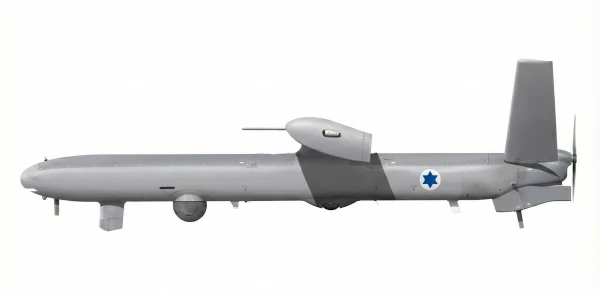
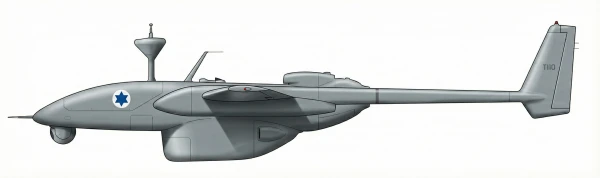
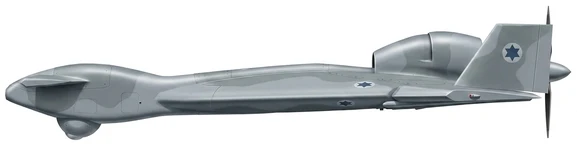

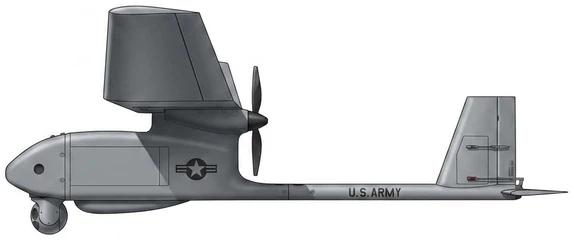
Description
The IAI Harpy is a loitering munition produced by Israel Aerospace Industries (IAI). Development began in the late 1980s after IAI acquired the designs for the ARD-10 loitering drone from the South African company Kentron. The system underwent its first flight tests in 1989. It is designed for the suppression of enemy air defenses (SEAD) by targeting radar systems.
Design
The Harpy airframe measures 2.7 meters in length with a 2.1-meter wingspan and has a gross weight of 135 kg. It is powered by a 28 kW (38 hp) UEL AR731 Wankel rotary engine. The munition reaches a maximum speed of 185 km/h and has an operational range of 200 km. The Mini Harpy variant differs in dimensions, featuring a 2.5-meter length and a 2.9-meter wingspan, and utilizes a triple-homing seeker system that combines anti-radiation sensors with electro-optical day and night seekers.
Armament
Armament for the standard Harpy consists of a 32 kg high-explosive warhead. The Mini Harpy carries a smaller warhead of up to 7.7 kg and is designed for a circular error probable (CEP) of less than one meter.
Operational History
Export customers for the Harpy include Azerbaijan, China, India, South Korea, and Morocco. In 1994, China purchased the system for approximately US$55 million. In 2004, China returned the munitions to Israel to be upgraded under contract. The United States government requested that Israel seize the munitions and nullify the contract, citing concerns regarding the security of Taiwanese and American forces. While Israel maintained that the system was an indigenous design containing no US-produced sub-systems, it returned the munitions to China in 2005 without the upgrades. This incident resulted in a temporary suspension of Israel's status as a Security Cooperative Participant in the Joint Strike Fighter program.
Variants
- IAI Harop: A loitering munition developed as a variant of the Harpy.
- Mini Harpy: A tactical variant with a 41 kg gross weight, a 100 km range, and two-hour endurance.
Frequently Asked Questions
What type of aircraft is the IAI Harpy?
What is the maximum speed of the IAI Harpy?
What is the range of the IAI Harpy?
When did the IAI Harpy first fly?
How much does a IAI Harpy cost?
What is the service ceiling of the IAI Harpy?
- APR 192026 Updated Service entry year added
- APR 72026 Updated Sources and cross-references refreshed
- FEB 72026 Updated Ceiling added
- JAN 172026 Updated Bombs, summary text and short description updated
- JAN 162026 Created Page created: IAI Harpy