Shahed 136
Iranian-designed loitering munition, introduced in the early 2020s, utilized as an autonomous pusher-propelled drone for attacking ground targets. Key figures: top speed 185 km/h, range 2,500 km, service ceiling 4,000 m, max takeoff weight 200 kg, unit price $0.193M, built 26,000.

| Length | 3.5 m (11.5 ft) |
| Wingspan | 2.5 m (8.2 ft) |
| Max. takeoff weight | 200 kg (441 lbs) |
| Powerplant | 1 × Mado MD-550 37 kW each |
| Maximum speed | 185 km/h (115 mph) |
| Operational range | 2,500 km (1,553 mi) |
| Service ceiling | 4,000 m (13,123 ft) |
- Guided Bomb Integrated 50kg Warhead
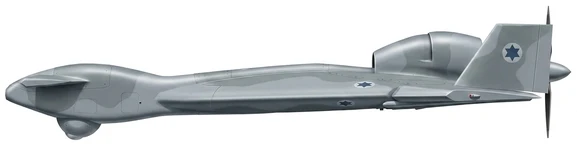
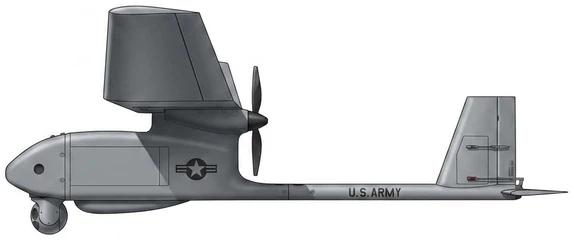
Description
The Shahed 136 is an Iranian loitering munition designed by Shahed Aviation Industries and manufactured by the Iran Aircraft Manufacturing Industrial Company (HESA). First documented in public footage in December 2021, the system is designed for long-range precision strikes against stationary ground targets. Russia produces a localized version of the aircraft at the Alabuga Special Economic Zone under the designation Geran-2. In late 2025, the United States deployed a reverse-engineered version, the Low-cost Uncrewed Combat Attack System (LUCAS), manufactured by SpektreWorks.
Design
The aircraft utilizes a cropped delta-wing airframe with a central blended fuselage and stabilizing rudders at the wingtips. It measures 3.5 meters in length with a wingspan of 2.5 meters and a total mass of approximately 200 kg. Propulsion is provided by a Mado MD-550 four-cylinder piston engine—a reverse-engineered German Limbach L550E—driving a two-bladed pusher propeller. The munition is launched from portable racks using rocket-assisted take-off (RATO), which is jettisoned after the engine engages. Guidance is achieved via an inertial navigation system (INS) corrected by civilian-grade GNSS (GPS and GLONASS). Russian-manufactured units incorporate the Kometa satellite navigation module and airframes constructed from fiberglass over carbon fiber.
Armament
Armament consists of a nose-mounted high-explosive warhead weighing between 30 kg and 50 kg. Specialized payloads include tungsten shrapnel for increased fragmentation and thermobaric explosives. A Russian variant utilizes a 90 kg warhead, which requires a reduction in fuel capacity and limits operational range to 650 km. Standard range estimates vary from 1,000 km to 2,500 km with a cruise speed of approximately 185 km/h.
Operational History
Operational deployments began during the Russo-Ukrainian War, where the munition has been used extensively against power grids and military infrastructure. Ukraine has utilized MiG-29 fighters, Gepard SPAAGs, and mobile fire groups to intercept the drones, claiming an interception rate between 65% and 85%. The aircraft has also been used in strikes against Iraqi Kurdistan in 2022, commercial shipping in the Indian Ocean, and during Iranian strikes against Israel in April 2024. In December 2025, the U.S. Navy conducted the first shipborne launch of a LUCAS drone from the USS Santa Barbara.
Russian Production (Geran-2)
Russia adopted the type as the Geran-2 in 2022 and moved from Iranian-supplied airframes to licensed assembly at the Alabuga Special Economic Zone in Tatarstan, agreed in November 2022. By 2025 the Yelabuga plant was reported to be turning out roughly 170 airframes per day, for a cumulative total on the order of 26,000 units — a scale the Iranian programme never approached, and the reason the Geran-2 rather than the Iranian-built article is the airframe most often recovered in Ukraine. Reported unit costs for the Russian-built version run an order of magnitude below the Iranian export figure.
Russian-built examples have diverged from the Iranian baseline in several respects. The imported satellite navigation unit was replaced by the domestic Kometa-M, a controlled-reception-pattern antenna (CRPA) array that senses the bearing of a jammer and steers nulls toward it while holding lock on GLONASS and GPS signals; the flight control unit is likewise Russian-made. The Iranian honeycomb internal structure gave way to fiberglass over woven carbon fiber, and recovered electronics have included Texas Instruments TMS320 processors and commercial 3G/4G modems used for in-flight reporting. Three purpose-built warheads have been documented alongside the standard high-explosive charge: the TBBCh-50M thermobaric, the OFZBCh-50 high-explosive incendiary, and a tungsten-ball fragmentation type.
Later field modifications go beyond the strike role. Airframes have been observed with a rearward-facing camera on the port wing and with PTM-3 anti-tank mines carried under the wings. From January 2026, examples have been documented carrying air-to-air armament intended to defeat Ukrainian interceptor drones, including AA-8 Aphid-B missiles and a shoulder-launched SA-29 Gizmo mounted above the fuselage.
The Geran designation covers the wider family rather than this airframe alone: Geran-1 is the Russian-built Shahed 131, while the Geran-3 and Geran-4 are jet-powered types and the Geran-5 is a separate design of cruise-missile configuration.
Variants
- Geran-2: Russian-built version, produced at Alabuga in far larger numbers than the Iranian original and progressively modified — see above.
- Shahed 131: A smaller iteration of the design distinguished by wingtip stabilizers that extend only upward.
- Shahed 238: A variant powered by a turbojet engine for increased speed and altitude, featuring a nose-mounted camera for terminal guidance.
- LUCAS: A United States-manufactured clone designed for autonomous one-way attack missions.
- MS Series: An upgraded variant equipped with an infrared camera and an Nvidia Jetson computer for autonomous target acquisition and electronic spectrum surveys.
Frequently Asked Questions
What type of aircraft is the Shahed 136?
What is the maximum speed of the Shahed 136?
What is the range of the Shahed 136?
When did the Shahed 136 first fly?
How many Shahed 136 have been built?
How much does a Shahed 136 cost?
What is the service ceiling of the Shahed 136?
- AUG 182026 Updated Merged the Geran-2 page in: same airframe under its Russian service name
- AUG 12026 Updated Manufacturer updated
- APR 72026 Updated Sources and cross-references refreshed
- FEB 72026 Updated Ceiling added
- JAN 172026 Updated Bombs added; summary text and short description updated
- JAN 162026 Created Page created: Shahed 136