KUS-FS
South Korean medium-altitude long-endurance unmanned aerial vehicle, developed in the early 21st century, designed for strategic surveillance and reconnaissance operations. Key figures: top speed 360 km/h, range 500 km, service ceiling 13,716 m, max takeoff weight 5,750 kg.
| Length | 13 m (42.7 ft) |
| Wingspan | 25 m (82.0 ft) |
| Height | 3 m (9.8 ft) |
| Max. takeoff weight | 5,750 kg (12,677 lbs) |
| Powerplant | 1 × Hanwha Aerospace turboprop 890 kW each |
| Maximum speed | 360 km/h (224 mph) |
| Operational range | 500 km (311 mi) |
| Endurance | 24 hours |
| Service ceiling | 13,716 m (45,000 ft) |
Description
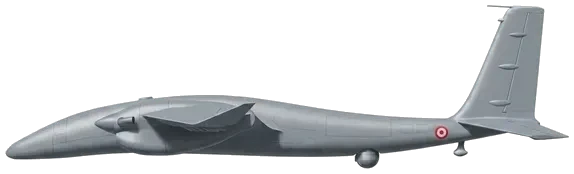
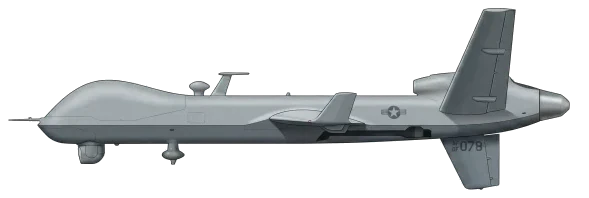
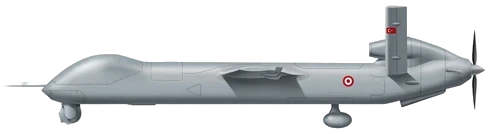
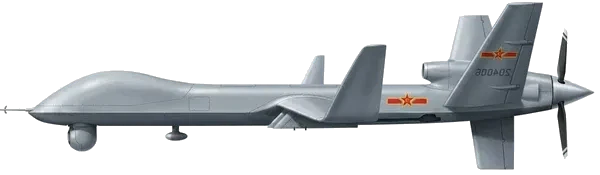
The Korean Air KUS-FS (Korean Unmanned System-Flight Strategic), also designated as the Medium-altitude Unmanned Aerial Vehicle (MUAV), is a medium-altitude long-endurance (MALE) unmanned aerial vehicle. Developed by the Agency for Defense Development (ADD) and the Korean Air Aerospace Division (KAL-ASD), the aircraft is designed for the Republic of Korea Air Force (ROKAF) Group 5 UAV system and occupies the same class as the US-built MQ-9 Reaper. Development began in 2008, and the first flight occurred in 2012. Development concluded in March 2022, and production began in January 2024. The ROKAF plans to acquire two to three complete systems, totaling approximately 10 air vehicles, with introduction scheduled by 2025 and deliveries concluding in 2028.
Design
The KUS-FS has a length of 13 meters, a wingspan of 25 meters, a height of 3 meters, and a maximum takeoff weight of 5,750 kg. Power is provided by a single 1,200 hp Hanwha Aerospace turboprop engine, which is a modified version of the Samsung Techwin SS-760K turbojet engine. The aircraft has a maximum speed of 360 km/h, a range of 500 km, a service ceiling of 13,716 meters, and a flight endurance exceeding 24 hours. The onboard avionics suite consists of Hanwha Systems electro-optics (EO) and infrared (IR) sensors, LIG Nex1 NexSAR synthetic-aperture radar (SAR), line-of-sight (LOS) and satellite data links, and a GPS anti-jamming device. Operating at altitudes between 10 km and 13 km, the aircraft can scan ground targets 110 km away, and its surveillance systems can identify a specific seat in the Seoul Sports Complex from a distance of 130 km.
Armament
For weapon payloads, the aircraft is equipped with four underwing hardpoints used to carry munitions.
Frequently Asked Questions
What type of aircraft is the KUS-FS?
What is the maximum speed of the KUS-FS?
What is the range of the KUS-FS?
When did the KUS-FS first fly?
Which countries operate the KUS-FS?
What is the service ceiling of the KUS-FS?
- JUL 62026 Created Page created: KUS-FS