Bayraktar Akıncı
Turkish high-altitude long-endurance unmanned combat aerial vehicle, introduced in 2021, utilized for strategic reconnaissance and precision strike missions. Key figures: top speed 361 km/h, range 7,500 km, service ceiling 13,716 m, max takeoff weight 5,500 kg, unit price $30M, built 110. In service with 6 air forces as of 2026 — Turkey (28), Pakistan (7), Libya (3) and 3 others.
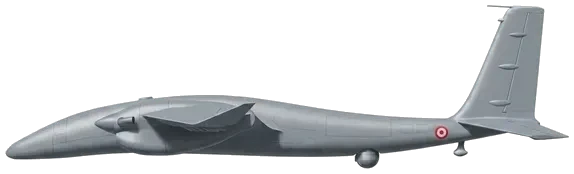
| Length | 12.2 m (40.0 ft) |
| Wingspan | 20 m (65.6 ft) |
| Height | 4.1 m (13.5 ft) |
| Empty weight | 4,501 kg (9,923 lbs) |
| Max. takeoff weight | 5,500 kg (12,125 lbs) |
| Powerplant | 2 × Ivchenko-Progress Motor Sich AI-450T 340 kW each |
| Maximum speed | 361 km/h (224 mph) |
| Operational range | 7,500 km (4,660 mi) |
| Endurance | 25 hours |
| Service ceiling | 13,716 m (45,000 ft) |
- Air-to-Air Short-Range Akdoğan
- Air-to-Air Short-Range Bozdoğan
- Air-to-Air Medium-Range Gökdoğan
- Air-to-Air Long-Range Gökhan
- Anti-Radiation AKBABA
- Air-to-Surface Çakır
- Cruise SOM
- Air-to-Surface TRG-230-İHA
- Air-to-Surface IHA-300
- Air-to-Surface TUBITAK-SAGE KUZGUN-TJ
- Air-to-Surface TUBITAK-SAGE KUZGUN-KY
- Air-to-Surface TUBITAK-SAGE KUZGUN-ER
- Anti-Tank UMTAS
- Air-to-Surface Eren
- Guided Bomb Teber-81
- Guided Bomb HGK-82
- Guided Bomb KGK-82
- Guided Bomb LGK-82
- Guided Bomb Teber-82
- Guided Bomb HGK-83
- Guided Bomb KGK-83
- Guided Bomb HGK-84
- Guided Bomb LHGK-84
- Guided Bomb TUBITAK-SAGE TOGAN
- Guided Bomb TUBITAK-SAGE KUZGUN-SS
- Guided Bomb Aselsan TOLUN
- Guided Bomb SARB-83
- Guided Bomb NEB-84
- Guided Bomb TUBITAK-SAGE BOZOK
- Guided Bomb TUBITAK-Gökçe
- Guided Bomb Alpagut
- Guided Bomb MAM-C
- Guided Bomb MAM-L
- Guided Bomb MAM-T
- Rocket Pod CIRIT
Recent Events — Bayraktar Akıncı
6 events →-
JUL 302026
 Mali
New batch of Akıncı transferred to the armed forces at Sévaré air base; quantity undisclosed.
Delivered
Mali
New batch of Akıncı transferred to the armed forces at Sévaré air base; quantity undisclosed.
Delivered
-
JUL 262026
 Saudi Arabia
Shot down by Houthi forces over Al-Jawf Governorate, northern Yemen; first Akıncı lost in the conflict.
Shot down
Saudi Arabia
Shot down by Houthi forces over Al-Jawf Governorate, northern Yemen; first Akıncı lost in the conflict.
Shot down
-
JAN 302026
Mali
×2
At least two more Akıncı formally handed over by the defence minister at Sévaré air base.
Delivered
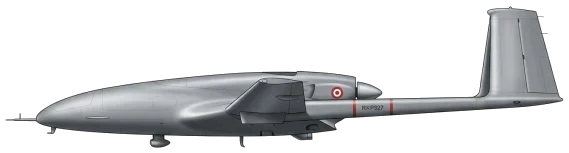
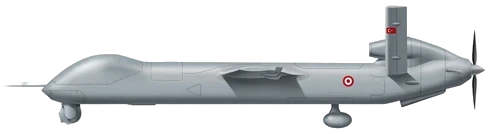
Description
The Bayraktar Akıncı is a high-altitude long-endurance (HALE) unmanned combat aerial vehicle (UCAV) designed and manufactured by the Turkish company Baykar. Preliminary design was completed in June 2019, followed by the maiden flight on December 6, 2019. The aircraft entered service with the Turkish Armed Forces on August 29, 2021. As of January 2026, more than 110 units have been produced.
Design
The airframe has a 20-meter wingspan, a length of 12.2 meters, and a maximum takeoff weight (MTOW) of 5,500 kg. It is powered by two turboprop engines. The avionics suite includes the MURAD active electronically scanned array (AESA) radar, synthetic-aperture radar (SAR/GMTI), and dual satellite communication (SATCOM) systems. For target acquisition and electronic sensing, the platform utilizes the Aselsan Common Aperture Targeting System (CATS), electronic support measures (ESM), and signal intelligence (SIGINT) modules.
Armament
The Akıncı has a total payload capacity of 1,350 kg, with 400 kg assigned to internal carriage and 950 kg to external hardpoints. The aircraft features eight hardpoints and is capable of launching the SOM cruise missile. Its arsenal includes MAM-C, MAM-L, and MAM-T smart munitions, CIRIT missiles, and the TRG-230-İHA supersonic air-to-surface missile. Guided bomb integration covers the Teber, HGK, KGK, and LGK series, as well as NEB-84 and SARB-83 bunker busters. Air-to-air capabilities are supported through the GÖKTUĞ missile program, including the Bozdoğan and Gökdoğan missiles.
Operational History
Operational deployment began with Pençe-Kilit Operations in Northern Iraq to target PKK positions. In February 2022, the platform conducted its first combat mission. During the 2023 Turkey-Syria earthquake, nine units flew over 1,551 hours to provide damage detection and search and rescue support. In May 2024, an Akıncı identified the crash site of an Iranian government helicopter in the Varzaqan region.
Confirmed operators include Turkey, Azerbaijan, Pakistan, Ethiopia, Libya, Burkina Faso, Morocco and Saudi Arabia. Operational losses have occurred in Libya (January 2025), the Qandil region of Iraq (March and October 2025), and Mali. Two Akıncı-A units were delivered to Mali in November 2024; one was lost in a training exercise and the second was shot down by Algerian forces in April 2025. On 26 July 2026 Houthi forces shot down a Saudi-operated Akıncı over Al-Jawf Governorate in northern Yemen; Janes recorded it as the first Akıncı lost in Yemen, and several defence outlets reported it as the type's first combat loss anywhere.
Variants
- Akıncı-A: The initial production variant powered by two 450 hp Ivchenko-Progress AI-450T turboprop engines.
- Akıncı-B: An upgraded version equipped with two 750 hp Pratt & Whitney Canada PT6A-135A turboprop engines.
- Akıncı-C: A high-power variant featuring two 850 hp Pratt & Whitney Canada PT6 engines, which first flew in February 2024.
Frequently Asked Questions
What type of aircraft is the Bayraktar Akıncı?
What is the maximum speed of the Bayraktar Akıncı?
What is the range of the Bayraktar Akıncı?
When did the Bayraktar Akıncı first fly?
How many Bayraktar Akıncı have been built?
Which countries operate the Bayraktar Akıncı?
How much does a Bayraktar Akıncı cost?
What is the service ceiling of the Bayraktar Akıncı?
- AUG 202026 Updated Unit price filled (30.0 $M) for the UAV inventory weighting. Basis: export deals imply ~$30M/unit.
- AUG 102026 Updated Description updated
- APR 82026 Updated Empty weight added
- APR 72026 Updated Sources and cross-references refreshed
- JAN 172026 Updated Bombs, missiles and 2 more fields updated
- JAN 162026 Created Page created: Bayraktar Akıncı