Palianytsia
Ukrainian turbojet-powered missile drone, developed during the Russian invasion of Ukraine and used to strike military targets deep behind the front line. Key figures: top speed 900 km/h, range 650 km, service ceiling 500 m, max takeoff weight 320 kg.
| Length | 3.5 m (11.5 ft) |
| Wingspan | 1.7 m (5.6 ft) |
| Max. takeoff weight | 320 kg (705 lbs) |
| Powerplant | 1 × turbojet Ivchenko-Progress/PBS AI-PBS-350 347 kgf each |
| Maximum speed | 900 km/h (559 mph) |
| Operational range | 650 km (404 mi) |
| Service ceiling | 500 m (1,640 ft) |


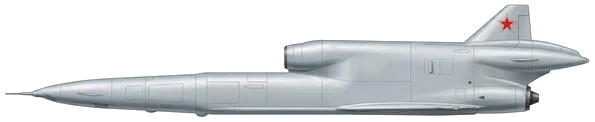
Description
Palianytsia (Ukrainian: Паляниця) is a Ukrainian turbojet-powered missile-drone developed during the Russian invasion of Ukraine and unveiled publicly on 24 August 2024. Classified by Ukrainian officials as a hybrid between a cruise missile and a strike drone, it is used against targets inside Russian territory and, being domestically produced, is not subject to the restrictions Western partners place on the use of their weapons for deep strikes. The name refers to a hearth-baked bread whose pronunciation has been used as a shibboleth to identify foreign agents in the Ukrainian armed forces.
Development
The programme took 18 months from initial design to production. President Volodymyr Zelenskyy presented the weapon on Ukraine's Independence Day, 24 August 2024, describing it as a new class of weaponry already employed against Russian military targets. On 28 August 2024, Minister for Digital Transformation Mykhailo Fedorov stated the unit cost was below US$1 million; a Ukrainian reserve colonel put the figure at $50,000–$100,000. On 6 September 2024, Oleksandr Kamyshin told The Kyiv Independent that Lithuania would contribute €10 million toward Palianytsia production. Defence Minister Rustem Umerov announced entry into serial production on 4 December 2024.
Design
The airframe measures 3.5 m in length with a 1.7 m wingspan, with a central body, forward-mounted wings and a tail section carrying four control surfaces. Defense Express reported in September 2025 a launch weight of 320 kg, a maximum range of 650 km, an operating altitude of 15–500 m and a cruising speed of 900 km/h. Mykhailo Podolyak, advisor to the head of the Office of the President, gave the range as 600–700 km; a hypothetical maximum of 1,200 miles has also been reported. Guidance is by GPS combined with an inertial navigation system. Launch is from a surface platform using a solid rocket booster, jettisoned before the turbojet takes over. According to military correspondent David Axe, propulsion is provided by the AI-PBS-350, developed jointly by PBS Velká Bíteš of the Czech Republic and Ukraine's Ivchenko-Progress; the engine weighs 51 kg, has an outer diameter of 298 mm and a length of 706 mm, produces 3,400 N of thrust, and has a specific fuel consumption of 0.125 kg/N/h, equating to 425 kg/h at full thrust.
Armament
Payload figures are disputed. Defense Express gives up to 100 kg of payload within the 320 kg launch weight, while two named defence analysts estimate a warhead of "a few tens of kilograms", considerably less than a conventional cruise missile. One analyst gives 50 kg, and a Ukrainian reserve colonel has estimated several hundred kilograms.
Operational History
At the time of the 24 August 2024 unveiling, Ukrainian officials stated the weapon had already been used against Russian military targets; media linked it to a strike on an ammunition depot in Voronezh Oblast for which Ukrainian authorities had claimed responsibility. Strikes on 18 and 21 September 2024 destroyed the Toropets depot and an ammunition storage facility and air base at Tikhoretsk. Based in part on Russian reports of jet engine noise during those attacks, David Axe attributed them to Palianytsia. Reported strike ranges extend to 600 miles from the front line.
Frequently Asked Questions
What type of aircraft is the Palianytsia?
What is the maximum speed of the Palianytsia?
What is the range of the Palianytsia?
When did the Palianytsia first fly?
Which countries operate the Palianytsia?
What is the service ceiling of the Palianytsia?
- AUG 152026 Created Palianytsia UAV page created (specs, description, 1 operators)