RQ-101 Night Intruder
South Korean unarmed military reconnaissance unmanned aerial vehicle, developed in the late 20th century and deployed since 2002 for corps-level intelligence gathering. Key figures: top speed 185 km/h, range 200 km, service ceiling 4,500 m, max takeoff weight 290 kg, unit price $2M. In service with 1 air force as of 2026 — South Korea (5).
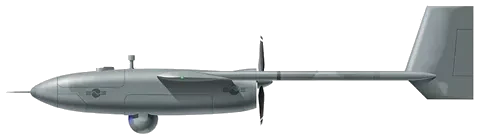
| Length | 4.7 m (15.4 ft) |
| Wingspan | 6.4 m (21.0 ft) |
| Height | 1.5 m (4.9 ft) |
| Max. takeoff weight | 290 kg (639 lbs) |
| Powerplant | 1 × propeller engine 39 kW each |
| Maximum speed | 185 km/h (115 mph) |
| Operational range | 200 km (124 mi) |
| Endurance | 6 hours |
| Service ceiling | 4,500 m (14,764 ft) |
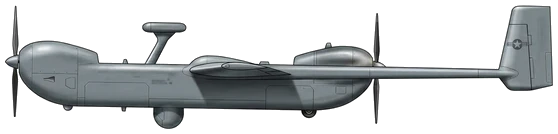
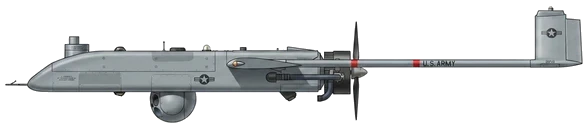
Description
The KAI RQ-101 Songgolmae is an unarmed tactical unmanned aerial vehicle (UAV) developed for the Republic of Korea Army. South Korea began developing the system in 1991 to replace Israeli Searcher UAVs and provide ground surveillance and reconnaissance for corps-level units. The Agency for Defense Development (ADD) and Korea Aerospace Industries (KAI) conducted exploratory development from 1991 to 1992, initiated system development in 1993, and completed operational testing in 1997. Development officially concluded in 2000. KAI executed a performance improvement program from 2009 to 2011 to upgrade the hardware of the mission equipment and ground control systems, followed by three minor improvements through 2015.
Design
The RQ-101 airframe is constructed from carbon fiber and glass fiber composites. The aircraft has a length of 4.7 meters, a wingspan of 6.4 meters, and a height of 1.5 meters. It has a gross weight of 215 kg, a maximum takeoff weight of 290 kg, and a payload capacity of 50 kg. Power is provided by a single 52-horsepower (39 kW) propeller engine, which drives the aircraft to a maximum speed of 185 km/h and a cruising speed of 150 km/h. The UAV has a service ceiling of 4,500 meters, an endurance of six hours, and an operational range between 110 km and 200 km.
For surveillance, reconnaissance, and real-time target acquisition, the RQ-101 carries an SU-1K electro-optics (EO) system, a forward-looking infrared (FLIR) camera, and a standard HD video camera for live image transmission. Navigation is supported by a combined GPS/INS system, and communications are maintained via a line-of-sight (LOS) data link. The aircraft carries no armament.
Operational History
The Republic of Korea Army has operated the RQ-101 since 2002. While the exact number of active aircraft is not publicly disclosed, public sources reported several dozen units in service in 2017. Due to a lack of additional development budget, further performance upgrades for the RQ-101 were discontinued. KAI has been developing a next-generation replacement, designated NCUAV, since 2012.
Frequently Asked Questions
What type of aircraft is the RQ-101 Night Intruder?
What is the maximum speed of the RQ-101 Night Intruder?
What is the range of the RQ-101 Night Intruder?
Which countries operate the RQ-101 Night Intruder?
How much does a RQ-101 Night Intruder cost?
What is the service ceiling of the RQ-101 Night Intruder?
- AUG 202026 Updated Unit price filled (2.0 $M, estimate) for the UAV inventory weighting.
- JUL 62026 Created Page created: RQ-101 Night Intruder