Shahpar
Pakistani reconnaissance and surveillance unmanned aerial vehicle, developed in the early 2010s, used by the Pakistani military for intelligence and target geo-referencing missions. Key figures: top speed 150 km/h, range 250 km, service ceiling 5,000 m, max takeoff weight 480 kg, unit price $1.5M. In service with 1 air force as of 2026 — Pakistan (6).
| Length | 4.2 m (13.8 ft) |
| Wingspan | 6.6 m (21.7 ft) |
| Max. takeoff weight | 480 kg (1,058 lbs) |
| Maximum speed | 150 km/h (93 mph) |
| Operational range | 250 km (155 mi) |
| Endurance | 7 hours |
| Service ceiling | 5,000 m (16,404 ft) |
Description
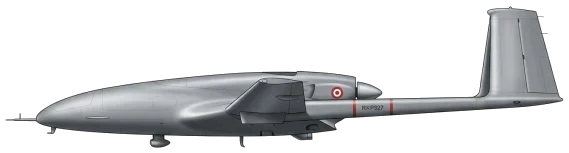
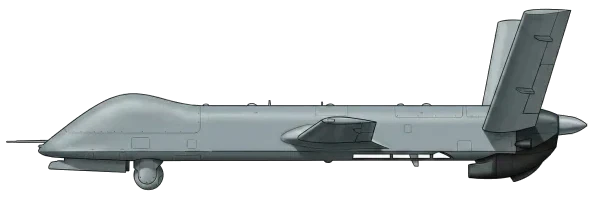
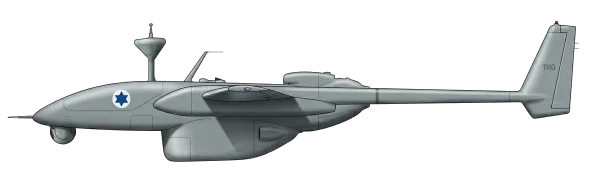
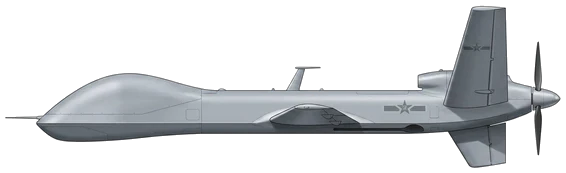
The GIDS Shahpar is a family of unmanned aerial vehicles built by Global Industrial Defence Solutions of Pakistan for reconnaissance and surveillance duties with the Pakistani military. It entered service with the Pakistan Air Force and Pakistan Army in 2013 and remains in production following the completion of its test and qualification phase.
Development
The Shahpar was developed by GIDS, a consortium of seven Pakistani companies. According to an engineer of the Advanced Engineering Research Organisation (AERO), one of the consortium members, the only components of the aircraft system not produced in Pakistan are the engine and the tyres. The Zumr-I (EP) multi-sensor turret is built at an AERO facility near Islamabad. The type completed test and qualification before entering series production.
Design
The Shahpar uses a pusher engine layout with canard foreplanes forward of the wings. It is 4.2 m long, spans 6.6 m, and has a gross weight of 480 kg with a payload capacity of 50 kg. Cruise speed is 150 km/h, endurance is 7 hours, and service ceiling is 5,000 m. The aircraft can take off and land autonomously from a runway or recover by parachute. Sensor payloads cover reconnaissance and day/night surveillance, and the avionics can geo-reference and geo-point ground targets. Onboard equipment includes the Zumr-I (EP) turret, an autonomous GPS-based tracking and control system, and a real-time data link with a range of 250 km. Hardware is built to military Environmental Standard 810F. Ground equipment supports mission planning and simulation, mission management and control, and crew debriefing.
Operational History
The first fleet of Shahpars entered service with the Pakistan Air Force and Pakistan Army in 2013, alongside the Burraq UCAV. Each flight consists of five aircraft, a communications station and a ground control station.
Variants
- Shahpar: Initial production version with the Zumr-I (EP) turret, 50 kg payload and 7-hour endurance.
- Shahpar-II: Second-generation development of the baseline design.
- Shahpar-III: Third-generation development of the family.
Frequently Asked Questions
What type of aircraft is the Shahpar?
What is the maximum speed of the Shahpar?
What is the range of the Shahpar?
Which countries operate the Shahpar?
How much does a Shahpar cost?
What is the service ceiling of the Shahpar?
- AUG 202026 Created Shahpar page created (specs, description, origin/operator, 5 related aircraft); Shahpar-II/III noted as successors in Variants