TS-11 Iskra
Polish jet trainer, designed in the Cold War era, used extensively for instruction and light attack roles. Key figures: top speed 720 km/h, range 1,250 km, service ceiling 11,000 m, max takeoff weight 3,840 kg, built 424.
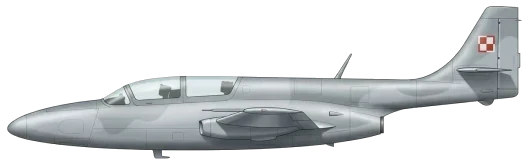
| Length | 11.2 m (36.6 ft) |
| Wingspan | 10.1 m (33.0 ft) |
| Height | 3.5 m (11.5 ft) |
| Wing area | 17.5 m² (188.4 sqft) |
| Empty weight | 2,560 kg (5,644 lbs) |
| Max. takeoff weight | 3,840 kg (8,466 lbs) |
| Powerplant | 1 × turbojet PZL-Rzeszów SO-3 1,000 kgf each |
| Ejection seat | S-3 |
| Maximum speed | 720 km/h (447 mph) |
| Operational range | 1,250 km (777 mi) |
| Service ceiling | 11,000 m (36,089 ft) |
| Climb rate | 14.8 m/s (48.6 ft/s) |
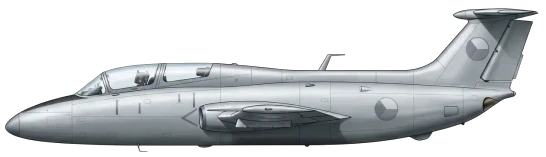
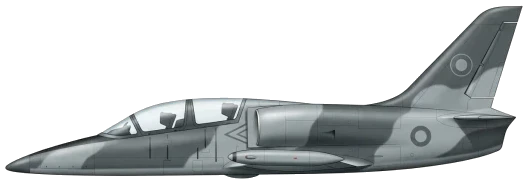
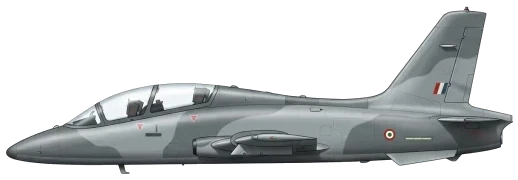
Description
The PZL TS-11 Iskra is a military aircraft developed and manufactured by the Polish aerospace company PZL Mielec. Introduced in the early 1960s, it was designed to meet the training needs of the Polish Air Force. The Iskra successfully served as a jet trainer and light attack aircraft throughout its operational history. Its development was a collaboration between Polish and Soviet engineers, with a focus on reliability and simplicity of operation. The Iskra has been utilized by various countries, including Poland, India, and Yemen, for training purposes and limited combat operations. This aircraft has played a significant role in pilot formation and skill development in multiple air forces.
Frequently Asked Questions
What type of aircraft is the TS-11 Iskra?
What is the maximum speed of the TS-11 Iskra?
What is the range of the TS-11 Iskra?
When did the TS-11 Iskra first fly?
How many TS-11 Iskra have been built?
Which countries operate the TS-11 Iskra?
What is the service ceiling of the TS-11 Iskra?
- AUG 272026 Updated India added to the operators (76 Iskra bis D, 1975-2004)
- AUG 12026 Updated Manufacturer updated
- APR 72026 Updated Picture credits updated in a site-wide editorial pass
- APR 52026 Updated Ejection seat added
- JAN 122026 Updated Range updated in a site-wide editorial pass