L-39 Albatros
Czech training jet, operational since the Cold War, deployed worldwide for various military aviation roles. Key figures: top speed 750 km/h, range 1,100 km, service ceiling 11,500 m, max takeoff weight 4,700 kg, unit price $1M, built 2,900. In service with 30 air forces as of 2026 — Russia (186), Algeria (43), Ukraine (42) and 27 others.
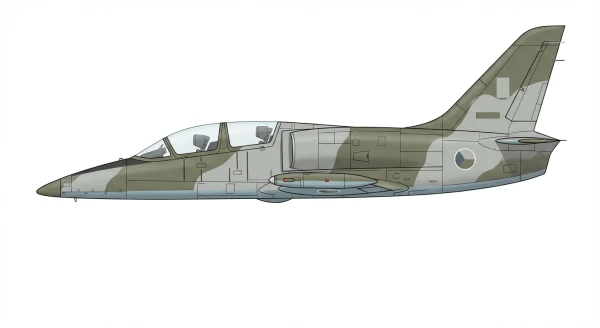
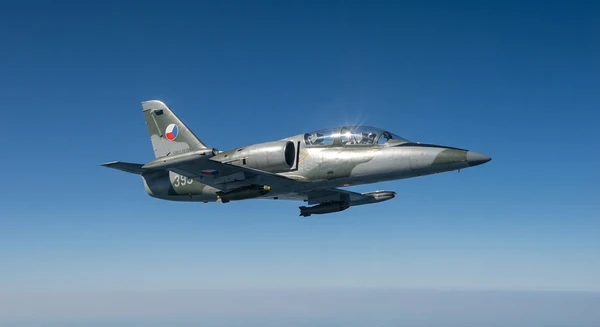
| Crew | 2 |
| Length | 12.1 m (39.8 ft) |
| Wingspan | 9.5 m (31.0 ft) |
| Height | 4.8 m (15.6 ft) |
| Wing area | 18.8 m² (202.4 sqft) |
| Empty weight | 3,459 kg (7,626 lbs) |
| Max. takeoff weight | 4,700 kg (10,362 lbs) |
| Powerplant | 1 × turbofan Ivchenko-Progress AI-25TL 1,720 kgf each |
| Ejection seat | Aero VS-1 |
| Maximum speed | 750 km/h (466 mph) |
| Operational range | 1,100 km (684 mi) |
| Service ceiling | 11,500 m (37,730 ft) |
| Climb rate | 22.0 m/s (72.2 ft/s) |
| Takeoff distance | 480 m (1,575 ft) |
-
 Russia
186
Russia
186
-
 Algeria
43
Algeria
43
-
 Ukraine
42
Ukraine
42
-
 Vietnam
29
Vietnam
29
-
 Yemen
28
Yemen
28
-
 Syria
23
Syria
23
-
 Kazakhstan
19
Kazakhstan
19
-
 Iraq
16
Iraq
16
-
 Libya
15
Libya
15
-
 Azerbaijan
14
Azerbaijan
14
-
 Mali
12
Mali
12
-
 Uganda
12
Uganda
12
-
 Czechia
11 +4
Czechia
11 +4
-
 Nigeria
11
Nigeria
11
-
 Belarus
10
Belarus
10
-
 Ethiopia
10
Ethiopia
10
-
 Armenia
9
Armenia
9
-
 Slovakia
9
Slovakia
9
-
 Hungary
8 +4
Hungary
8 +4
-
 Central African Republic
8
Central African Republic
8
-
 Georgia
8
Georgia
8
-
 Bulgaria
6
Bulgaria
6
-
 Uzbekistan
6
Uzbekistan
6
-
 Angola
4
Angola
4
-
 Tajikistan
4
Tajikistan
4
-
 Cuba
3
Cuba
3
- 🇨🇩 Congo Democratic Republic 2
- 🇬🇶 Equatorial Guinea 2
-
 Afghanistan
1
Afghanistan
1
-
 Mozambique
1
Mozambique
1
Recent Events — L-39 Albatros
12 events →-
AUG 112026
 Ethiopia
Crashed in East Shewa after reportedly coming under Oromo Liberation Army ground fire; both pilots ejected and were rescued.
Crash
Ethiopia
Crashed in East Shewa after reportedly coming under Oromo Liberation Army ground fire; both pilots ejected and were rescued.
Crash
-
JUL 272026
 Russia
Crashed during low-altitude aerobatic manoeuvres near Kushchyovskaya, Krasnodar Krai; both crew killed.
Crash
Russia
Crashed during low-altitude aerobatic manoeuvres near Kushchyovskaya, Krasnodar Krai; both crew killed.
Crash
-
JUN 112026
 Congo Democratic Republic
L-39 lost near Kalemie, Tanganyika; wreckage lifted from a swamp by Russian-speaking personnel, M23 claims a shootdown.
Other
Congo Democratic Republic
L-39 lost near Kalemie, Tanganyika; wreckage lifted from a swamp by Russian-speaking personnel, M23 claims a shootdown.
Other
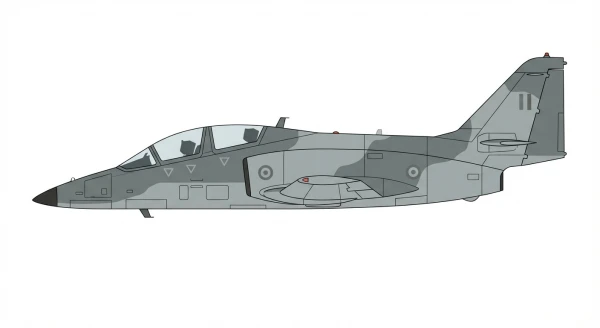
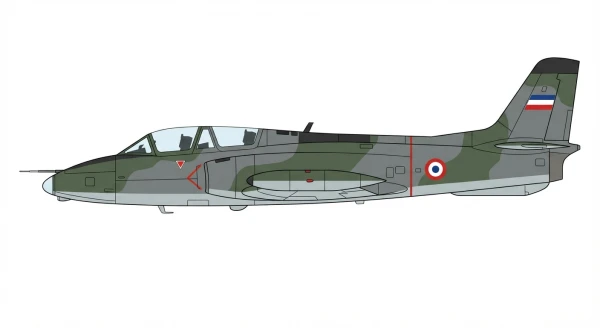
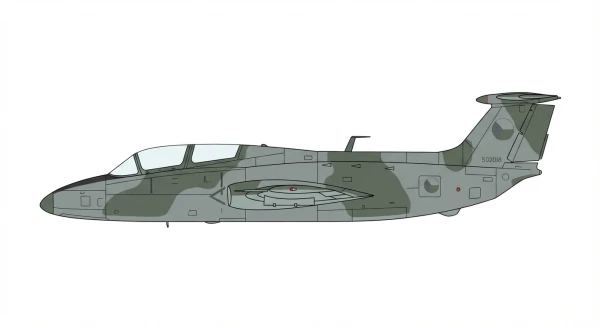

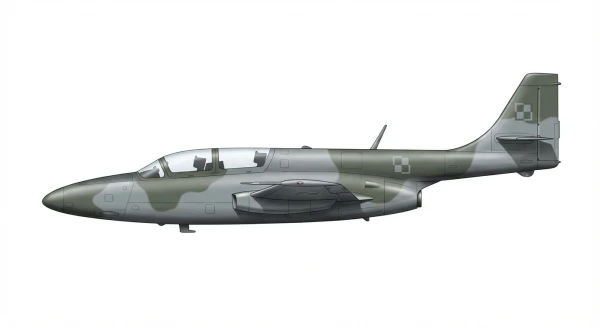
Description
The Aero L-39 Albatros is a high-performance jet trainer and light-attack aircraft manufactured by Aero Vodochody in Czechoslovakia. Designed to perform basic and advanced flight training, it entered military service with the Czechoslovak Air Force in 1974. The L-39 was the first trainer aircraft in the world equipped with a turbofan powerplant and served as the standard primary jet trainer across the Warsaw Pact.
Development
Development commenced in 1964 under lead designer Jan Vlček at Aero Vodochody to replace the Aero L-29 Delfín. The aircraft performed its maiden flight on 4 November 1968, and serial production of the initial L-39C model began in 1971. In 1972, the Warsaw Pact recognized the L-39 as its preferred primary trainer, resulting in large production orders across Eastern Europe. Production ended in the mid-1990s after more than 2,800 units were built, before resuming in 2023 under the updated L-39NG Skyfox program.
Design
The L-39 features a low-set straight wing with a double-taper planform, wingtip fuel tanks, double-slotted trailing-edge flaps, and an automatic trimming system. Its airframe includes a tandem cockpit fitted with Czech-built VS-1 ejection seats under individual right-hinged canopies, with the instructor seat elevated for forward visibility. Power is provided by a single Ivchenko AI-25TL turbofan engine fed through shoulder-mounted semi-circular air intakes. The aircraft uses pushrod-actuated flight controls, a hydraulic system for the landing gear and airbrakes, and a nosewheel undercarriage suitable for grass airfields.
Armament
The base L-39C trainer includes provision for two underwing hardpoints for drop tanks or practice weapons. Dedicated light-attack variants carry up to 1,290 kg of payload across four underwing hardpoints, accommodating K-13 or R-60 air-to-air missiles, rocket pods, and bomb stores. The L-39ZA variant adds a ventral conformal pod containing a 23 mm Gryazev-Shipunov GSh-23 twin-barreled cannon supplied by an internal 150-round magazine.
Operational History
Iraq became the first export customer for the L-39 in the mid-1970s, with over 30 air forces eventually operating the type. The aircraft saw combat service in the Chadian-Libyan conflict, the War in Abkhazia, the First Nagorno-Karabakh War, and internal conflicts in Chechnya and Afghanistan. Syrian Arab Air Force L-39ZA aircraft conducted light-attack missions during the Syrian civil war, and Ukrainian L-39s saw action during the 2022 Russian invasion. Since the 1990s, hundreds of retired airframes have entered civilian ownership.
Variants
- L-39C: Standard basic training variant equipped with two underwing pylons, with approximately 2,260 aircraft built.
- L-39ZO: Export weapon-training model fitted with a strengthened wing and four underwing hardpoints.
- L-39ZA: Light-attack and armed training variant equipped with four hardpoints and a ventral GSh-23 twin-barreled cannon pod.
- L-59: Second-generation development featuring a strengthened airframe, updated cockpit, and a Lotarev DV-2 engine.
- L-39 Skyfox: Modernized variant powered by a Williams FJ44 engine, featuring upgraded avionics and an altered wing design without tip tanks.
Frequently Asked Questions
What type of aircraft is the L-39 Albatros?
What is the maximum speed of the L-39 Albatros?
What is the range of the L-39 Albatros?
When did the L-39 Albatros first fly?
How many L-39 Albatros have been built?
Which countries operate the L-39 Albatros?
How much does a L-39 Albatros cost?
What is the service ceiling of the L-39 Albatros?
- AUG 62026 Updated Description updated
- AUG 52026 Updated Powerplant updated in a site-wide editorial pass
- JUL 232026 Updated Sources and cross-references refreshed
- APR 72026 Updated Sources and cross-references refreshed