An-26 Curl vs Douglas DC-3
An-26 Curl vs Douglas DC-3 at a glance — top speed 540 vs 413 km/h, range 2,500 vs 2,540 km, max takeoff weight 24,000 vs 13,154 kg, built 1,403 vs 10,174 units.
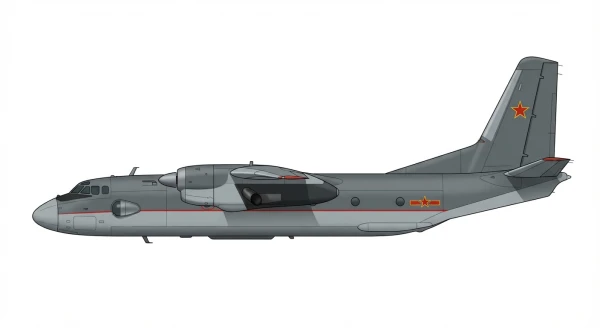
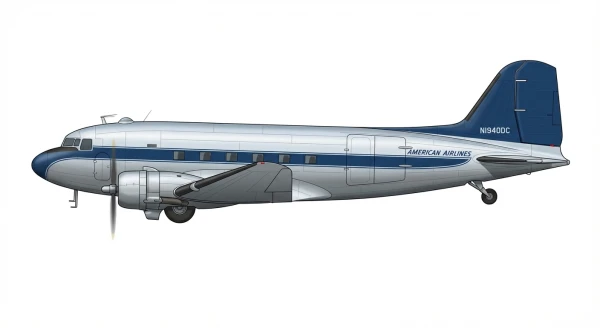
| An-26 Curl | Douglas DC-3 | |
|---|---|---|
| Origin country | 🇷🇺 Ex-USSR | 🇺🇸 United States |
| Category | Military Transport Aircraft | Military Transport Aircraft |
| Manufacturer | Antonov | Douglas |
| First flight | 21 May 1969 | 23 December 1941 |
| Year introduced | 1969 | 1936 |
| Number produced | 1403 units | 10174 units |
| Average unit price | $22 million | $80K |
| Wing area | 75.0 m² | 91.7 m² |
| Wingspan | 29.3 m | 29.0 m |
| Height | 8.6 m | 5.6 m |
| Length | 23.8 m | 22.7 m |
| Maximum speed | 540 km/h | 413 km/h |
| Operational range | 2,500 km | 2,540 km |
| Service ceiling | 7,500 m | 7,071 m |
| Max. takeoff weight | 24,000 kg | 13,154 kg |
| Empty weight | 15,020 kg | 6,450 kg |
| Total thrust | 2 x 2,103 kW | 3 x 875 kW |
Detailed Comparison
The Douglas DC-3 defined the concept of reliable military air logistics during the Second World War, whereas the Antonov An-26 Curl represents a Cold War evolution specifically engineered for the tactical necessities of the Soviet military. While separated by three decades, both airframes became ubiquitous in their respective spheres of influence, bridging the gap between austere airstrips and strategic supply lines.
Development and Design
The DC-3 originated as a commercial airliner designed to compete with the Boeing 247, featuring a low-wing monoplane configuration and conventional "taildragger" landing gear. Its conversion to military service (as the C-47 Skytrain) involved structural reinforcement but retained the side cargo door, which significantly restricted the loading of vehicles and bulky freight.
Conversely, the An-26 was developed from the An-24 specifically to address military shortcomings, particularly the lack of a ventral loading hatch. The Antonov design features a high-set wing for rough-field clearance and a distinctive retractable rear cargo ramp. This ramp allows for direct vehicle loading from truck beds and can be sealed for pressurized flight. A unique engineering solution in the An-26 is the inclusion of an auxiliary turbojet in the starboard nacelle to boost takeoff performance, a feature absent in the purely piston-driven design of the original DC-3.
Specifications and Performance
The generational gap is evident in lift capacity, with the An-26 possessing a Maximum Takeoff Weight (MTOW) of 24,000 kg, nearly double the DC-3’s 13,154 kg. This allows the Soviet aircraft to transport heavier military hardware impossible to fit in the Douglas airframe. Powered by twin Ivchenko-Progress AI-24T turboprops, the An-26 achieves a maximum speed of 540 km/h, surpassing the DC-3’s 450 km/h.
However, the DC-3 demonstrates superior endurance characteristics with a range of 2,540 km compared to the An-26's 1,100 km. This disparity highlights the An-26's optimization for short-range tactical insertions and "last-mile" logistics, whereas the DC-3 was designed to serve longer operational routes.
Deployment and Usage
The DC-3 served as the logistical backbone of Allied forces in WWII, facilitating massive paratroop deployments and supply runs across every theater. Its reliability allowed it to persist in military service for decades globally, with over 10,000 military units built.
The An-26 saw extensive combat usage with the Soviet VTA (Military Transport Aviation), notably in the Soviet-Afghan War for commando insertions and paratroop assaults. Unlike the DC-3, which was strictly a transport platform in its original design, the An-26 integrates secondary offensive capabilities. It features underwing bomb racks and has been utilized as a bomber by the Vietnam People's Air Force and the Sudanese Air Force.
Conclusion
While the Douglas DC-3 pioneered global military air transport through sheer ubiquity and reliability, the Antonov An-26 offered a more specialized, tactical solution. The inclusion of a rear ramp and auxiliary thrust in the An-26 addressed specific battlefield mobility requirements that the adapted civilian design of the DC-3 could not match. Both aircraft remain testaments to rugged engineering, having outlived their projected service lives in air forces around the world.