An-26 Curl vs C-130 Hercules
An-26 Curl vs C-130 Hercules at a glance — top speed 540 vs 593 km/h, range 2,500 vs 3,800 km, max takeoff weight 24,000 vs 70,307 kg, built 1,403 vs 2,500 units.
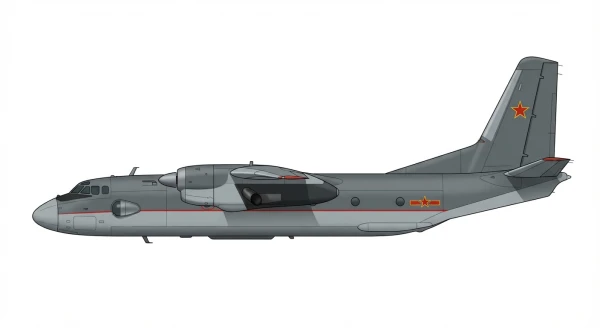
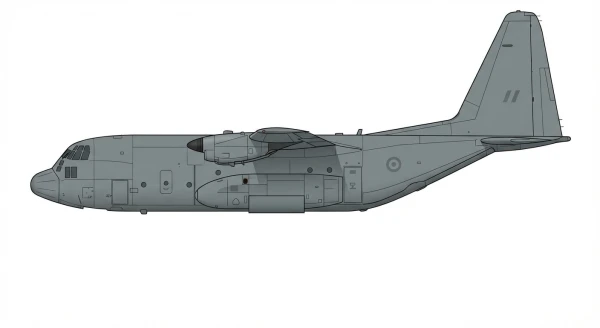
| An-26 Curl | C-130 Hercules | |
|---|---|---|
| Origin country | 🇷🇺 Ex-USSR | 🇺🇸 United States |
| Category | Military Transport Aircraft | Military Transport Aircraft |
| Manufacturer | Antonov | Lockheed |
| First flight | 21 May 1969 | 23 August 1954 |
| Year introduced | 1969 | 1956 |
| Number produced | 1403 units | 2500 units |
| Average unit price | $22 million | $68 million |
| Wing area | 75.0 m² | 162.0 m² |
| Wingspan | 29.3 m | 40.4 m |
| Height | 8.6 m | 11.7 m |
| Length | 23.8 m | 29.8 m |
| Maximum speed | 540 km/h | 593 km/h |
| Operational range | 2,500 km | 3,800 km |
| Service ceiling | 7,500 m | 10,058 m |
| Max. takeoff weight | 24,000 kg | 70,307 kg |
| Empty weight | 15,020 kg | 35,800 kg |
| Total thrust | 2 x 2,103 kW | 4 x 3,661 kW |
Detailed Comparison
The American C-130 Hercules is a large, four-engine strategic airlifter designed for long-range, heavy-lift missions, while the Soviet An-26 Curl is a smaller, twin-engine tactical transport derived from a pre-existing airframe for regional operations. The Hercules was a clean-sheet design intended for robust versatility from its inception, resulting in a much larger production run and a wider array of specialized variants.
Development and Design
The C-130 was developed in the early 1950s to a specific US Air Force requirement for a versatile transport capable of operating from unprepared airstrips. Its design philosophy prioritized durability and payload flexibility, resulting in a high-wing configuration, four powerful turboprop engines, and an integrated rear-loading ramp. This purpose-built design has proven exceptionally adaptable over its long service life. In contrast, the An-26 emerged in the late 1960s as a military evolution of the An-24 passenger aircraft. Its primary innovation was a unique ventral ramp that could slide forward under the fuselage for direct loading from trucks or be lowered for vehicle access. A distinctive feature is its auxiliary turbojet in the starboard nacelle, providing additional takeoff thrust.
Specifications and Performances
The C-130's operational scope is significantly greater than the An-26's, a fact directly reflected in their specifications. With a maximum takeoff weight of 70,307 kg, the Hercules can carry nearly three times the payload of the An-26 (24,000 kg). This size advantage is matched by superior performance metrics across the board. The C-130’s range of 8,375 km dwarfs the An-26’s 1,100 km, underscoring their strategic versus tactical roles. Furthermore, the Hercules has a higher service ceiling (10,058 m vs. 7,500 m) and climb rate (9.3 m/s vs. 8.0 m/s), providing greater operational flexibility in contested or high-altitude environments.
Deployment and usage
Both aircraft have extensive operational histories, but in different contexts. The C-130 has been a ubiquitous asset in Western and allied air forces for nearly seven decades, seeing combat in nearly every major conflict from Vietnam to Afghanistan. Its airframe has been adapted into highly specialized platforms, including the AC-130 gunship, MC-130 special operations transport, and KC-130 tanker. The An-26 served as a workhorse for the Soviet Union and its client states, primarily in transport and paratroop roles. While less versatile than the Hercules, it has been adapted for specific duties such as arctic surveillance. Some operators, such as the Vietnamese and Sudanese air forces, have employed the An-26 in a secondary bombing role, a capability not inherent to the standard C-130 transport.
Conclusion
The C-130 Hercules is a strategic asset, defined by its large payload, intercontinental range, and unparalleled mission adaptability through numerous purpose-built variants. It remains in production and continuous modernization. The An-26 Curl is a successful and rugged tactical transport that effectively met the Soviet requirement for a regional airlifter with improved cargo handling. While capable and widely used within its sphere, its smaller size, shorter range, and design origins limit it to a tactical role, standing as a capable but less ambitious counterpart to the globally deployed Hercules.