ATR-72 vs C-295 Persuader
ATR-72 vs C-295 Persuader at a glance — top speed 565 vs 576 km/h, range 1,404 vs 5,750 km, max takeoff weight 22,500 vs 23,200 kg, built 1,000 vs 209 units.
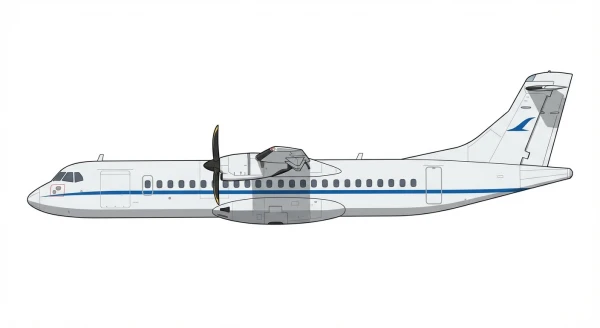
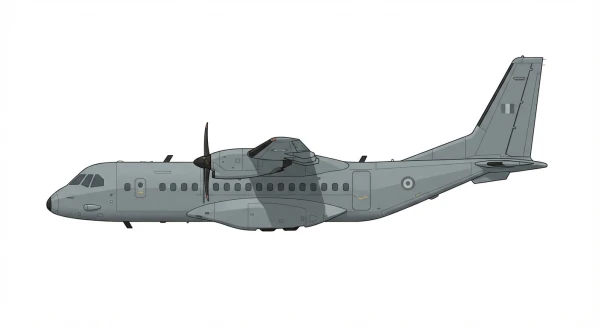
| ATR-72 | C-295 Persuader | |
|---|---|---|
| Origin country | 🇫🇷 France🇮🇹 Italy | 🇪🇸 Spain🇮🇩 Indonesia |
| Category | Military Transport Aircraft | Military Transport Aircraft |
| Manufacturer | ATR | Airbus |
| First flight | 27 October 1988 | 28 November 1997 |
| Year introduced | 1989 | 2001 |
| Number produced | 1000 units | 209 units |
| Average unit price | $26 million | $78 million |
| Wing area | 61.0 m² | 59.0 m² |
| Wingspan | 27.1 m | 25.8 m |
| Height | 7.7 m | 8.6 m |
| Length | 27.2 m | 24.5 m |
| Maximum speed | 565 km/h | 576 km/h |
| Operational range | 1,404 km | 5,750 km |
| Service ceiling | 7,620 m | 7,620 m |
| Max. takeoff weight | 22,500 kg | 23,200 kg |
| Empty weight | 12,950 kg | 9,250 kg |
| Total thrust | 2 x 2,051 kW | 2 x 1,972 kW |
Detailed Comparison
The ATR-72 and C-295 Persuader are both twin-turboprop aircraft adapted for military missions, but they stem from fundamentally different design philosophies. The ATR-72 is a civilian regional airliner modified for military surveillance and utility roles, while the C-295 is a purpose-designed tactical military transport aircraft. This core distinction shapes their capabilities, performance, and operational deployment.
Development and Design
The ATR-72's lineage as a stretched regional airliner is evident in its design. Developed by a Franco-Italian consortium for commercial routes, its structure prioritizes passenger capacity and fuel efficiency. It features a conventional side-door configuration and lacks an integrated rear ramp, which fundamentally limits its utility for vehicle and heavy palletized cargo transport. Military variants, such as the ATR 72MP, are post-production modifications that integrate sophisticated sensor suites like Leonardo’s ATOS system into the civilian airframe, making it a platform for C4ISR and maritime patrol rather than a tactical airlifter.
In contrast, the C-295 was developed by Spain's CASA as a stretched and re-engined derivative of the CN-235 military transport. Its design is optimized for military logistics. Key features include a rear-loading ramp, a wide cargo hold (12.69 m long) configured for standard military pallets or light vehicles, and an undercarriage suited for operations from austere, soft-field airstrips. The airframe and avionics were designed from the outset to meet military requirements, providing greater inherent robustness and tactical flexibility compared to the adapted ATR-72.
Specifications and Performances
A comparison of specifications reveals the C-295’s tactical superiority. Despite a similar maximum takeoff weight (23,200 kg for C-295 vs. 22,500 kg for ATR-72), the C-295 has a significantly lower empty weight (9,250 kg vs. 12,950 kg), indicating a more efficient airframe for carrying payload. The most critical performance differentiator is its short-field capability. The C-295 requires only 671 meters for takeoff, while the ATR-72 needs 1,223 meters. This allows the C-295 to operate from a much wider range of forward airfields. While both aircraft have a comparable service ceiling and maximum speed, the C-295's design gives it a clear advantage in tactical airlift scenarios.
Deployment and usage
The operational roles of the two aircraft reflect their designs. The C-295 is employed globally as a primary tactical transport for troops, cargo, and paratroopers. Its versatility is demonstrated by variants for maritime patrol (MPA/Persuader), armed ISR, and even AEW&C. The integrated rear ramp is crucial for its role in moving military equipment and conducting airdrops, making it a logistical workhorse for operators like Spain, Poland, and Egypt.
The ATR-72's military use is almost exclusively in specialized surveillance roles. Nations like Italy and Turkey operate it as a maritime patrol (TMPA/P-72A) and anti-submarine warfare (ASW) platform. In these missions, its long fuselage provides ample space for mission consoles and crew, and its origins as an airliner offer fuel efficiency beneficial for long-endurance patrols. It functions as a sensor platform, not a transport asset.
Conclusion
The choice between the ATR-72 and C-295 is mission-dependent. The C-295 is a purpose-built, versatile tactical airlifter with superior short-field performance and cargo handling capabilities essential for military logistics. The ATR-72, leveraging a mature and significantly less expensive commercial airframe (a reported $20 million vs. the C-295's $78 million), serves as a cost-effective platform for dedicated, long-endurance surveillance and maritime patrol missions where tactical airlift is not a requirement. The C-295 offers tactical flexibility at a premium, while the ATR-72 provides a specialized capability at a lower acquisition cost.