B-52 Stratofortress vs Tu-95 Bear
B-52 Stratofortress vs Tu-95 Bear at a glance — top speed 1,000 vs 920 km/h, range 14,200 vs 15,000 km, max takeoff weight 220,000 vs 188,000 kg, built 744 vs 500 units.
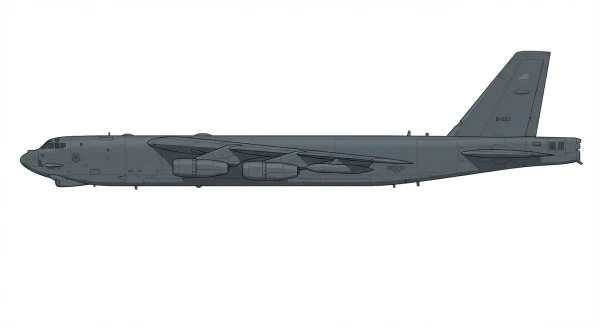
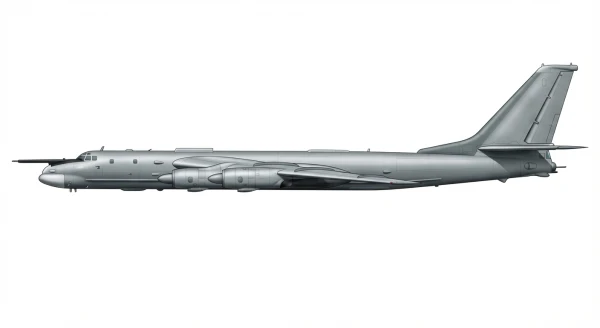
| B-52 Stratofortress | Tu-95 Bear | |
|---|---|---|
| Origin country | 🇺🇸 United States | 🇷🇺 Ex-USSR |
| Category | Bombers | Bombers |
| Manufacturer | Boeing | Tupolev |
| First flight | 15 April 1952 | 12 November 1952 |
| Year introduced | 1955 | 1956 |
| Number produced | 744 units | 500 units |
| Average unit price | $9.3 million | $60 million |
| Wing area | 370.0 m² | 310.0 m² |
| Wingspan | 56.4 m | 50.1 m |
| Height | 12.4 m | 12.1 m |
| Length | 48.5 m | 46.2 m |
| Maximum speed | 1000 km/h | 920 km/h |
| Operational range | 14,200 km | 15,000 km |
| Service ceiling | 15,000 m | 13,716 m |
| Max. takeoff weight | 220,000 kg | 188,000 kg |
| Empty weight | 83,250 kg | 90,000 kg |
| Total thrust | 8 x 7,747 kgf | 4 x 8,950 kW |
Detailed Comparison
The B-52 Stratofortress and Tu-95 Bear are enduring icons of Cold War strategic bomber design, both achieving service lives far exceeding their original expectations. While sharing the mission of intercontinental weapon delivery, they embody divergent propulsion philosophies. The B-52 leverages eight turbojet engines for higher speed and altitude, whereas the Tu-95 utilizes four powerful and efficient turboprops to achieve exceptional range and endurance. Both aircraft have proven remarkably adaptable, evolving from their initial nuclear deterrence roles to become versatile standoff missile platforms in the 21st century.
Development and Design
The designs of both aircraft were dictated by the strategic requirements of the early Cold War. The United States Air Force prioritized speed and altitude for survivability, leading Boeing to abandon early turboprop concepts in favor of a swept-wing, eight-engine jet design for the B-52. This configuration provided high-subsonic performance at high altitudes, intended to penetrate Soviet air defenses. The large fuselage and wing area (370.0 m²) were optimized for carrying heavy nuclear payloads and vast quantities of fuel. In contrast, the Soviet Union's Tupolev design bureau focused on achieving immense range. The solution was the Tu-95's unique propulsion system: four Kuznetsov NK-12 turboprops, each driving large, contra-rotating propellers. This provided fuel efficiency for endurance and a surprisingly high top speed of 920 km/h, making the Tu-95 one of the fastest propeller-driven aircraft ever built. The aircraft's adaptability is evident in its nearly twenty variants, including specialized electronic reconnaissance and anti-submarine warfare models.
Specifications and Performances
A comparison of specifications reveals the trade-offs in each design. The B-52 is the larger aircraft, with a greater wingspan (56.4 m vs. 50.1 m) and a significantly higher maximum takeoff weight of 220,000 kg compared to the Tu-95's 188,000 kg, allowing for a larger potential payload. This size, combined with its turbojet engines, gives the B-52 a performance edge in speed (1,000 km/h vs. 920 km/h) and service ceiling (15,000 m vs. 13,716 m). However, the Tu-95's turboprop efficiency gives it a comparable unrefueled range of 12,500 km to the B-52's 13,900 km, and its design is renowned for its exceptional flight endurance, a critical factor in its long-range maritime patrol missions.
Deployment and usage
Both bombers began as airborne nuclear deterrents. The B-52, however, saw extensive conventional combat, from carpet bombing missions in Vietnam with the "Big Belly" modified B-52D variant to precision strikes in the Gulf War and recent operations in the Middle East. Its evolution is marked by its integration of a wide array of munitions, from unguided bombs to JDAMs and Air-Launched Cruise Missiles (ALCMs). The Tu-95's combat history is more recent, primarily serving as a standoff weapons platform. Its operational focus has been on long-range maritime reconnaissance and as a launch vehicle for cruise missiles like the Kh-55 and Kh-101 against targets in Syria. While the B-52 has proven itself a versatile tactical and strategic asset, the Tu-95 has remained a more specialized strategic platform, excelling as a persistent threat and missile carrier.
Conclusion
The B-52 and Tu-95 represent two successful, yet distinct, solutions to the challenge of long-range strategic air power. The B-52's jet-powered design has made it a faster, higher-flying, and more versatile platform, adapting effectively from a nuclear penetrator to a conventional munitions truck and standoff missile carrier. The Tu-95's unique turboprop configuration, a significant engineering achievement, grants it unparalleled endurance, making it an ideal platform for long-duration maritime patrol and as a persistent cruise missile carrier. The continued service of both aircraft, nearly 70 years after their first flights, is a testament to the robustness of their fundamental designs and their capacity for technological evolution.