Bayraktar Akıncı vs Bayraktar TB2
Bayraktar Akıncı vs Bayraktar TB2 at a glance — top speed 361 vs 222 km/h, range 7,500 vs 300 km, max takeoff weight 5,500 vs 1,200 kg, built 110 vs 600 units.
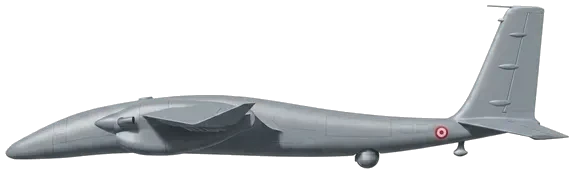
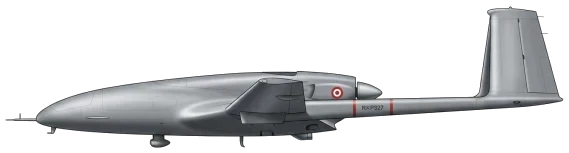
| Bayraktar Akıncı | Bayraktar TB2 | |
|---|---|---|
| Origin country | 🇹🇷 Turkey | 🇹🇷 Turkey |
| Category | Military Drones | Military Drones |
| Manufacturer | Baykar | Baykar |
| First flight | 6 December 2019 | 1 August 2014 |
| Year introduced | 2021 | 2014 |
| Number produced | 110 units | 600 units |
| Average unit price | $30 million | $5 million |
| Wingspan | 20.0 m | 12.0 m |
| Height | 4.1 m | -- m |
| Length | 12.2 m | 6.5 m |
| Maximum speed | 361 km/h | 222 km/h |
| Operational range | 7,500 km | 300 km |
| Service ceiling | 13,716 m | 8,239 m |
| Max. takeoff weight | 5,500 kg | 1,200 kg |
| Empty weight | 4,501 kg | 650 kg |
| Total thrust | 2 x 340 kW | -- |
Detailed Comparison
Baykar's TB2 and Akıncı occupy opposite ends of the unmanned combat aerial vehicle (UCAV) spectrum. The TB2, a 1,200 kg medium-altitude tactical platform powered by a single 100 hp internal combustion engine, prioritizes mass production and expendability. The Akıncı, a 5,500 kg high-altitude long-endurance (HALE) twin-turboprop system, operates as a heavy strike asset akin to a manned attack aircraft, equipped with AESA radar and beyond-visual-range (BVR) missiles.
Development and Design
The TB2 emerged in the early 2010s directly from a US embargo on armed drone exports to Turkey. Baykar designed it for tactical counter-insurgency, utilizing a blended wing body, an inverted V-tail, and a modular carbon fiber monocoque structure. At a unit cost of $5 million, it provides cheap, mass-producible lower-tier ISR. The Akıncı, developed in the late 2010s, shifts Baykar’s design doctrine toward replacing manned fighter sorties. It integrates an Aselsan MURAD AESA radar, SIGINT modules, and twin Ivchenko-Progress turboprops (with Pratt & Whitney engines in the B and C variants). While the TB2 is an attritable forward observer, the Akıncı functions as a standoff weapons truck.
Specifications and Performances
The performance delta between the two platforms dictates strictly separated operational profiles. The Akıncı’s 5,500 kg maximum takeoff weight allows it to carry 1,350 kg of ordnance across eight hardpoints, compared to the TB2’s 150 kg limit over four. The Akıncı reaches altitudes of 13,716 meters and speeds of 361 km/h, distancing itself from short-range air defense systems (SHORAD). The TB2, operating around 8,200 meters at 222 km/h, relies instead on a small radar cross-section and low acoustic signature. The armament profiles diverge accordingly:
- The TB2 is restricted to lightweight micro-munitions like the MAM-C and MAM-L.
- The Akıncı deploys heavyweight standoff weapons, including the SOM cruise missile and GÖKTUĞ air-to-air missiles.
Deployment and usage
The TB2 established its combat record in permissive and semi-permissive environments. In Syria, Libya, and the 2020 Nagorno-Karabakh conflict, TB2 swarms suppressed legacy armor. However, the Russian invasion of Ukraine exposed its vulnerability to integrated air defense systems (IADS); after early kinetic strikes, Russian Tor and Pantsir systems forced the TB2 out of a strike role and into standoff ISR. The Akıncı circumvents the TB2’s attrition problem by avoiding the weapon engagement zone. In operations against PKK targets in Northern Iraq and in export service with Pakistan, the Akıncı acts as a standoff launcher. It drops precision-guided bunker busters (NEB-84) from altitudes out of reach for MANPADS and point-defense systems.
Conclusion
The TB2 has the definitive edge in low-intensity conflicts and counter-insurgency, where volume and unit cost dictate procurement. With 600 units built, it provides persistent, affordable overwatch for militaries fighting non-state actors. However, the Akıncı is the requisite choice for near-peer engagements. Its altitude ceiling and 1,350 kg payload capacity allow it to launch heavy, long-range standoff munitions outside modern IADS coverage—a mission profile the payload-constrained TB2 cannot execute.


