Bayraktar TB2 vs Mohajer-6
Bayraktar TB2 vs Mohajer-6 at a glance — top speed 222 vs 200 km/h, range 300 vs 2,400 km, max takeoff weight 1,200 vs 670 kg, built 600 vs 210 units.
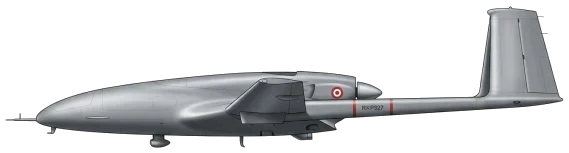
| Bayraktar TB2 | Mohajer-6 | |
|---|---|---|
| Origin country | 🇹🇷 Turkey | 🇮🇷 Iran |
| Category | Military Drones | Military Drones |
| Manufacturer | Baykar | Qods |
| First flight | 1 August 2014 | 1 January 2016 |
| Year introduced | 2014 | 2018 |
| Number produced | 600 units | 210 units |
| Average unit price | $5 million | -- |
| Wingspan | 12.0 m | 10.0 m |
| Length | 6.5 m | 7.5 m |
| Maximum speed | 222 km/h | 200 km/h |
| Operational range | 300 km | 2,400 km |
| Service ceiling | 8,239 m | 7,600 m |
| Max. takeoff weight | 1,200 kg | 670 kg |
| Empty weight | 650 kg | 450 kg |
| Total thrust | -- | 1 x 86 kW |
Detailed Comparison
Emerging from heavily sanctioned defense sectors, the Iranian Mohajer-6 and Turkish Bayraktar TB2 operate heavily across middle-tier conflicts. Turkey’s Baykar has built roughly 600 TB2 airframes since 2014, securing 31 export customers. Iran’s HESA has produced approximately 210 Mohajer-6 units since 2018, supplying internal forces, proxy militias, and allied states including Russia. Both are medium-altitude, long-endurance (MALE) uncrewed combat aerial vehicles (UCAVs) fulfilling tactical intelligence, surveillance, target acquisition, reconnaissance (ISTAR), and strike requirements, but they diverge in avionics architecture, endurance, and operational doctrine.
Development and Design
The TB2 emerged from a Turkish imperative to bypass US export restrictions on armed UAVs, resulting in an indigenous blended wing body design with an inverted V-tail. Baykar prioritized survivability by integrating triply-redundant avionics and cross-redundant ground control stations based on NATO specifications. The Mohajer-6 utilizes a conventional twin-tailboom, high-wing configuration. Operating under tighter aerospace sanctions, Iranian designers prioritized rapid manufacturability and commercial off-the-shelf components over complex flight control redundancies. Both platforms power their pusher-propellers with internal combustion engines; the TB2 utilizes the Rotax 912, while the Mohajer-6 mounts a 115 hp Rotax 914 or an unlicensed domestic copy.
Specifications and Performances
The TB2 operates at nearly double the maximum takeoff weight of the Mohajer-6 (1,200 kg versus 670 kg) but maintains an identical weapon payload capacity of 150 kg. Baykar engineers translated this mass into fuel fraction and altitude. The TB2 reaches a 27-hour endurance and an operational ceiling of 8,239 m. The Mohajer-6 is restricted to 12 hours of flight time and an 18,000-foot ceiling, keeping it within the engagement envelope of a wider array of short-range air defense (SHORAD) systems. For strike missions, Turkey relies on the MAM series of laser-guided bombs, while Iran outfits the Mohajer-6 with Qaem electro-optical/infrared glide bombs and Almas anti-tank missiles.
Deployment and usage
Combat records in high-intensity environments expose the strict limits of both airframes. The TB2 dominated the 2020 Nagorno-Karabakh war and the opening weeks of the 2022 Russian invasion of Ukraine, striking armored columns before the airspace became heavily contested. Once Russian layered air defenses consolidated, TB2 losses mounted rapidly, forcing Ukrainian commanders to relegate the platform to standoff ISTAR roles. Russia deployed imported Mohajer-6s in Ukraine primarily as ISR assets and target designators for Geran-2 loitering munitions. Like the TB2, it has suffered high attrition against organized radar-guided air defenses. Both platforms perform reliably only in permissive airspace, executing uncontested strikes against insurgents in Syria, Iraq, and Sudan.
Conclusion
The Bayraktar TB2 holds the edge over the Mohajer-6 in endurance, avionics redundancy, and operational altitude. Its 27-hour loiter time and 8,239 m service ceiling provide a more survivable overwatch capability in asymmetric environments. The Mohajer-6 is aerodynamically constrained by its 12-hour endurance and lower operating altitude, increasing its exposure to basic air defense networks and man-portable air-defense systems (MANPADS). For militaries requiring a persistent UCAV with tested integration into modern kill chains, the TB2 dictates the tactical standard. The Mohajer-6 functions strictly as an accessible alternative for sanctioned actors unable to procure Turkish or Western hardware.