Bayraktar TB2 vs Bayraktar TB3
Bayraktar TB2 vs Bayraktar TB3 at a glance — top speed 222 vs 300 km/h, range 300 vs 2,000 km, max takeoff weight 1,200 vs 1,450 kg.
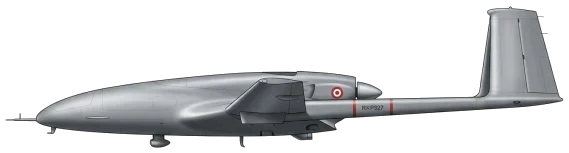
| Bayraktar TB2 | Bayraktar TB3 | |
|---|---|---|
| Origin country | 🇹🇷 Turkey | 🇹🇷 Turkey |
| Category | Military Drones | Military Drones |
| Manufacturer | Baykar | Baykar |
| First flight | 1 August 2014 | 27 October 2023 |
| Year introduced | 2014 | 2025 |
| Number produced | 600 units | N/A |
| Average unit price | $5 million | -- |
| Wingspan | 12.0 m | 14.0 m |
| Height | -- m | 2.6 m |
| Length | 6.5 m | 8.4 m |
| Maximum speed | 222 km/h | 300 km/h |
| Operational range | 300 km | 2,000 km |
| Service ceiling | 8,239 m | -- m |
| Max. takeoff weight | 1,200 kg | 1,450 kg |
| Empty weight | 650 kg | -- kg |
Detailed Comparison
Baykar’s TB2 and TB3 address fundamentally different operational requirements. The TB2 is a land-based, lightweight tactical unmanned combat aerial vehicle (UCAV) built for volume production and attrition warfare. The TB3 is a heavier, navalized derivative engineered specifically for short take-off and landing (STOL) operations from amphibious assault ships lacking catapults or ski-jumps.
Development and Design
The TB2 emerged in 2014 directly to bypass U.S. export restrictions on armed UAVs to Turkey. Its architecture relies on a carbon-fiber monocoque, an inverted V-tail, and a commercial-off-the-shelf Rotax 912 engine. The TB3’s development was triggered by Turkey's removal from the F-35B program, which left the landing helicopter dock TCG Anadolu without a fixed-wing strike element. To operate in a maritime environment, the TB3 integrates folding wings, reinforced landing gear for carrier recoveries, and domestic TEI-PD170/200 diesel engines to eliminate the platform's vulnerability to foreign propulsion embargoes.
Specifications and Performances
The TB3 requires a larger physical envelope to support its expeditionary mission. Its 14-meter wingspan and 1,450 kg maximum takeoff weight (MTOW) yield a 280 kg payload capacity—nearly double the TB2’s 150 kg limit. This permits the TB3 to carry six hardpoints compared to the TB2's four, enabling the integration of heavier munitions like the MAM-T and the Roketsan IHA-122 supersonic missile. The TB3 operates at higher speeds (300 km/h versus the TB2’s 222 km/h) and natively integrates beyond-line-of-sight operations with a 2,000 km range, contrasting with the baseline TB2’s 300 km ground-station constraint. The TB3 also abandons imported electro-optical turrets in favor of the Aselsan ASELFLIR 500 or an AESA radar.
Deployment and usage
The TB2 has established a dense combat record across Syria, Libya, Nagorno-Karabakh, and Ukraine. It operated effectively against exposed armor and short-range air defenses (SHORAD) during Operation Spring Shield and the Second Nagorno-Karabakh War. However, attrition rates in Ukraine demonstrated its vulnerability to layered, modern integrated air defense systems (IADS) in high-intensity conflict. The TB3 transitions the platform from terrestrial counter-insurgency to maritime strike. Following its November 2024 integration on the TCG Anadolu, the TB3 executed joint sorties in the Baltic during NATO's Steadfast Dart 2026. Indonesia’s 60-unit procurement for the Giuseppe Garibaldi confirms its targeted export niche: flat-deck navies lacking vertical-lift fighter aircraft.
Conclusion
The TB2 is the preferred solution for cost-constrained, land-based attrition warfare. At $5 million per unit, it provides scalable ISR and light strike capabilities for forces operating in permissive or semi-permissive airspace where volume and expendability dictate procurement.
The TB3 wins decisively in expeditionary, carrier-based scenarios. For middle-power navies requiring organic, over-the-horizon fixed-wing air support, the TB3 provides a near-monopoly capability in the current export market. Its heavier payload, STOL geometry, ability to launch 50-km range supersonic munitions, and domestic sensor-engine baseline make it the required platform for maritime force projection.


