C-160 Transall vs C-390 Millennium
C-160 Transall vs C-390 Millennium at a glance — top speed 513 vs 980 km/h, range 1,853 vs 6,240 km, max takeoff weight 51,000 vs 72,000 kg, built 214 vs 15 units.
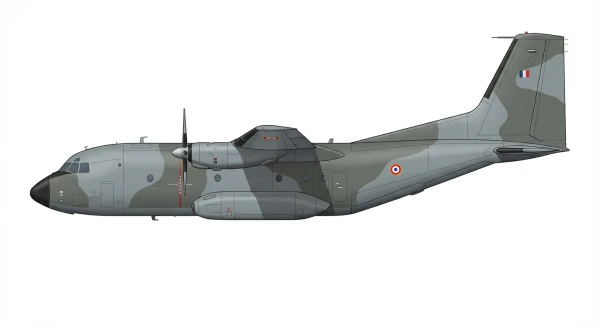
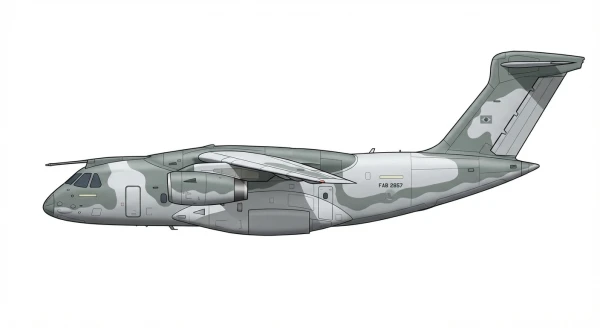
| C-160 Transall | C-390 Millennium | |
|---|---|---|
| Origin country | 🇩🇪 Germany🇫🇷 France | 🇧🇷 Brazil |
| Category | Military Transport Aircraft | Military Transport Aircraft |
| Manufacturer | Transall | Embraer |
| First flight | 25 February 1963 | 30 August 2025 |
| Year introduced | 1967 | 2019 |
| Number produced | 214 units | 15 units |
| Average unit price | $12 million | $140 million |
| Wing area | 160.0 m² | -- m² |
| Wingspan | 40.0 m | 35.1 m |
| Height | 11.7 m | 10.3 m |
| Length | 32.4 m | 33.9 m |
| Maximum speed | 513 km/h | 980 km/h |
| Operational range | 1,853 km | 6,240 km |
| Service ceiling | 8,230 m | 11,000 m |
| Max. takeoff weight | 51,000 kg | 72,000 kg |
| Empty weight | 29,000 kg | 35,000 kg |
| Total thrust | 2 x 4,549 kW | 2 x 13,154 kgf |
Detailed Comparison
The Embraer C-390 Millennium is a 21st-century multi-role jet transport, contrasting sharply with the Transall C-160, a Cold War-era tactical turboprop airlifter. The C-390 leverages modern avionics and turbofan propulsion for speed and versatility, whereas the C-160 was a product of a specific Franco-German requirement for rugged, short-field operations. This generational and technological gap defines their respective capabilities and operational envelopes.
Development and Design
The C-160 originated from a 1950s consortium to replace aging piston-engine transports. Its design is a classic high-wing, twin-turboprop configuration optimized for tactical missions, including operations from short, semi-prepared airstrips. Its key design features include a high-mounted wing for propeller clearance, a robust landing gear, and a rear loading ramp. In contrast, the C-390's development in the 2000s aimed to create a direct but more advanced competitor to aircraft like the C-130. Its design incorporates modern systems absent in the C-160, including:
- Fly-by-wire flight controls with active sidesticks.
- Advanced Pro Line Fusion avionics with head-up displays.
- Integrated self-defense suites (RWR, DIRCM).
- A modular design for rapid mission reconfiguration, such as aerial refueling (KC-390).
The C-390's use of IAE V2500 turbofan engines, derived from commercial airliners, reflects a design philosophy balancing tactical capability with strategic speed and efficiency.
Specifications and Performances
The performance disparity between the two aircraft is substantial. The C-390's turbofan engines provide a significant speed advantage, with a maximum speed of 980 km/h compared to the C-160's 513 km/h. It also operates at a higher service ceiling (11,000 m vs. 8,230 m). In terms of airlift capacity, the C-390 carries a much heavier maximum payload of 26 tonnes, a considerable increase over the C-160's 16 tonnes. While both are designed for austere field operations, the C-160 was specifically noted for its ability to land on airstrips as short as 400 meters. The C-390 is also capable of operating from unpaved surfaces but offers greater range and speed, blurring the line between tactical and strategic airlift roles.
Deployment and usage
The C-160 has a long and proven operational history spanning decades. It served as a workhorse in numerous conflicts and peacekeeping missions, from the invasion of Cyprus and the South African Border War to operations in Mali and Afghanistan. Its specialized C-160G Gabriel SIGINT variant was a key intelligence-gathering asset for the French Air Force. The C-390, being a much newer airframe, has a more limited but growing operational record. Its missions have showcased its multi-role design, including humanitarian aid after the Beirut explosion and Haiti earthquake, COVID-19 medical airlifts in Brazil, support for Antarctic operations, and participation in joint exercises with the USAF. Its ability to perform as both a transport and an aerial tanker provides significant operational flexibility.
Conclusion
The Transall C-160 was a highly successful tactical airlifter for its time, defined by its ruggedness and short-field performance. It fulfilled its specific Cold War-era mission set effectively for over 50 years. The Embraer C-390 represents the contemporary evolution of this aircraft class. It sacrifices some of the C-160’s specialized short-takeoff-and-landing performance for substantially greater speed, payload, range, and technological sophistication. The C-390 is a versatile multi-role platform, capable of performing missions from tactical airlift to strategic transport and aerial refueling, reflecting the broader demands placed on modern air forces. This enhanced capability comes at a correspondingly higher unit cost.