C-130 Hercules vs C-160 Transall
C-130 Hercules vs C-160 Transall at a glance — top speed 593 vs 513 km/h, range 3,800 vs 1,853 km, max takeoff weight 70,307 vs 51,000 kg, built 2,500 vs 214 units.
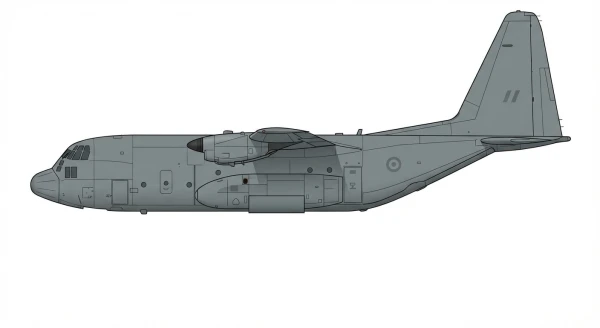
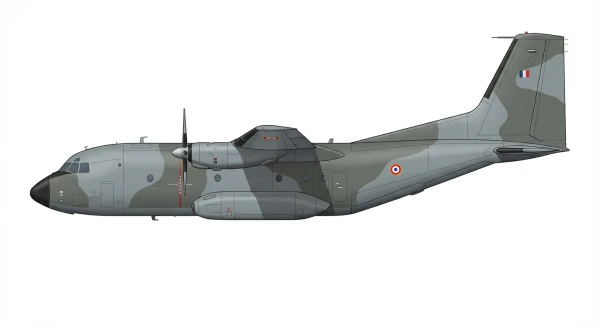
| C-130 Hercules | C-160 Transall | |
|---|---|---|
| Origin country | 🇺🇸 United States | 🇩🇪 Germany🇫🇷 France |
| Category | Military Transport Aircraft | Military Transport Aircraft |
| Manufacturer | Lockheed | Transall |
| First flight | 23 August 1954 | 25 February 1963 |
| Year introduced | 1956 | 1967 |
| Number produced | 2500 units | 214 units |
| Average unit price | $68 million | $12 million |
| Wing area | 162.0 m² | 160.0 m² |
| Wingspan | 40.4 m | 40.0 m |
| Height | 11.7 m | 11.7 m |
| Length | 29.8 m | 32.4 m |
| Maximum speed | 593 km/h | 513 km/h |
| Operational range | 3,800 km | 1,853 km |
| Service ceiling | 10,058 m | 8,230 m |
| Max. takeoff weight | 70,307 kg | 51,000 kg |
| Empty weight | 35,800 kg | 29,000 kg |
| Total thrust | 4 x 3,661 kW | 2 x 4,549 kW |
Detailed Comparison
The C-160 Transall and C-130 Hercules represent a fundamental divergence in airlift design philosophy, with the twin-engine Transall being a purpose-built tactical airlifter for specific European needs, while the four-engine Hercules became a more powerful, versatile, and globally ubiquitous strategic/tactical transport. The C-130’s greater engine power and numbers grant it superior payload, range, and operational redundancy, whereas the C-160 was optimized for exceptional short-field performance and specific cargo dimensions.
Development and Design
The C-130 was developed in the early 1950s to a broad U.S. Air Force requirement for a new transport, leading to a robust, four-engine design that prioritized versatility and range from the outset. Its continuous production and evolution, culminating in the C-130J, underscore a design with immense adaptability. Conversely, the C-160 originated from a more focused 1957 Franco-German requirement to replace the Nord Noratlas. Its twin-engine configuration was deemed sufficient for the intended tactical roles and ranges. Key innovations reflect these differing priorities: the C-160 features a landing gear that can partially retract on the ground to lower the fuselage for easier loading and was designed for steep descents and landings on airstrips as short as 400 meters. The C-130's design, while capable of operating from unprepared fields, is inherently built for heavier loads over longer distances.
Specifications and Performances
The C-130's four Allison T56 engines give it a decisive advantage in raw performance. It possesses a significantly higher Max Takeoff Weight (70,307 kg vs. the C-160’s 51,000 kg), a greater max speed (593 km/h vs. 513 km/h), and a substantially longer ferry range. This allows the Hercules to carry heavier loads, including armored vehicles that may be too heavy for the Transall, over intercontinental distances. The C-160’s performance is tailored for tactical environments; its lower weight and aerodynamic design provide superior short takeoff and landing (STOL) capabilities, a critical asset for forward operating bases. The Transall’s cargo hold was specifically designed to be wider (3.15 m) to accommodate European railway loading gauges, a unique requirement not central to the C-130's initial design.
Deployment and usage
The operational histories reflect their design and production scales. With over 2,500 units built, the C-130 has been the backbone of airlift for dozens of nations, participating in nearly every major Western military and humanitarian operation since the Vietnam War. Its airframe proved exceptionally adaptable, leading to numerous specialized variants, including the heavily armed AC-130 gunship, KC-130 tanker, and various special operations (MC-130) and electronic warfare (EC-130) platforms. The Transall’s deployment, with 214 units built, was more limited, primarily serving France, Germany, Turkey, and South Africa. It proved highly effective in tactical theaters like Africa and Cyprus, fulfilling roles from paratrooper drops to SIGINT missions with the C-160G Gabriel. However, it never achieved the global presence or mission diversity of the Hercules.
Conclusion
The C-130 Hercules established itself as the international standard for medium airlift due to its combination of range, payload, and unparalleled adaptability, supported by a continuous production run and American logistical backing. It is a strategic asset capable of performing tactical missions. The C-160 Transall, in contrast, was a successful and highly capable tactical airlifter, perfectly executed to meet a specific set of European requirements, particularly austere field operations. While effective in its intended role, its twin-engine design and smaller production volume ultimately constrained it to a more regional and specialized service life compared to the globally dominant Hercules.