Diamond DA62 vs Vulcanair P68
Diamond DA62 vs Vulcanair P68 at a glance — top speed 372 vs 322 km/h, range 2,380 vs 2,043 km, max takeoff weight 2,300 vs 1,990 kg, built 120 vs 431 units.
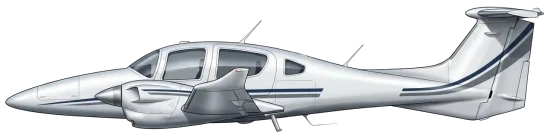
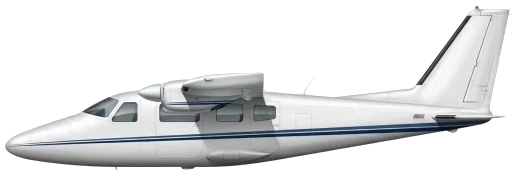
| Diamond DA62 | Vulcanair P68 | |
|---|---|---|
| Origin country | 🇦🇹 Austria | 🇮🇹 Italy |
| Category | Military Special Mission Aircraft | Military Transport Aircraft |
| Manufacturer | Diamond | Vulcanair |
| First flight | 1 April 2012 | 25 May 1970 |
| Year introduced | 2015 | 1971 |
| Number produced | 120 units | 431 units |
| Average unit price | $1.9 million | $1.2 million |
| Wing area | 17.1 m² | 18.6 m² |
| Wingspan | 14.6 m | 12.0 m |
| Height | 2.8 m | 3.4 m |
| Length | 9.2 m | 9.6 m |
| Maximum speed | 372 km/h | 322 km/h |
| Operational range | 2,380 km | 2,043 km |
| Service ceiling | 6,069 m | 5,850 m |
| Max. takeoff weight | 2,300 kg | 1,990 kg |
| Empty weight | 1,590 kg | 1,230 kg |
| Total thrust | 2 x 132 kW | 2 x 149 kW |
Detailed Comparison
Diamond's DA62 MPP and Vulcanair's P.68 compete in the light twin-engine special missions category, separated by four decades of aerospace engineering. The DA62 relies on carbon-fiber composites and Jet A-burning diesel engines, while the older P.68 utilizes an aluminum airframe and standard AvGas piston engines. The procurement choice centers on operating economics and sensor integration versus acquisition cost and raw field performance.
Development and Design
The Partenavia P.68, designed by Luigi Pascale in 1969, utilizes a traditional aluminum high-wing monoplane structure. The base models employ fixed tricycle gear and two 200 hp Lycoming IO-360 engines. Later iterations, specifically the P.68 Observer, replaced the standard nose structure with a transparent plexiglass dome, granting the crew helicopter-like forward visibility for uninstrumented patrol duties.
Diamond developed the DA62 in 2012, scaling up the single-engine DA50 fuselage into a twin-engine, carbon-fiber airframe. Diamond integrated Austro AE330 diesel engines. Running on standard Jet A-1 fuel rather than 100LL AvGas eliminates a logistical bottleneck for military operators, who base their supply chains around turbine fuel. The DA62 integrates modern digital avionics natively, centering on the Garmin G1000Nxi suite.
Specifications and Performances
The DA62 operates with a higher maximum takeoff weight of 2,300 kg (in its US configuration) compared to the P.68's 1,990 kg. This 310 kg delta supports heavier electro-optical/infrared (EO/IR) sensor turrets and datalink hardware without sacrificing fuel load. Aerodynamic drag reduction gives the DA62 a 50 km/h speed advantage (372 km/h vs 322 km/h) and a longer range of 2,380 km.
Conversely, the P.68 outclimbs the DA62, generating a 7.6 m/s climb rate compared to the DA62's 5.2 m/s. This results directly from the P.68's 1,230 kg empty weight, which is 360 kg lighter than the DA62. The DA62 offsets its lower climb rate with a 10-hour loiter endurance, driven by the inherent thermal efficiency of diesel powerplants.
Deployment and usage
The P.68 established the baseline for light twin observation aircraft relying on visual search. Twin-engine redundancy and low stall speeds dictated its use over water and urban terrain:
- The UK’s National Police Air Service and German state police operated the P.68 Observer for urban surveillance.
- The Chilean Navy and Royal Bahamas Defence Force deployed the aircraft for coastal and maritime patrol.
The DA62 MPP shifts the mission profile from visual observation to acting as an electronic sensor truck. The Nigerian Air Force acquired four units in 2023 for intelligence, surveillance, and reconnaissance (ISR) missions against insurgent groups, tracking targets via sensors rather than the naked eye. Greece contracted three units in 2024 for €23.3 million to coordinate maritime and firefighting operations via networked data-links.
Conclusion
The DA62 holds the definitive edge for military and government operators. The P.68 costs less upfront ($1.25 million vs $1.9 million) and provides better raw climb performance for short-field, low-altitude visual patrols. However, its reliance on AvGas isolates it from standard military supply chains. The DA62’s ability to burn Jet A-1, combined with a 10-hour endurance and an airframe designed to carry modern modular sensor suites, dictates its selection for contemporary, networked ISR operations.