Diamond DA62 vs PA-44 Seminole
Diamond DA62 vs PA-44 Seminole at a glance — top speed 372 vs 311 km/h, range 2,380 vs 1,695 km, max takeoff weight 2,300 vs 1,724 kg, built 120 vs 926 units.
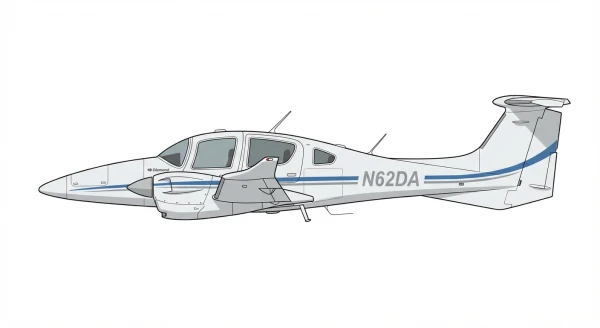
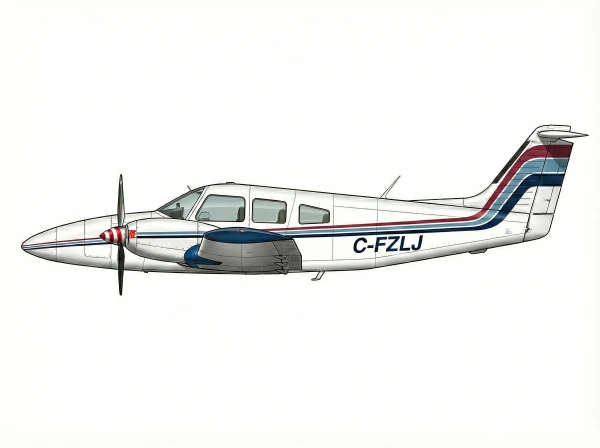
| Diamond DA62 | PA-44 Seminole | |
|---|---|---|
| Origin country | 🇦🇹 Austria | 🇺🇸 United States |
| Category | Military Special Mission Aircraft | Military Training Aircraft |
| Manufacturer | Diamond | Piper |
| First flight | 1 April 2012 | 1 January 1976 |
| Year introduced | 2015 | 1979 |
| Number produced | 120 units | 926 units |
| Average unit price | $1.9 million | $600K |
| Wing area | 17.1 m² | 17.1 m² |
| Wingspan | 14.6 m | 11.8 m |
| Height | 2.8 m | 2.6 m |
| Length | 9.2 m | 8.4 m |
| Maximum speed | 372 km/h | 311 km/h |
| Operational range | 2,380 km | 1,695 km |
| Service ceiling | 6,069 m | 5,200 m |
| Max. takeoff weight | 2,300 kg | 1,724 kg |
| Empty weight | 1,590 kg | 1,068 kg |
| Total thrust | 2 x 132 kW | 2 x 130 kW |
Detailed Comparison
The Diamond DA62 and Piper PA-44 Seminole occupy entirely separate nodes within military light twin-engine aviation. The PA-44 is an analog, avgas-powered trainer dating to the late 1970s, built for raw flight instruction. The DA62 is a 2012-era, Jet-A burning composite platform configured primarily for intelligence, surveillance, and reconnaissance (ISR) missions. The Piper is procured for student throughput, while the Diamond acts as a low-cost surrogate for larger maritime patrol or tactical overwatch aircraft.
Development and Design
The Piper PA-44 emerged in 1976 as a multi-engine derivation of the Cherokee line. Its defining architectural trait is the use of counter-rotating Lycoming O-360 engines. By eliminating the critical engine penalty during an asymmetrical thrust event, the PA-44 lowers the risk profile for student pilots practicing engine-out procedures. Structurally, it relies on traditional aluminum construction and mechanical controls.
Diamond initiated the DA62 program in 2012, utilizing a carbon-fiber composite airframe derived from the single-engine DA50. Diamond replaced traditional avgas piston engines with twin Austro AE330 diesels running on Jet-A fuel. This shift to heavy fuel, combined with Full Authority Digital Engine Control (FADEC) and a Garmin G1000Nxi avionics suite, standardizes logistics for military operators who no longer maintain 100LL avgas stockpiles.
Specifications and Performances
The DA62 operates in a heavier weight class, with a maximum takeoff weight (MTOW) of 2300 kg compared to the PA-44's 1724 kg. The Austro diesels give the DA62 an endurance of 10 hours and a range of 2380 km, outdistancing the Seminole's 1695 km range. Speed metrics favor the DA62, which reaches 372 km/h versus the PA-44's 311 km/h.
This 576 kg MTOW delta dictates how operators equip each airframe:
- The DA62 allocates this margin to electro-optical/infrared (EO/IR) turrets, communications relay equipment, and expanded fuel reserves for loitering.
- The PA-44 restricts payload to the flight instructor, student pilot, and standard fuel loads required for local training sorties.
Deployment and usage
Military adoption of the PA-44 is strictly relegated to multi-engine pilot conversion. The Royal Jordanian Air Force and Peruvian Air Force operate small fleets to bridge students from single-engine trainers to heavier transport aircraft. It handles no frontline operational tasking.
The DA62 MPP (Multi-Purpose Platform) directly participates in operational theaters. The Nigerian Air Force acquired four DA62 MPPs in 2023 for border surveillance and counter-insurgency overwatch, utilizing its low acoustic signature and long loiter time to track militant movements. Greece procured three units in 2024 for €23.3 million to coordinate firefighting air operations and maritime search and rescue.
Conclusion
The Diamond DA62 holds the definitive edge for modern military procurement. Its $1.9 million unit cost is triple that of the $0.6 million PA-44, but its heavy-fuel Austro engines, 10-hour endurance, and payload capacity transform a civilian twin into a viable ISR node for air forces unable to afford turboprop platforms like the King Air 350. The PA-44 Seminole remains the pragmatic choice strictly for basic flight schools requiring counter-rotating multi-engine trainers, but its reliance on 100LL avgas and analog design freeze its utility entirely within the training pattern.