Douglas DC-3 vs Il-14 Crate
Douglas DC-3 vs Il-14 Crate at a glance — top speed 413 vs 430 km/h, range 2,540 vs 1,300 km, max takeoff weight 13,154 vs 18,000 kg, built 10,174 vs 1,348 units.
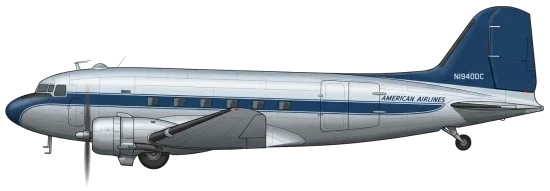
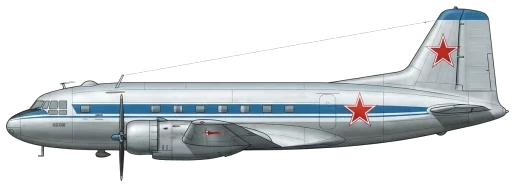
| Douglas DC-3 | Il-14 Crate | |
|---|---|---|
| Origin country | 🇺🇸 United States | 🇷🇺 Ex-USSR |
| Category | Military Transport Aircraft | Military Transport Aircraft |
| Manufacturer | Douglas | Ilyushin |
| First flight | 23 December 1941 | 1 October 1950 |
| Year introduced | 1936 | 1954 |
| Number produced | 10174 units | 1348 units |
| Average unit price | $80K | $1.5 million |
| Wing area | 91.7 m² | 100.0 m² |
| Wingspan | 29.0 m | 31.7 m |
| Height | 5.6 m | 7.9 m |
| Length | 22.7 m | 22.3 m |
| Maximum speed | 413 km/h | 430 km/h |
| Operational range | 2,540 km | 1,300 km |
| Service ceiling | 7,071 m | 7,400 m |
| Max. takeoff weight | 13,154 kg | 18,000 kg |
| Empty weight | 6,450 kg | 12,600 kg |
| Total thrust | 3 x 875 kW | 2 x 1,397 kW |
Detailed Comparison
The Douglas DC-3, originating in the mid-1930s, established the blueprint for modern air transport, while the Ilyushin Il-14 Crate emerged in the 1950s as a Soviet effort to rectify the limitations of the DC-3's direct license-built derivative, the Lisunov Li-2. While the DC-3 revolutionized global logistics through its efficient all-metal monoplane construction, the Il-14 was engineered specifically to operate from austere Soviet airfields with improved single-engine safety margins, representing a generation of technological refinement over its American predecessor.
Development and Design
Developed by Arthur E. Raymond for Douglas, the DC-3 was a commercial response to TWA's requirements, introducing a robust, low-wing metal airframe capable of transcontinental flight. Its design prioritized aerodynamic efficiency and passenger capacity, utilizing radial engines like the Pratt & Whitney R-1830. Conversely, the Il-14 was a direct response to operational deficiencies in the Il-12 and the aging Li-2 fleet. Ilyushin designers focused heavily on aerodynamic stability and safety, incorporating a redesigned wing and broad tailfin to handle the power of two Shvetsov ASh-82T-7 engines. The Soviet design philosophy prioritized ruggedness for unpaved runways and reliable single-engine handling, addressing specific logistical challenges within the USSR that the earlier DC-3 derivatives struggled to manage safely.
Specifications and Performances
The Il-14 is a significantly heavier aircraft, with a maximum takeoff weight of 18,000 kg compared to the DC-3's 13,154 kg. This increased mass is supported by more powerful propulsion, with the Il-14's engines generating approximately 1,400 kW each, surpassing the 750–890 kW output of standard DC-3 powerplants. While the provided data suggests comparable top speeds, the DC-3 demonstrates superior operational range at 2,540 km versus the Il-14's 1,300 km. This highlights the Douglas design's efficiency for long-haul logistics, whereas the Il-14's higher wing loading and power were optimized for lift, climbing performance, and stability rather than endurance.
Deployment and usage
As the C-47 Skytrain, the DC-3 saw ubiquitous service during World War II, with over 10,000 units forming the backbone of Allied logistical and paratroop operations. Its versatility extended to glider towing and medical evacuation, eventually replacing trains for long-distance travel in the US. The Il-14 served a similar role within the Warsaw Pact and Soviet-aligned nations, acting as the standard tactical transport, paratroop platform, and glider tug. Unlike the DC-3's primary focus on general logistics, the Il-14 saw more specialized militarized variants from the factory, including the Il-14FK for aerial photography and Electronic Warfare (Crate-C) configurations, remaining in service with some air forces into the 1990s.
Conclusion
The Douglas DC-3 stands as the foundational platform of modern military air transport, achieving unrivaled production numbers and operational longevity due to its adaptable, efficient airframe. The Ilyushin Il-14 represents a necessary evolutionary step for Soviet aviation, sacrificing the DC-3's range for the structural robustness and power required to operate reliably in harsh environments. While the DC-3 defined the category, the Il-14 optimized the formula for the specific infrastructure constraints of the Eastern Bloc.


