C-130 Hercules vs Douglas DC-3
C-130 Hercules vs Douglas DC-3 at a glance — top speed 593 vs 413 km/h, range 3,800 vs 2,540 km, max takeoff weight 70,307 vs 13,154 kg, built 2,500 vs 10,174 units.
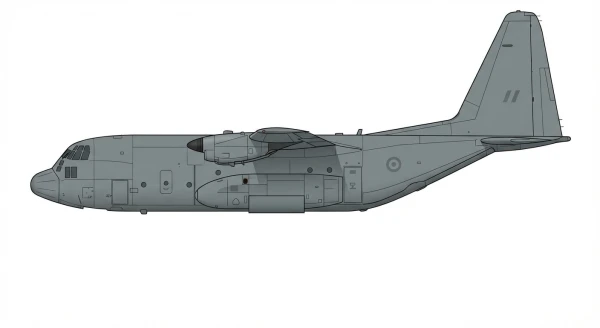
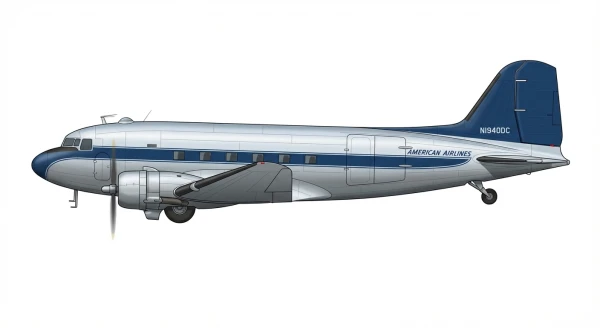
| C-130 Hercules | Douglas DC-3 | |
|---|---|---|
| Origin country | 🇺🇸 United States | 🇺🇸 United States |
| Category | Military Transport Aircraft | Military Transport Aircraft |
| Manufacturer | Lockheed | Douglas |
| First flight | 23 August 1954 | 23 December 1941 |
| Year introduced | 1956 | 1936 |
| Number produced | 2500 units | 10174 units |
| Average unit price | $68 million | $80K |
| Wing area | 162.0 m² | 91.7 m² |
| Wingspan | 40.4 m | 29.0 m |
| Height | 11.7 m | 5.6 m |
| Length | 29.8 m | 22.7 m |
| Maximum speed | 593 km/h | 413 km/h |
| Operational range | 3,800 km | 2,540 km |
| Service ceiling | 10,058 m | 7,071 m |
| Max. takeoff weight | 70,307 kg | 13,154 kg |
| Empty weight | 35,800 kg | 6,450 kg |
| Total thrust | 4 x 3,661 kW | 3 x 875 kW |
Detailed Comparison
The Lockheed C-130 Hercules and the Douglas DC-3 (predominantly in its C-47 military configuration) define the tactical transport capabilities of their respective generations. While the DC-3 pioneered modern air logistics with a low-wing, piston-engine configuration, the C-130 introduced the specialized turboprop heavy-lifter standard. Both airframes share a reputation for extreme longevity and adaptability, yet they differ fundamentally in airframe geometry and payload management.
Development and Design
The DC-3 originated as a commercial airliner, optimized for passenger comfort and aerodynamic efficiency with a low-wing monoplane design and conventional "taildragger" landing gear. Its adaptation for military use involved reinforcing the floor and adding a cargo door, but the lack of a rear ramp complicated loading, requiring equipment to be lifted manually or by forklift. Conversely, the C-130 was purpose-built for military logistics. Its high-wing configuration places the fuselage close to the ground, maximizing clearance for propellers while enabling the integration of a rear-loading ramp. This design choice facilitates roll-on/roll-off capability for vehicles and efficient airdrops. Structurally, the C-130 utilizes aluminum alloys and four Allison T56 turboprops to achieve STOL performance on unprepared strips, a capability the DC-3 achieved through light wing loading and rugged radial engines.
Specifications and Performances
The performance gap illustrates the evolution of strategic airlift requirements. The C-130 possesses a Maximum Takeoff Weight (MTOW) of 70,307 kg, over five times the DC-3's 13,154 kg. This allows the Hercules to lift heavy armor and equipment that the DC-3, limited to roughly 21 troops or light cargo, could never accommodate. Speed and range metrics similarly favor the modern platform; the C-130 cruises at 593 km/h with a range of 3,800 km, compared to the DC-3's 450 km/h and 2,540 km reach. While the DC-3 relied on two radial engines producing approximately 1,200 hp each, the C-130's four turboprops provide vastly superior thrust-to-weight ratios, essential for operating at higher service ceilings and with heavier payloads.
Deployment and usage
The DC-3/C-47 served as the logistical backbone of Allied forces during World War II, revolutionizing rapid troop deployment and paratrooper operations, notably in the European theater. Post-war, it transitioned to specialized roles like the AC-47 "Spooky" gunship in Vietnam. The C-130 expanded this multi-role philosophy extensively. Beyond standard transport, the airframe supports diverse variants: the AC-130 provides close air support with side-firing heavy artillery, the MC-130 facilitates special operations infiltration, and the KC-130 conducts aerial refueling. The C-130's ability to utilize ski-equipped landing gear (LC-130) for polar missions mirrors the rugged versatility established by its predecessor.
Conclusion
Ultimately, the Douglas DC-3 proved the viability of sustained air logistics, while the Lockheed C-130 perfected the tactical transport formula. The DC-3 was an adapted civilian airliner that met wartime needs through ubiquity and reliability. The C-130 represented a shift toward specialized military design, introducing the rear-ramp configuration that remains the industry standard. Though separated by decades of technology, both aircraft achieved an unprecedented service life, remaining operational long after their contemporaries were retired.